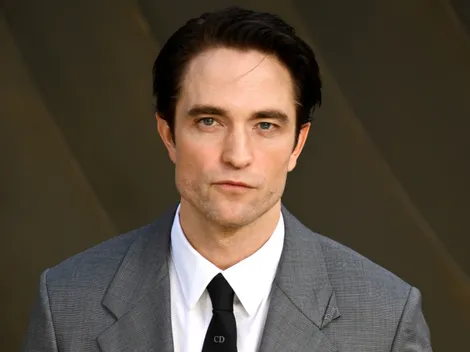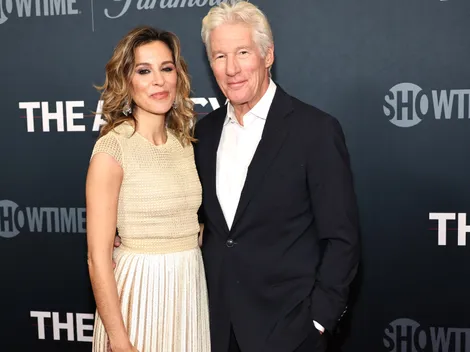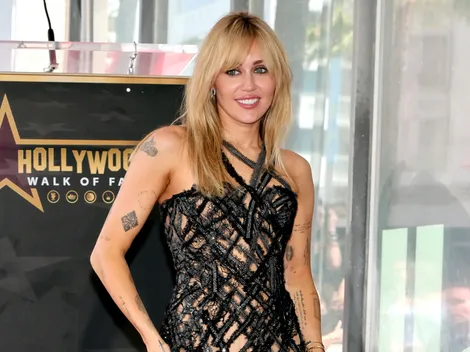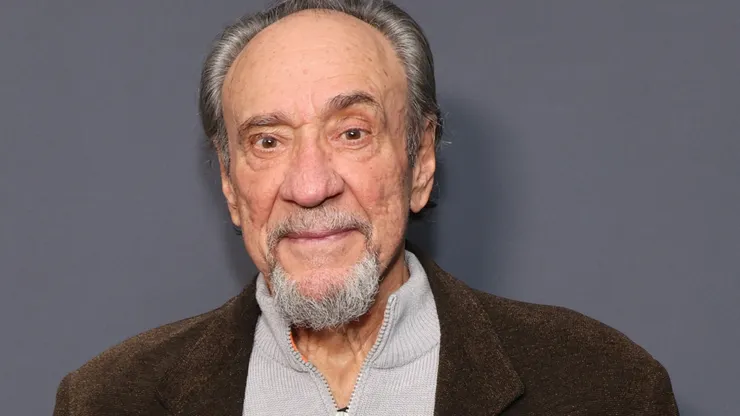
In some cases, actors struggled to find roles that matched their Oscar-winning performances, while others faced flops, personal troubles, or changing industry tastes that derailed their momentum. Here are 10 stars whose careers never quite reached the same heights after their big victory.
Cuba Gooding Jr.

Source: Monica Schipper/Getty Images
After his high-energy “Show me the money!” acceptance speech for Jerry Maguire in 1997, Cuba Gooding Jr. seemed destined for the Hollywood pantheon, yet he famously admitted to spending the following decade in a wilderness of critical bombs.
By turning down prestige roles in films like Amistad and Hotel Rwanda to chase big-budget comedies that failed to land, he eventually found himself starring in nearly 20 consecutive direct-to-DVD titles. While he saw a brief critical resurgence in 2016 with The People v. O. J. Simpson, his film career never regained the A-list theatrical velocity it possessed in the mid-90s.
Halle Berry
Halle Berry made history in 2002 as the first Black woman to win Best Actress for Monster’s Ball, a milestone that should have afforded her a lifetime of curated roles, but she instead pivoted toward a series of high-profile misfires. The most notorious of these was 2004’s Catwoman, a commercial and critical disaster that led her to personally accept a Razzie Award just three years after her Oscar win.
Despite her continued status as a household name and occasional turns in franchises like John Wick, Berry recently noted in a 2024 interview that the limited opportunities for Black women in Hollywood meant her Oscar didn’t provide the career-long protection many expected.
Adrien Brody
In 2003, Adrien Brody became the youngest man ever to win Best Actor for The Pianist, yet his subsequent filmography struggled to balance his immense talent with commercial viability.
He followed his masterpiece with the widely panned King Kong and a string of experimental indies and action flops like Predators that saw him vanish from the awards conversation for nearly two decades. It wasn’t until March 2025 that he finally broke the curse, winning his second Academy Award for The Brutalist and ending one of the longest cold streaks in modern cinema history.
Mo’Nique
The 2010 Best Supporting Actress win for Precious was a masterclass in performance, but Mo’Nique’s refusal to play the game during the grueling Oscar campaign season led to a public and permanent fallout with industry titans like Lee Daniels and Oprah Winfrey.
The star claimed she was shut out of major studio opportunities for demanding fair compensation for promotional tours, resulting in a five-year gap where she didn’t film a single movie despite her newfound prestige. Though she eventually settled a lawsuit with Netflix over pay equity and reconciled with Daniels for the 2024 film The Deliverance, her career remains a cautionary tale of how industry politics can eclipse raw talent.
Mira Sorvino
Winning an Oscar for Mighty Aphrodite in 1996 should have made Mira Sorvino the it girl of the decade, but her presence in major films curiously evaporated shortly after her victory.
For years, fans wondered why she was relegated to minor television roles and B-movies until the 2017 Harvey Weinstein revelations exposed that the mogul had intentionally blacklisted her after she rejected his advances. Director Peter Jackson later confirmed he was told by Miramax that Sorvino was difficult to work with, proving that her career decline was not a lack of talent, but a calculated campaign of professional sabotage.
Jean Dujardin

Source: Pierre Suu/Getty Images
When Jean Dujardin charmed the world in the silent film The Artist, he became the first French actor to win Best Actor, but the unique nature of his breakout role proved difficult to translate into a sustained Hollywood career.
Aside from a small, charismatic turn in The Wolf of Wall Street and a role in The Monuments Men, Dujardin found that Tinseltown struggled to cast him in leading man parts outside of the foreign suave archetype. He ultimately retreated to the French film industry, where he remains a massive superstar, though his brief reign as Hollywood’s golden boy remains a singular, silent moment in time.
F. Murray Abraham
The Amadeus Curse became a literal term in the industry after F. Murray Abraham won Best Actor in 1985, only to see his film career immediately downshift into supporting villain roles and minor character work.
While he remained a titan of the stage, Hollywood seemed unsure how to utilize his intense gravitas, leading to a long period where he was more likely to be seen in a Fruit of the Loom commercial than a blockbuster. Fortunately, the late-career renaissance hit him hard in the 2020s, with his acclaimed turn in The White Lotus finally introducing his brilliance to a younger generation.
Kim Basinger
Kim Basinger’s 1998 win for L.A. Confidential was viewed as a massive comeback for the 80s icon, yet it strangely marked the beginning of her transition out of the limelight.
Following her victory, she took several years off and returned in projects like I Dreamed of Africa and Bless the Child, both of which were expensive failures that cooled her bankability as a lead. By the mid-2000s, her appearances became sporadic, often relegated to mother roles in films like 8 Mile or supporting turns in the Fifty Shades franchise, never again capturing the noir magic of her Oscar-winning performance.
Louise Fletcher
Louise Fletcher’s portrayal of the icy, authoritarian Nurse Ratched in the 1975 masterpiece One Flew Over the Cuckoo’s Nest remains one of the most chilling performances in cinema history. Her terrifyingly subtle turn earned her the Academy Award for Best Actress, a feat she achieved at age 41 after having previously stepped away from acting for a decade to raise her family.
Despite her historic win, Fletcher found it difficult to escape the shadow of the character, as Hollywood struggled to see her as anything other than a cold-blooded antagonist. While she maintained a steady career with roles in projects like Exorcist II: The Heretic, Flowers in the Attic, and a recurring part in Star Trek: Deep Space Nine, she never again secured a leading film role that matched the prestige of her Oscar-winning debut.
Roberto Benigni

Source: Vittorio Zunino Celotto/Getty Images
The image of Roberto Benigni jumping over the backs of theater seats to accept his Oscar for Life is Beautiful is one of the Academy’s most iconic moments, but it was also the peak of his international relevance.
His follow-up project, a live-action Pinocchio in which he played the titular puppet, was a legendary disaster that currently holds a rare 0% on Rotten Tomatoes. The failure of that film, combined with the difficulty of translating his specific brand of manic Italian comedy for American audiences, effectively ended his brief tenure as a global cinematic force.