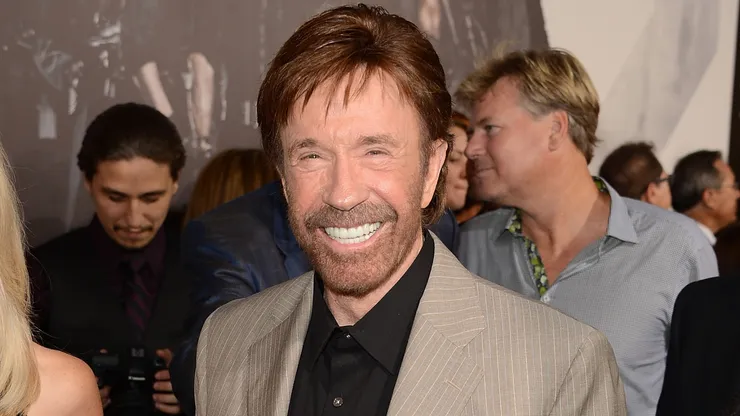
Long before his name became shorthand for unshakable toughness, Chuck Norris built one of the most distinctive careers in action cinema. From his early appearance opposite Bruce Lee in The Way of the Dragon to a string of ’80s and ’90s genre staples, he carved out a niche as a leading man whose martial arts credibility translated into box‑office appeal.
As the appetite for high‑octane action persists, revisiting these classics highlights not only his physical presence on screen but also the ways his films helped shape the action genre itself.
Lone Wolf McQuade (1983)
- Available to buy through iTunes, Google Play and Vudu.
Lone Wolf McQuade is often cited as one of Chuck Norris’s most defining action roles, casting him as rugged Texas Ranger J.J. McQuade, a loner with a distinctive code of justice. In this modern Western‑style action film, McQuade goes head‑to‑head with a ruthless drug cartel, blending gritty gunplay with martial arts combat. Its narrative is grounded in frontier justice, reflecting a style that influenced Norris’s later television persona.
Beyond its explosive confrontations, the film showcases Norris’s ability to carry a story built on character as much as physicality — McQuade is taciturn but principled, a lawman whose presence looms as large as his reputation. The tension between him and his adversaries, especially during the climactic fight sequences, remains one of the most memorable aspects of 1980s action cinema.
The Way of the Dragon (1972)
- Available to buy through iTunes, Google Play and Vudu.
The Way of the Dragon is a landmark in Chuck Norris’s career, even though he played a supporting role. His legendary showdown with Bruce Lee in the Roman Colosseum has become one of the most iconic martial arts sequences in film history.
Norris portrays Colt, an American martial arts expert helping to defend a restaurant from local gangsters, demonstrating a perfect combination of skill and screen presence. Beyond the famous final fight, the film showcases Norris’s ability to balance choreographed combat with cinematic storytelling.
Though a secondary role, it launched him onto the international stage and cemented his reputation as a true martial artist on screen, paving the way for his own action-led films in the years that followed.
Code of Silence (1985)
- Available on Prime Video.
In Code of Silence, Chuck Norris steps into one of his most critically respected roles as Sergeant Eddie Cusack, a Chicago police officer entangled in a brutal gang war. Directed by Andrew Davis, the film stands out from typical action fare with its gritty neo‑noir sensibilities and intense urban backdrop, presenting a more grounded, character‑driven story.
What separates this movie from many others in Norris’s filmography is its balance of drama and action: visceral shootouts sit alongside moral ambiguity and a protagonist forced to navigate corruption and violence without easy answers. This approach elevated the film beyond mere B‑movie thrills and earned it recognition as one of Norris’s most complete efforts.
Missing in Action (1984)
- Available on Fubo.
Missing in Action was a breakthrough for Norris in the war‑action subgenre, putting him in the shoes of Colonel James Braddock, a Vietnam War veteran determined to rescue POWs forgotten by official channels. The film’s stakes are intensely personal, framing the rescue mission not just as a military operation but as a moral obligation.
The raw energy of the action sequences, coupled with the rugged determination of Braddock’s character, turned the movie into an emblem of 1980s patriotic cinema. Its success spawned sequels that deepened the storyline, but the original remains the most iconic chapter — a narrative about redemption, survival and the costs of conflict.
The Delta Force (1986)
- Available to buy through iTunes, Google Play and Vudu.
In The Delta Force, Norris plays Major Scott McCoy, a commander leading an elite anti‑terrorist unit tasked with rescuing hostages from a hijacked aircraft. Inspired by real‑world military operations of the era, the film blends explosive action with a high‑stakes rescue plot that keeps tension taut from start to finish.
The energy of the movie comes from its unrelenting pace and willingness to push the envelope on set‑piece spectacle, from airborne insertions to close‑quarters combat, illustrating Norris’s larger‑than‑life screen persona. Paired with co‑stars like Lee Marvin, his performance balances strategic leadership with raw physicality.
Good Guys Wear Black (1978)
- Available on Fubo.
Good Guys Wear Black marked a turning point in Norris’s career as his first major starring role and helped establish him as a leading force in American martial arts cinema. He portrays John T. Booker, an elite operative drawn back into conflict when his former comrades begin dying mysteriously years after Vietnam.
What made the film significant was its distinctly American tone and themes, merging martial arts with political intrigue and post‑war reflection. It also laid the groundwork for Norris’s subsequent action successes by proving he could anchor a complex narrative with stamina and charisma.
Hero and the Terror (1988)
- Available on Fubo.
In this unconventional mix of action and thriller, Norris portrays Danny O’Brien, an L.A. police detective on the trail of a serial murderer nicknamed “The Terror.” Based on a novel, the film adds psychological tension to traditional action tropes, exploring the pursuit of a cunning adversary as much as the physical confrontations.
Although it received mixed reviews, Hero and the Terror is notable for showing Norris in a role that balances detective work with his trademark combat prowess. The cat‑and‑mouse dynamic between protagonist and antagonist gives the film a distinctive feel among his other titles.
A Force of One (1979)
- Available on Fubo.
In A Force of One, Norris stars as Matt Logan, a karate champion enlisted to help an anti‑narcotics unit battling a killer targeting police. The narrative blends martial arts competition with criminal justice, showcasing Norris’s fighting expertise in a context that builds tension through both plot and physical confrontation.
The movie is significant for its integration of authentic martial arts skill into a crime‑drama framework, giving Norris room to shine as a formidable combatant while also engaging with themes of teamwork and duty — a departure from the lone‑wolf archetype.
Silent Rage (1982)
- Available to buy through iTunes, Google Play and Vudu.
Silent Rage mixes action with thriller elements by casting Norris as a Texas sheriff confronting a nearly unstoppable criminal enhanced by a clandestine medical experiment. The premise pushes the film into a genre crossover that combines suspense with Norris’s signature physical action.
The movie’s pace and tone — oscillating between gritty pursuit and speculative menace — make it stand out among Norris’s early work. While it has camp elements, the palpable threat of an indestructible villain gives the film a unique texture in the canon of 80s martial arts action.
Missing in Action 2: The Beginning (1985)
- Available on Fubo.
Serving as a narrative prequel to the original Missing in Action, this installment digs deeper into how Colonel James Braddock was captured and survived years of imprisonment. It reframes the familiar hero in a context of endurance and survival, focusing on his early struggles and resilience.
Rather than just replicating the rescue formula of the first film, this chapter adds emotional depth by highlighting Braddock’s journey from desperation to determination, enriching the character’s arc and offering a more personal glimpse into the motivations that drive his later missions.