Not every biopic is interested in telling a life story from beginning to end. Some pictures choose a far stranger — and far more revealing — route, breaking away from the traditional formula to explore fame, identity and memory through unconventional storytelling.
From fragmented timelines to surreal visuals and imagined conversations, films like Marie Antoinette, Amadeus and The Last Temptation of Christ proved that biographical cinema does not always need historical precision to leave a lasting impression.
Marie Antoinette
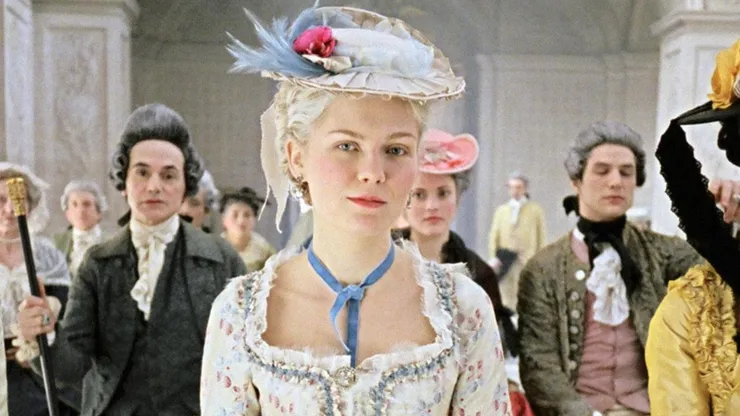
Instead of portraying the infamous French queen as a distant historical figure trapped inside textbooks, Sofia Coppola transformed Marie Antoinette into a dreamy, modern portrait of isolation, excess, and youth.
The film mixes 18th-century politics with contemporary music, pastel aesthetics, and emotional detachment, creating a version of Versailles that feels strangely alive and intimate.
Kirsten Dunst’s performance avoids grand speeches and dramatic breakdowns, focusing instead on the quiet loneliness behind the diamonds, gossip, and towering wigs. Rather than explaining Marie Antoinette, the movie invites audiences to sit inside her confusion as the world around her slowly collapses.
Born to Be Blue
Robert Budreau’s Born to Be Blue refuses to behave like a conventional jazz biopic. Instead of documenting every chapter of Chet Baker’s career, the film drifts through memory and fiction like one of Baker’s trumpet solos, blurring the line between reality and performance.
Ethan Hawke plays the legendary musician with a fragile exhaustion that turns the movie into something deeply melancholic, especially as Baker struggles to rebuild both his music and himself after addiction nearly destroyed him. The film openly embraces its “semi-factual, semi-fictional” structure, choosing emotional truth over strict accuracy.
Andrei Rublev
Few biographical films feel as spiritual and monumental as Andrei Tarkovsky’s Andrei Rublev. Rather than offering a straightforward account of the famous Russian icon painter, the movie unfolds like a meditation on faith, suffering, art, and silence during one of the darkest periods in Russian history.
Tarkovsky barely treats Rublev as a traditional protagonist; instead, he observes the chaos surrounding him — war, brutality, famine, fear — and slowly asks what role an artist can possibly have in a broken world. The result is less a biography than a philosophical journey disguised as cinema.
Bronson
Nicolas Winding Refn turned the life of Britain’s most notorious prisoner into something that feels halfway between a stage play, a nightmare, and a violent dark comedy.
In Bronson, Tom Hardy does not simply portray Michael Peterson — better known as Charles Bronson — he practically explodes across the screen with theatrical monologues, surreal imagery, and bursts of uncontrollable rage.
The movie constantly reminds viewers that Bronson himself treated his criminal identity like performance art, transforming prison violence into celebrity mythology. Instead of searching for psychological explanations, Refn leans into chaos, ego, and spectacle.
The Last Temptation of Christ
Martin Scorsese’s The Last Temptation of Christ caused outrage long before audiences even entered theaters, largely because it dared to portray Jesus not as an untouchable religious symbol, but as a man filled with fear, doubt, temptation, and emotional conflict.
Adapted from Nikos Kazantzakis’ controversial novel, the film strips away the polished certainty often associated with biblical epics and replaces it with vulnerability. Willem Dafoe’s performance gives the story an almost painfully human dimension, turning the movie into an exploration of sacrifice and identity rather than a conventional retelling of scripture.
I’m Not There
Todd Haynes approached Bob Dylan’s life like a puzzle with missing pieces, turning I’m Not There into one of the boldest anti-biopics ever made. Instead of casting a single actor, the film splits Dylan into multiple identities played by Cate Blanchett, Heath Ledger, Christian Bale, Richard Gere, and others, each representing a different version of the musician’s constantly shifting public persona.
The movie never tries to explain Dylan in a conventional sense; it embraces contradiction, reinvention, and mystery, much like Dylan himself spent decades doing in real life. Critics and fans alike have often described the film as confusing, hypnotic, and strangely perfect for an artist who always resisted definition.
Ed Wood
Tim Burton transformed the story of Hollywood’s so-called “worst director” into an unexpectedly heartfelt love letter to artistic obsession. Shot in luminous black and white, Ed Wood avoids mocking its protagonist and instead celebrates his endless optimism, chaotic creativity, and refusal to stop making movies no matter how disastrous they became.
Johnny Depp plays Wood with infectious enthusiasm, while Martin Landau’s Oscar-winning Bela Lugosi adds surprising emotional weight to the film. Rather than focusing on historical precision, Burton fills the movie with exaggerated charm and cinematic fantasy, making the entire biopic feel as eccentric as the filmmaker it portrays.
At Eternity’s Gate
Julian Schnabel’s At Eternity’s Gate barely resembles a traditional artist biopic. Instead of carefully documenting Vincent van Gogh’s career milestones, the film immerses itself in the painter’s fractured emotional world through drifting camerawork, blurred imagery, and long moments of silence.
Willem Dafoe’s performance captures Van Gogh less as a tortured genius stereotype and more as a deeply sensitive man struggling to understand both himself and the world surrounding him. The movie often feels like stepping directly inside one of Van Gogh’s paintings — beautiful, unstable, intimate, and painfully alive.
I, Tonya
Craig Gillespie approached the scandal surrounding Tonya Harding with the energy of a dark comedy rather than a solemn sports drama, and that decision completely changed the tone of the biopic genre.
I, Tonya jumps between contradictory interviews, unreliable narration, fourth-wall breaks, and absurd humor, constantly reminding viewers that truth itself became impossible to separate from media spectacle.
Margot Robbie gives Harding a raw, explosive humanity that pushes beyond tabloid caricature, while Allison Janney’s viciously hilarious performance as Harding’s mother turns every scene into controlled chaos. The film does not ask audiences to forgive Tonya Harding, but it forces them to reconsider how America turned her life into entertainment.
Jackie
Pablo Larraín’s Jackie narrows one of the most famous tragedies in American history into an intensely personal psychological portrait. Rather than covering John F. Kennedy’s presidency from beginning to end, the film focuses almost entirely on the days immediately following his assassination, trapping Jacqueline Kennedy inside grief, performance, and political mythology.
Natalie Portman’s haunting portrayal captures a woman simultaneously collapsing in private while carefully constructing the public image that would define Camelot forever. The movie unfolds like memory itself — fragmented, elegant, and emotionally suffocating.
Mishima: A Life in Four Chapters
Paul Schrader’s Mishima: A Life in Four Chapters may be one of the most visually daring biopics ever made. Instead of following Japanese author Yukio Mishima through a conventional timeline, the film divides his life into thematic chapters while blending black-and-white flashbacks, theatrical recreations of his novels, and the final day leading to his ritual suicide in 1970.
Schrader uses radically different visual styles to separate fiction from reality, creating a movie that feels less like a biography and more like a psychological self-portrait assembled from obsession, nationalism, beauty, and performance.
Critics at the time praised its avant-garde structure and Philip Glass’ hypnotic score, while Roger Ebert later described it as a “triumph of concise writing and construction”.
BlacKkKlansman
Spike Lee took the unbelievable true story of detective Ron Stallworth — a Black police officer who infiltrated the Ku Klux Klan in the 1970s — and transformed it into something far more politically explosive than a standard crime biopic.
BlacKkKlansman constantly shifts between satire, thriller, historical drama, and contemporary social commentary, using humor and absurdity to expose the terrifying persistence of racism in America.
Lee intentionally blurs past and present throughout the film, especially in its devastating final moments, where real footage from Charlottesville suddenly collides with the story. Rather than trapping the narrative inside nostalgia, the movie weaponizes history against the present day.
The Social Network
David Fincher’s The Social Network transformed the creation of Facebook into something that resembles a Shakespearean betrayal drama more than a tech biopic. Aaron Sorkin’s razor-sharp screenplay avoids the inspirational clichés usually attached to genius entrepreneurs and instead paints Mark Zuckerberg as brilliant, isolated, insecure, and emotionally detached.
The film unfolds through depositions and fractured recollections, making every version of the truth feel incomplete or self-serving. Combined with Trent Reznor and Atticus Ross’ cold, haunting score, the movie captures Silicon Valley not as a land of innovation, but as a machine built on ambition, resentment, and social alienation.
Oppenheimer
Christopher Nolan approached Oppenheimer with the structure of a political thriller and the emotional intensity of a psychological horror film. Instead of simply documenting J. Robert Oppenheimer’s role in creating the atomic bomb, Nolan fractures time itself, jumping across decades, interrogations, memories, and political hearings to explore guilt, ego, paranoia, and power.
The film rarely slows down to explain history in traditional biopic fashion; it overwhelms audiences with momentum, dialogue, and tension, mirroring the unstoppable force that nuclear creation unleashed on the world.
Cillian Murphy’s performance keeps the story grounded inside a man who slowly realizes that scientific achievement and moral catastrophe may become impossible to separate.
BlackBerry
Matt Johnson’s BlackBerry turns the rise and collapse of the world’s first smartphone empire into a frantic corporate tragicomedy filled with panic, ego, and technological obsession. Rather than presenting the founders of Research In Motion as polished Silicon Valley visionaries, the film portrays them as awkward outsiders suddenly crushed by the ruthless speed of the tech industry.
Glenn Howerton’s explosive performance as executive Jim Balsillie injects the movie with chaotic energy, while the screenplay constantly emphasizes how quickly innovation can become extinction in the modern market. Critics widely praised the film for transforming a business story into something tense, funny, and unexpectedly human.
Love & Mercy
Bill Pohlad’s Love & Mercy avoids the predictable “rise-and-fall musician biopic” formula by splitting Beach Boys legend Brian Wilson into two different timelines portrayed by Paul Dano and John Cusack.
Instead of focusing on fame itself, the film dives into Wilson’s fragile mental state, his groundbreaking creative process during the making of Pet Sounds, and the years he spent trapped under the control of controversial therapist Eugene Landy.
The movie moves with a dreamlike emotional rhythm, layering music, trauma, and memory together in ways that feel deeply personal rather than overly dramatized. Many critics highlighted how the film captured the sound and emotional texture of Wilson’s mind instead of merely recounting his career milestones.
Raging Bull
Martin Scorsese’s Raging Bull shattered expectations of what a sports biopic could look like. Shot in stark black and white, the film transforms boxer Jake LaMotta’s life into a brutal study of masculinity, violence, jealousy, and self-destruction.
Robert De Niro’s legendary performance refuses to romanticize LaMotta, portraying him instead as a man consumed by paranoia and uncontrollable rage both inside and outside the ring.
Scorsese’s boxing scenes feel less like athletic competition and more like psychological warfare, with distorted sound, surreal slow motion, and bursts of operatic violence turning every fight into emotional collapse. Over time, the film became widely regarded as one of the greatest American movies ever made, not because it celebrates its subject, but because it dissects him.