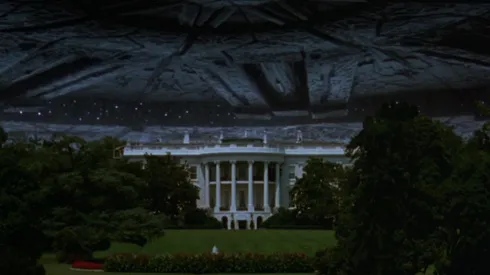
According to IMDb trivia, the sequence that became the centerpiece of the film’s marketing campaign relied almost entirely on miniature models, carefully planned pyrotechnics, and high speed photography instead of digital effects. Three decades later, it remains one of the defining practical effects achievements of the 1990s.
How the Filmmakers Destroyed the White House Before CGI Took Over
Although “Independence Day” featured groundbreaking visual effects for its time, director Roland Emmerich and his team chose a practical approach for what would become the movie’s signature shot. Rather than creating the White House digitally, the effects department built a detailed miniature at one twelfth of its actual size specifically for the destruction sequence. The model also appeared briefly in an earlier scene when David and Julius Levinson stop outside the presidential residence before its dramatic fate.
Blowing up the miniature required far more planning than simply setting off explosives. The crew spent an entire week preparing the sequence and carefully positioned explosive charges throughout the model to achieve the desired effect. To capture every detail, nine cameras filmed the explosion simultaneously, each operating at different speeds to provide multiple perspectives of the blast.
One camera proved especially important to the final result. It recorded the explosion at twelve times the normal frame rate, allowing the footage to be played back at regular speed. That technique made the fireball appear heavier, slower, and dramatically larger than it would have looked in real time, giving the destruction its unforgettable sense of scale.
The finished shot quickly became the defining image of “Independence Day.” It appeared prominently in teasers, trailers, television commercials, and even on the cover of many VHS editions, helping establish the film as one of the biggest event movies of 1996.
Interestingly, the White House interior sets seen elsewhere in the movie were not built from scratch. They had previously been constructed for “The American President” and were later reused in productions including “Mars Attacks!” and “Nixon.”