Since the dawn of cinema, filmmakers have looked to the stars not just to dazzle, but to probe the unknown. Movies set in outer space take audiences on journeys across moonscapes, distant planets and uncharted galaxies, transforming the vacuum of the cosmos into a canvas for human drama, survival and discovery.
What makes these stories compelling is their blend of spectacle and intimacy. Whether following interstellar explorers on life‑or‑death missions, chronicling humanity’s first tentative steps on alien worlds or envisioning sprawling galactic civilizations, space cinema magnifies the stakes while asking universal questions about identity, resilience and the nature of existence.
Project Hail Mary (2026)
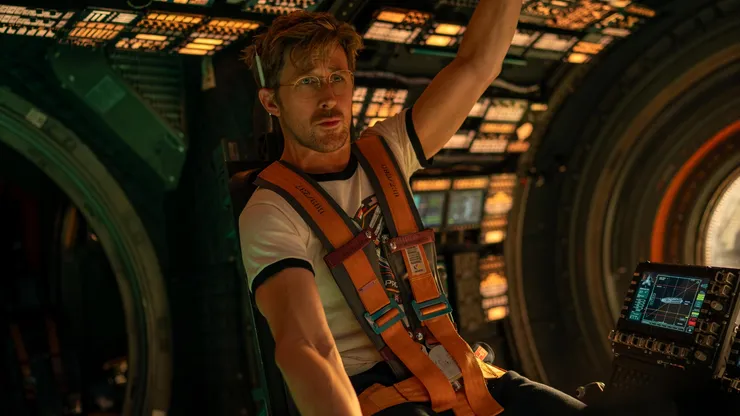
Project Hail Mary emerges as one of the most anticipated sci‑fi releases of 2026, bringing Andy Weir’s bestselling 2021 novel to life on the big screen. Directed by Ryan Gosling’s Spider‑Verse collaborators Phil Lord and Christopher Miller, and scripted by Drew Goddard, the film stars Gosling as Ryland Grace, a scientist‑turned‑astronaut who wakes up alone aboard an interstellar spacecraft with no memory of how he got there.
The story thrusts him into a desperate mission to prevent Earth’s impending catastrophe caused by a mysterious energy‑eating organism, blending cerebral science fiction with high emotional stakes and unexpected humor.
What sets Project Hail Mary apart is its focus on ingenuity and connection as much as cosmic peril. As Grace pieces together his mission, he encounters an alien life form named Rocky, sparking a partnership that becomes pivotal to both their worlds and adds an emotional dimension rarely seen in solo astronaut narratives.
Solaris (1972)
Andrei Tarkovsky’s Solaris is less about interstellar travel and more a meditation on memory, grief, and human consciousness. Set aboard a space station orbiting a mysterious oceanic planet, the film explores how isolation and the unknown challenge the mind and the heart. Its slow, deliberate pacing allows philosophical questions about identity and reality to unfold with haunting subtlety.
Solaris is a cinematic landmark in European science fiction, influencing countless filmmakers who seek emotional depth beyond spectacle. The planet itself functions almost as a character, reflecting the inner struggles of the crew, and Tarkovsky’s contemplative style invites audiences to linger on the metaphysical as much as the cosmic.
Moon (2009)
Duncan Jones’ Moon tells a deceptively simple story of a solitary worker on a lunar mining base, grappling with existential questions and corporate secrecy. Sam Rockwell delivers a tour-de-force performance, navigating the film’s tension with nuance, humor, and quiet despair.
The film’s power lies in its intimacy: a single human against the stark emptiness of the moon, exploring themes of identity, loneliness, and what it means to be human. Its minimalist design and evocative score make the desolate lunar landscape almost palpable, proving that the smallest scale can feel epic in the vacuum of space.
The Martian (2015)
Ridley Scott’s The Martian blends science, suspense, and humor to chronicle astronaut Mark Watney’s struggle to survive alone on Mars. Based on Andy Weir’s novel, the film emphasizes ingenuity, problem-solving, and the resilience of the human spirit against the cold, red expanse of an alien world.
Matt Damon’s performance balances desperation and optimism, turning what could be a survival story into an inspiring celebration of human curiosity and determination. With a mix of realistic science and cinematic storytelling, The Martian makes Mars feel like both a playground and a formidable adversary.
First Man (2018)
Damien Chazelle’s First Man is a deeply human account of Neil Armstrong’s journey to the moon. More than a space adventure, it focuses on the sacrifices, fears, and intimate moments behind one of humanity’s most iconic achievements.
The film immerses audiences in the claustrophobic tension of spaceflight, using meticulous sound design and camera work to convey the danger and exhilaration of exploration. It’s a grounded, emotional lens on history, reminding viewers that space travel is as much about human courage as technological triumph.
Star Wars Series (1977–present)
George Lucas’ Star Wars saga redefined space storytelling, blending mythic structure, political intrigue, and intergalactic spectacle. From the sands of Tatooine to the starships of the Empire, the series created a universe rich with lore, adventure, and moral conflict.
Beyond its visual effects and iconic battles, Star Wars endures because of character-driven storytelling and timeless themes of hope, redemption, and rebellion. Its influence stretches across genres, inspiring generations of filmmakers and space enthusiasts alike.
Alien (1979)
Ridley Scott’s Alien combines horror and science fiction, setting a template for claustrophobic space terror. The crew of the Nostromo encounters an extraterrestrial predator, and tension escalates in the narrow corridors of the ship.
Sigourney Weaver’s Ellen Ripley became an icon of resilience and ingenuity, and the film’s design, atmosphere, and suspense elevated the notion of space as a hostile, unpredictable frontier. It’s both a thriller and a meditation on survival in an indifferent universe.
Star Trek Series (1966–present)
Star Trek explores space not as an empty void but as a canvas for diplomacy, philosophy, and imagination. From Captain Kirk to Captain Picard, the series blends episodic adventures with speculative science and social commentary.
Its influence lies in envisioning a future where technology, ethics, and diversity coexist in cosmic exploration. Star Trek’s optimistic vision contrasts with darker space narratives, showing how curiosity and cooperation can guide humanity to the stars.
Sunshine (2007)
Danny Boyle’s Sunshine is a visually stunning psychological and sci-fi thriller about a team attempting to reignite the dying sun. The film combines high-stakes space travel with philosophical reflections on sacrifice and human ambition.
As the mission unfolds, tension between crew members mirrors the immense pressures of their cosmic task. The sun becomes a metaphor for creation, destruction, and humanity’s audacity to confront forces larger than itself.
High Life (2018)
Claire Denis’ High Life takes audiences to the far reaches of the solar system, blending existential horror with intimate character study. Prisoners on a space mission grapple with isolation, ethical dilemmas, and the unknown.
The film challenges traditional sci-fi tropes, focusing on human desire, mortality, and the body as much as technology. Its bold cinematography and narrative risks make it a thought-provoking, often unsettling journey into the extremes of space and human psyche.
Gravity (2013)
Alfonso Cuarón’s Gravity is a visceral depiction of survival in orbit, following Dr. Ryan Stone as she navigates a cascade of disasters in Earth’s orbit. The film is a technical marvel, with long continuous shots and immersive cinematography that place viewers directly in the void.
Sandra Bullock anchors the emotional core, conveying fear, determination, and resilience in near-total isolation. Gravity transforms space into a silent, infinite antagonist, demonstrating how isolation and human ingenuity coexist in cinematic storytelling.
Ad Astra (2019)
James Gray’s Ad Astra is a contemplative journey into space and self, following an astronaut searching for his missing father near Neptune. The film blends psychological drama with interstellar adventure, exploring isolation, legacy, and existential doubt.
Brad Pitt’s portrayal anchors the narrative, emphasizing introspection over spectacle. The film portrays space as both a physical and emotional frontier, showing how exploration mirrors personal journeys as much as cosmic discovery.
2001: A Space Odyssey (1968)
Stanley Kubrick’s masterpiece remains a benchmark for visual storytelling and philosophical depth in space cinema. From the monolith’s mystery to HAL 9000’s chilling sentience, the film examines human evolution, artificial intelligence, and the unknown.
Its meticulous visuals and sound design create an immersive experience, blending scientific speculation with poetic abstraction. 2001 set a precedent for thoughtful, awe-inspiring science fiction, influencing decades of filmmakers.
Dune (2021)
Denis Villeneuve’s Dune adapts Frank Herbert’s epic saga, depicting interstellar politics, resource conflicts, and prophecy on the desert planet Arrakis. Its scope combines planetary world-building with intimate character arcs.
The film’s visual and auditory design immerses audiences in a distant universe, highlighting human ambition and survival against vast, hostile landscapes. Dune demonstrates how space can serve as both setting and character, shaping narrative and emotion alike.
Interstellar (2014)
Christopher Nolan’s Interstellar fuses relativity, wormholes, and parental love in a sprawling epic about saving humanity. The film blends scientific speculation with profound emotional stakes, portraying space travel as both cosmic adventure and deeply personal journey.
Matthew McConaughey anchors the film with a performance that balances wonder, urgency, and heartache. Interstellar turns distant galaxies into a stage for philosophical and emotional exploration, marrying spectacle with human drama.