Science fiction authors are notoriously protective of their world-building, but Andy Weir is proving to be the exception to the rule. As his latest cinematic adaptation climbs the global box office, the man who gave us “The Martian” is remarkably candid about where his own prose fell short.
In a recent interview with Polygon, Weir credits the creative trio of screenwriter Drew Goddard and directors Phil Lord and Christopher Miller for trimming the narrative fat from Ryland Grace’s journey to the stars.
While the 2021 novel relied on a convenient genetic quirk to explain why a middle-school teacher was the only man for the job, the film pivots to a far more grounded—and arguably more tragic—human reality.
A Cleaner Path to the Same Desperation
In the literary version of the story, Weir introduced a biological golden ticket to justify his protagonist’s presence on the dangerous mission. As he reflects on the transition to film, the author notes, “In the book, there’s a gene that makes you very resistant to long-term comas, and they could test for it, and only people who had that gene were candidates to be on the ship,” adding that “Ryland had that gene.”
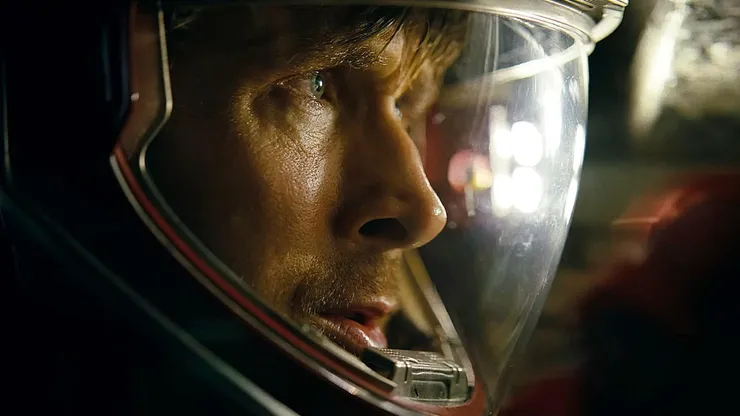
This plot point served its purpose on the page, but the picture strips away the DNA-testing subplots in favor of a much more immediate, tragic scenario: a catastrophic accident that leaves Grace as the only scientist suited for the journey.
This shift in the narrative engine does more than just simplify the plot; it deepens the character’s isolation and the moral gray area of the mission. Sandra Hüller’s Eva Stratt delivers the cold, pragmatic blow in the movie, noting that Grace is the perfect candidate not because of his bloodwork, but because he has no family or dependents to mourn him.
Weir acknowledges that the filmmaking team “came up with a way to have Ryland be on the ship without having that coma gene,” a move that reframes the character from a genetically special chosen one into an ordinary man forced by circumstance to do the extraordinary.
The writer openly embraced the change, recognizing that the directors found a path to the same narrative urgency without leaning on what he described as a “little made-up side science” that he felt forced to invent for the book’s internal logic. He admits that the original concept “always felt a little contrived” to him, and expresses a genuine relief that the cinematic team found a way to bypass it.
By prioritizing human stakes over biological convenience, the film transforms Ryland Grace’s journey into something far more relatable and harrowing. It is a subtle shift that resonates more deeply in a theater, where the character’s vulnerability and lack of specialness make his eventual heroism feel earned rather than predestined.