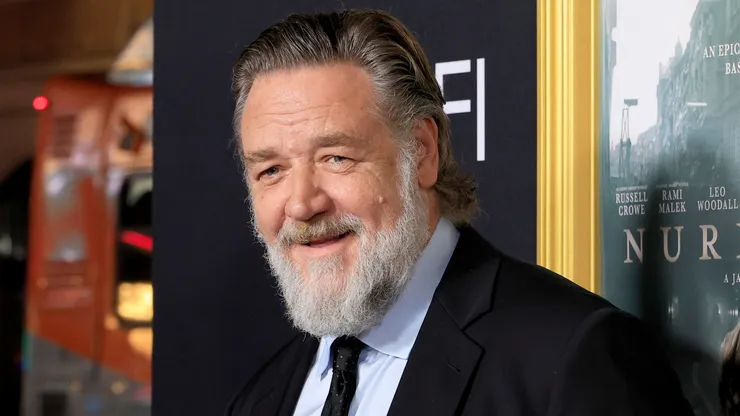
Russell Crowe’s Hollywood career has been defined by bold choices, intense roles, and a reputation for fully committing to characters that demand emotional depth and physical transformation.
Yet even for an actor of his stature, there are decisions that linger in hindsight, projects that could have taken his legacy in a different direction. One of the most talked-about among them is his missed opportunity to portray music legend Johnny Cash on the big screen.
Why Russell Crowe Walked Away From Playing Johnny Cash
Russell Crowe has openly reflected on the emotional conflict that came with the offer. While he saw the role as a dream opportunity, he also questioned the implications of portraying such an iconic figure. As he explained: “It was one of those curious things with an internal moral; it was like: ‘This is the job of my dreams’”.
Yet admiration for Cash wasn’t the issue—it was the fear of crossing an artistic line that made him hesitate. He admitted he worried the performance could be interpreted as opportunistic, as if he were benefiting from someone else’s legacy.
He wondered whether his interpretation would be perceived as a way of taking advantage of Johnny Cash’s fame, adding that it would feel like “receiving things I hadn’t earned” and that he might be “taking advantage of Johnny Cash to get Grammy nominations or something, it just didn’t feel right”.
Joaquin Phoenix’s Performance and Crowe’s Reaction
When Walk the Line was finally released with Joaquin Phoenix in the lead role, the film received critical praise, particularly for Phoenix’s transformative performance as Johnny Cash. Crowe himself was among those impressed by the final result, even if it came with a sense of bittersweet reflection.
“I know he’s one of the best actors at the moment, so the fact that he did an incredible job doesn’t surprise me at all. From the first notes when the soundtrack starts, I felt a pang in my heart. My God, not only did I want to make the film, but this was exactly the version I wanted to make”.
His reaction highlights a unique Hollywood reality: even when a role is lost, the artistic connection to it doesn’t necessarily disappear. For Crowe, the experience remains a mixture of admiration, regret and “what could have been”—a reminder of how one decision can subtly reshape a career’s narrative.