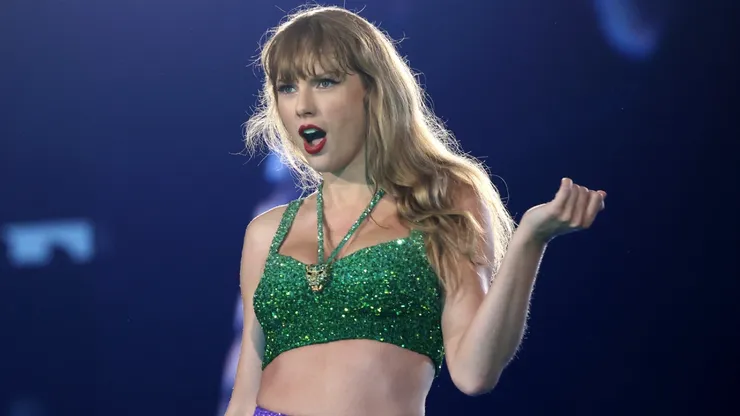
The milestone marked the end of a years long dispute over the recordings that launched her career and gave her full control of a catalog that had become central to a wider conversation about artists’ rights.
Swift finalized the acquisition of her original recordings from Shamrock Capital in May 2025, bringing a lengthy chapter to a close.
A Fight That Reshaped the Conversation Around Music Ownership
The road to that moment began in 2019, when Big Machine Records, the label that released Swift’s first six studio albums, was sold to music executive Scooter Braun‘s Ithaca Holdings. Included in the transaction were the master recordings of Swift’s early work, setting off a highly publicized disagreement over who controlled some of the most valuable recordings in contemporary music.
The situation evolved again in late 2020 when Braun sold the catalog to private equity firm Shamrock Capital. While ownership had changed hands, Swift still did not possess the recordings herself. Rather than wait for another opportunity to purchase them, she pursued a different strategy that would eventually redefine the dispute.
That strategy became the foundation of the “Taylor’s Version” era. Beginning with “Fearless (Taylor’s Version)” in 2021, Swift started re-recording the albums she originally released under Big Machine. The project expanded with new versions of Red, Speak Now, and 1989, each becoming major commercial successes while directing attention back to music she could fully control.
The re-recordings accomplished more than preserving revenue streams. They transformed a contract dispute into a cultural event, encouraging fans to support the newly recorded editions and turning ownership rights into a mainstream topic of discussion. What began as a business conflict evolved into a broader conversation about how artists manage and protect their creative work.
In May 2025, following the conclusion of the record breaking Eras Tour, Swift ultimately secured the outcome she had sought for years. By purchasing the masters, along with associated videos and artwork, from Shamrock Capital for an estimated $360 million, she gained ownership of the recordings that had been at the center of the dispute. One year later, the deal remains a landmark moment not only in Swift’s career but also in the ongoing discussion about artist control in the music business.