At 48, Jessica Chastain stands not merely as an actress with a résumé of memorable roles, but as one of the most compelling forces shaping contemporary cinema.
From her breakthrough in gritty dramas that chart the emotional terrain of real lives to her chameleonic transformations in biographical and genre fare, her career charts a rare arc of both critical acclaim and fearless choice.
Over more than a decade on the global stage, she has woven through narratives of power, vulnerability, obsession and reinvention, earning an Academy Award along the way while continually expanding what audiences expect from a leading woman in Hollywood.
Zero Dark Thirty (2012) – Maya Harris
In Zero Dark Thirty, Jessica Chastain delivers one of her most career‑defining performances as Maya Harris, a determined CIA intelligence analyst at the heart of the decade‑long manhunt for Osama bin Laden.
Under Kathryn Bigelow’s taut direction and Mark Boal’s rigorous script, Chastain’s Mayer isn’t a caricature of espionage brilliance but a forensic, unrelenting presence whose psychological depth and tactical precision drive the film’s pulse.
Her portrayal anchors the narrative with a heady mix of obsession and vulnerability, transforming what could have been a procedural archetype into a portrait of layered resilience.
Critics widely praised this turn for its precision and fearlessness, resulting in Chastain winning the Golden Globe for Best Actress and earning her first Academy Award nomination in the category.
Maya’s workaday intensity, often expressed in minimalistic facial language and stormy silences, makes her feel less like a spy in a thriller and more like a human mosaic of ambition and fatigue, embodying the psychological costs of a war fought in data and shadows.
The Eyes of Tammy Faye (2021) – Tammy Faye Bakker
In this biographical drama, Chastain undertakes a complete physical and emotional metamorphosis to portray televangelist Tammy Faye Bakker, a figure both embodied and mythologized in American popular culture.
Her performance is a study in contrasts: through Tammy’s extravagant makeup and flamboyant public persona, Chastain reveals an interior life of insecurity, joy, and spiritual longing.
While the film received mixed reviews as a whole, her performance was consistently highlighted as magnetic and deeply invested, showcasing Chastain’s talent for navigating roles that demand both bravado and tenderness.
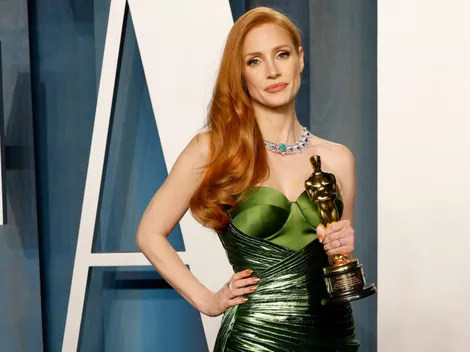
Her commitment to capturing Tammy Faye’s distinct voice and emotional complexity culminated in winning the Academy Award for Best Actress, a testament to a performance that radiates both spectacle and sincerity.
By making Tammy human—with all her contradictions and heartfelt beliefs—Chastain transformed a polarizing cultural icon into a figure of genuine empathy, reshaping how audiences connect with both the woman and the myth.
Molly’s Game (2017) – Molly Bloom
Aaron Sorkin’s directorial debut placed Chastain at the center of a true‑crime drama that marries bracing wit with character study. In Molly’s Game, she portrays Molly Bloom, a former Olympic skier who rises to run one of the world’s most exclusive underground poker games, only to face legal and personal consequence for her ambitions.
Chastain’s delivery—sharp, resilient, and alive to every beat of Sorkin’s dense dialogue—turns Bloom into an adrenaline‑infused, self‑aware force whose flaws and strengths are never easy to disentangle.
Beyond the rapid pacing and courtroom tension, Chastain invests Bloom with a vulnerability that reveals the emotional cost of relentless ambition. Her performance is more than a tour through clever banter; it’s a layered excavation of a woman wrestling with agency, regret, and reinvention. In doing so, she avoids archetype entirely, crafting a truly modern antiheroine for the screen.
Interstellar (2014) – Adult Murph Cooper
In Christopher Nolan’s epic Interstellar, Chastain anchors the emotional core of a sprawling speculative adventure with her portrayal of Murph Cooper, the daughter whose scientific brilliance and emotional persistence both advance and haunt the narrative.
While the film itself traverses cosmic wonders and speculative physics, it’s Chastain’s grounded performance—particularly her dynamic interplay with the themes of love, time, and loss—that keeps the story tethered to humanity.
Her Murph shifts from resentment toward quiet determination as she decodes physics and familial tension, revealing immense inner strength baked into every scientific insight.
What makes this role distinctive is how Chastain conveys intellectual intensity without sacrificing emotional texture: her Murph is constantly oscillating between heartbreak over abandoned familial bonds and ecstatic clarity upon solving the equation that might save humanity.
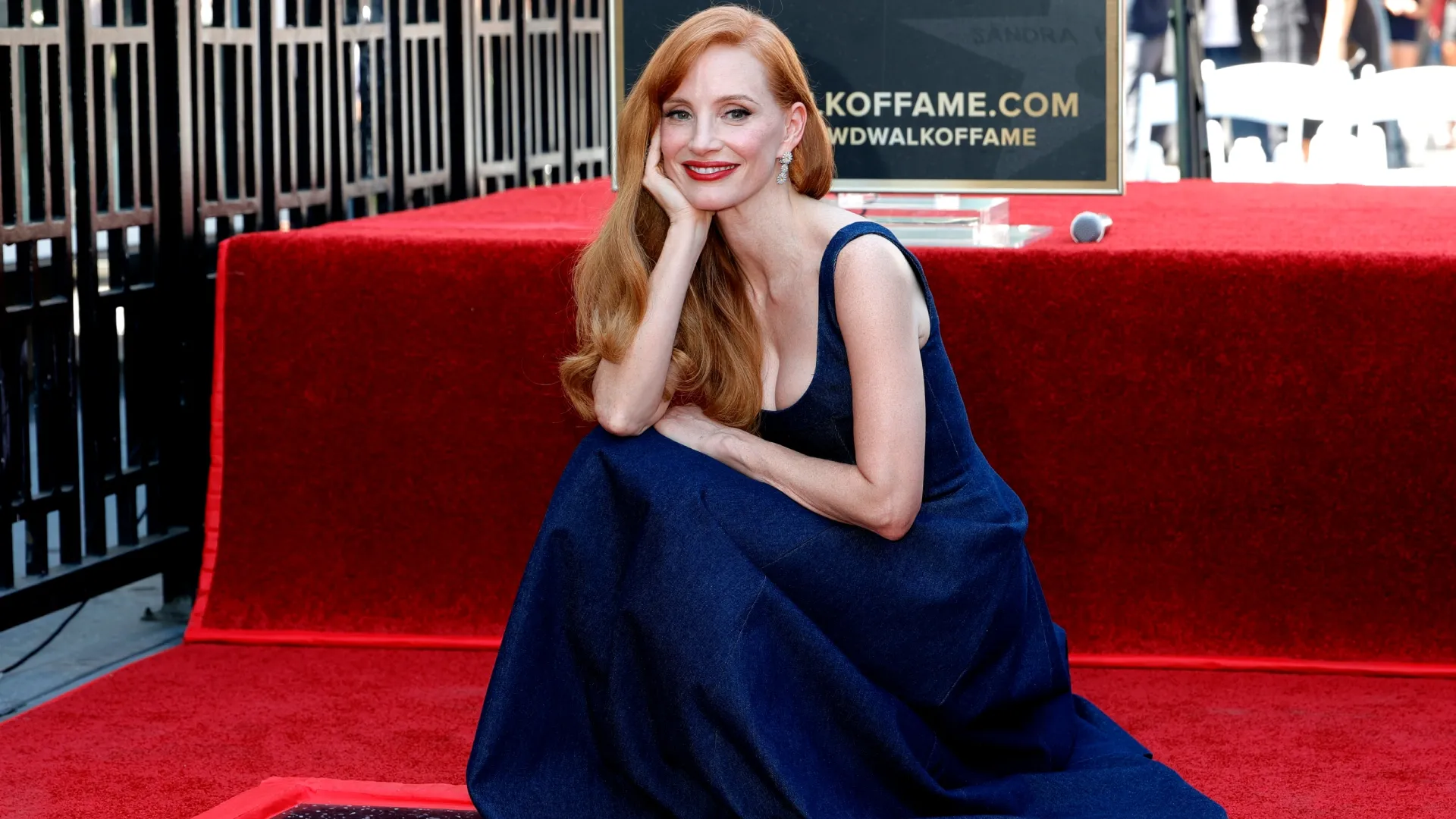
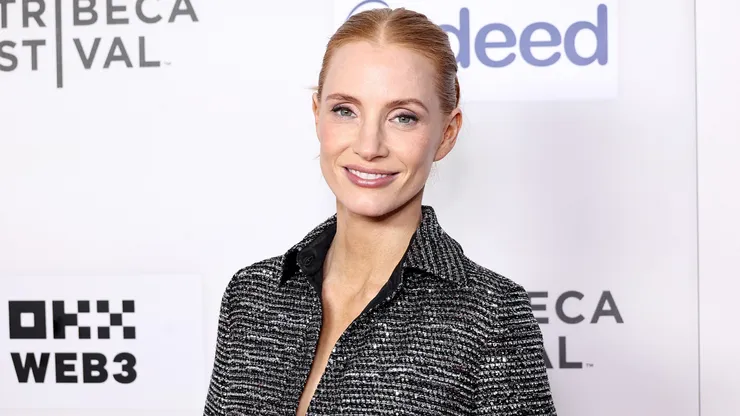
Jessica Chastain attends her Hollywood Walk of Fame Star Ceremony in 2025 (Source: Frazer Harrison/Getty Images)
The Help (2011) – Celia Foote
Set against the fraught racial tensions of 1960s Mississippi, The Help features Chastain as Celia Foote, a society outcast whose warmth and openness distinguish her in a community defined by rigid norms. Her Celia isn’t simply comic relief or a foil; she embodies a hopeful, if sometimes naive, generosity that turns social exclusion into personal resilience.
Chastain’s work here delivers a kinetic blend of charm and depth, making Celia’s efforts to connect across cultural divides both humorous and profoundly humane. Her performance resonated with audiences and critics alike, earning her an Academy Award nomination for Best Supporting Actress.
What makes this role particularly memorable is how Chastain infuses the character with emotional integrity, navigating the complexities of affection and acceptance in a segregated world with both buoyancy and heart.
A Most Violent Year (2014) – Anna Morales
In J.C. Chandor’s atmospheric crime drama set amid the turbulent backdrop of New York City’s most violent year, Chastain portrays Anna Morales, the intelligent and incisive wife and business partner of a small‑time oil entrepreneur.
Her performance is a masterclass in precision: Anna signals strength without bluster, tending to her family and business with a steely calm that undercuts the chaos around her. She becomes, in essence, both moral compass and catalyst, a still point in a narrative saturated with corruption and jeopardy.
Critics recognized her portrayal as one of the film’s standout elements, earning her nominations from major critics’ groups and Golden Globe consideration. Rather than slipping into stereotype, she balances warmth with a razor’s edge, illustrating how restraint and strategy can be just as powerful as overt defiance—especially in a world run by fear and profit.
Take Shelter (2011) – Samantha LaForche
In the eerie psychological drama Take Shelter, Chastain plays Samantha LaForche, the devoted wife of a man beset by apocalyptic visions. Though much of the film’s tension centers on her husband’s unraveling psyche, Chastain’s performance offers an emotional anchor, investing Samantha with a palpable, quietly mounting concern that gives the narrative its profound emotional resonance.
She navigates her character’s growing dread with nuanced poise, embodying a partner caught between love, loyalty, and fear of the unknown. Unlike conventional thrillers, Take Shelter leans heavily on internal tension rather than episodic shocks.
Within this framework, Chastain’s layered performance becomes a study of emotional containment—her smallest gestures reverberate with moral complexity, illuminating themes of trust and vulnerability in the face of psychological uncertainty.
The Tree of Life (2011) – Mrs. O’Brien
Terrence Malick’s The Tree of Life is less a conventional film than a poetic interrogation of memory, faith, and familial love. In this landscape of impressionistic storytelling, Chastain’s role as Mrs. O’Brien stands out as luminous and expressive, offering warmth and spiritual curiosity alongside Brad Pitt’s more austere patriarch.
Her presence almost feels like a living “grace note,” infusing every frame with contemplation, compassion, and a maternal aura that transcends speech itself. Her performance functions as a fulcrum between the cosmic imagery and the intimate drama at the film’s core, appealing not through melodrama but through breath and quiet presence.
Observers have described her embodiment of the role as a rare blend of serenity and subtle emotional force, anchoring Malick’s ambitious narrative in a human experience that feels both universal and deeply personal.
The Disappearance of Eleanor Rigby: Her (2013) – Eleanor Rigby
In this unique triptych of films by Ned Benson, Chastain’s portrayal of Eleanor Rigby redefines the cinematic love story through a singular lens: that of a woman grappling with grief, identity, and self‑rediscovery after profound loss.
Unlike standard romantic dramas, the Her version centers Eleanor’s subjective experience, tracing her emotional fractures and reconciliations with intimate intensity.
Chastain’s performance captures the character’s collision of sorrow and resilience with courage and complexity, creating a portrait of heartbreak that feels as deeply human as it is unsparing.
The film’s reception acknowledged the strength of her work, often cited as the emotional anchor that elevates the project beyond structural ingenuity. Her performance is less about dramatic flourish and more about the raw economy of feeling: each glance, pause, and breath reflects a nuanced inquiry into how love persists even as it reshapes itself through loss.
The Good Nurse (2022) – Amy Loughren
Jessica Chastain’s turn as Amy Loughren in The Good Nurse is a quiet yet shattering study in moral courage. Based on the real nurse whose intuition and bravery helped expose one of the most notorious serial killers in American medical history, Chastain gives Loughren an emotional depth that communicates both professional dedication and personal vulnerability.
As a single mother battling a serious heart condition while caring for patients, her performance is as much about inner fortitude as it is about confronting unimaginable betrayal.
Chastain’s nuanced approach grounds the film’s true‑crime framework in human stakes; her Amy isn’t a caricature of heroism but a woman whose empathy and resilience ultimately drive the narrative toward justice.
Through meticulous detail and emotional subtlety, she turns a story of horror into a testament to courage under pressure, reminding audiences that bravery often arrives in quiet, unassuming forms.