As we celebrate National Science Fiction Day—timed to honor the birth of the legendary Isaac Asimov—we look back at the genre that has always been the vanguard of cinematic innovation. Sci-fi is more than just “space movies”; it is a mirror held up to humanity, reflecting our deepest anxieties about technology and our wildest dreams of the stars. The following ten films didn’t just entertain audiences; they shattered technical glass ceilings and forced the industry to rethink what was possible on a projection screen.
Metropolis (1927)

Fritz Lang’s silent masterpiece remains the foundational DNA for almost every urban dystopia captured on film over the last century. Its staggering scale and expressionist architecture introduced the concept of the “city of the future” as a character in its own right. By blending social commentary with groundbreaking practical effects, Lang proved that science fiction could be a profound vehicle for political allegory.
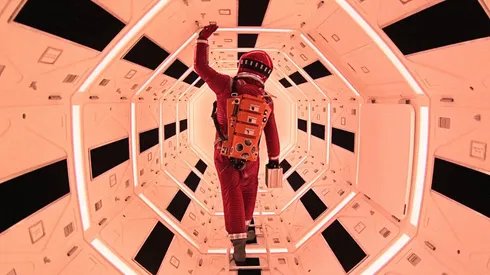
2001: A Space Odyssey (1968)
Stanley Kubrick stripped away the campiness of 1950s rockets to deliver a transcendental, philosophical epic that still looks modern decades later. The film’s Star Gate sequence pushed slit-scan photography to its limit, creating a visual trip that redefined the theatrical experience as something purely sensory. It remains the gold standard for realism in orbital mechanics and the chilling potential of artificial intelligence.
Star Wars: Episode IV – A New Hope (1977)
George Lucas didn’t just launch a franchise; he birthed the modern blockbuster and the “lived-in” aesthetic of a galaxy far, far away. By utilizing motion-control photography and intricate miniatures, Industrial Light & Magic fundamentally changed how action sequences were choreographed. This film shifted the industry’s focus toward high-concept merchandising and the power of the hero’s journey in a cosmic setting.
Alien (1979)
Ridley Scott masterfully pivoted the genre into the realm of claustrophobic body horror, proving that space could be terrifyingly intimate. The design of the Nostromo, combined with H.R. Giger’s biomechanical creature, created a visceral nightmare that felt disturbingly organic. It broke the mold by featuring a blue-collar crew and a female protagonist who subverted every trope of the era.
Blade Runner (1982)
The rain-slicked, neon-noir aesthetic of this film effectively invented the cyberpunk subgenre as we know it today. While it struggled at the box office initially, its philosophical inquiry into what constitutes a soul eventually cemented it as a cult phenomenon. The practical world-building and Vangelis’s haunting score created an atmosphere so thick you could almost breathe the smog.
Terminator 2: Judgment Day (1991)
James Cameron pushed the digital envelope by introducing the T-1000, a liquid-metal shapeshifter that signaled the arrival of the CGI revolution. This sequel balanced high-octane practical stunts with seamless computer-generated imagery in a way that had never been seen before. It proved that digital effects could be used to create characters with physical presence, forever changing the workflow of Hollywood post-production.
Jurassic Park (1993)
While often categorized as an adventure film, Steven Spielberg’s adaptation of Michael Crichton’s techno-thriller is the ultimate science gone wrong cautionary tale. The blend of Stan Winston’s animatronics and ILM’s digital dinosaurs created a sense of awe that remains the benchmark for creature features. When those raptors appeared on screen, the line between reality and animation vanished for audiences worldwide.
The Matrix (1999)
The Wachowskis fused Hong Kong action cinema with high-concept simulation theory to create a visual language that defined the turn of the millennium. “Bullet time” became an instant cultural shorthand, utilizing a rig of still cameras to manipulate time and space in a way that felt like a living comic book. It forced cinema to reckon with the digital age, both in its narrative themes and its technical execution.
Children of Men (2006)
Alfonso Cuarón’s vision of a fertile-less future brought a gritty, documentary-style realism to the genre through the use of breathtaking long takes. These “oners” immersed the viewer in a chaotic, decaying world, stripping away the shiny polish of traditional sci-fi in favor of raw human desperation. The film’s technical mastery lies in its ability to make the impossible look like a news broadcast from a nightmare.
Avatar (2009)
The sheer technical audacity of James Cameron’s journey to Pandora cannot be overstated. By pioneering performance capture and a custom-built 3D camera system, it transformed the way actors interact with digital environments. It served as the ultimate proof of concept for the virtual production techniques that now dominate modern filmmaking.