Every awards season crowns a winner, but history doesn’t always agree with the Academy’s final choice. Over time, certain performances that walked away empty handed have only grown in reputation, shaping careers, influencing future actors, and becoming cultural touchstones in their own right. Here are ten performances that ultimately became more iconic than the ones that took home the trophy.
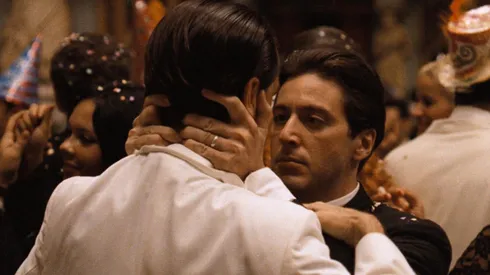
Al Pacino in ‘The Godfather Part II’

Al Pacino’s turn as Michael Corleone in “The Godfather Part II” has grown into a performance that defines cinematic excellence, far eclipsing the Oscar-winning work of Art Carney in “Harry and Tonto.”
At the time, Carney’s victory surprised many, as he bested Pacino, Jack Nicholson, Dustin Hoffman, and Albert Finney in a year full of legendary performances. Pacino’s portrayal of a calculating and tragic mob boss has since become a cultural touchstone, shaping how audiences and filmmakers alike think about nuanced character work.
Judy Garland in ‘A Star Is Born’
Judy Garland’s performance in “A Star Is Born” remains one of the most powerful and enduring in Hollywood history, outshining Grace Kelly’s Oscar-winning work in “The Country Girl.”
Garland embodied raw emotion and resilience, delivering a career-defining turn highlighted by the unforgettable musical number “The Man That Got Away.” While Kelly’s Oscar recognized her ability to break away from her ice princess image, Garland’s role is celebrated as a masterclass in both acting and singing, solidifying her status as a cultural icon.
Ralph Fiennes in ‘Schindler’s List’
Ralph Fiennes’ chilling portrayal of Amon Goeth in “Schindler’s List” stands as one of the most haunting and unforgettable villain performances in film history, eclipsing Tommy Lee Jones’s Oscar-winning work in “The Fugitive.”
Fiennes brought a terrifying precision and icy detachment to the role, creating a character so convincingly monstrous that it left an indelible impression on audiences and critics alike. While Jones delivered a charismatic and scene-stealing performance as Sam Gerard, Fiennes’s Goeth is remembered for its psychological depth, moral horror, and transformative intensity.
Angela Lansbury in ‘The Manchurian Candidate’
Angela Lansbury delivered a performance as Eleanor Shaw in “The Manchurian Candidate” that remains one of the most memorable and chilling villain portrayals in film history, outshining Patty Duke’s Oscar-winning turn in “The Miracle Worker.”
Lansbury created a manipulative and calculating character whose cunning and ambition left audiences both captivated and unsettled, made even more striking by the fact that she was only slightly older than her on-screen son. While Duke’s performance was celebrated at the time for its emotional flair, Lansbury’s role has endured as a touchstone of cinematic villainy, often referenced and admired decades later. The part not only elevated the film’s status as a Cold War masterpiece but also solidified Lansbury’s reputation as an actress of extraordinary range.
Robert De Niro in ‘Taxi Driver’
Robert De Niro’s performance as Travis Bickle in “Taxi Driver” has cemented itself as one of the most recognizable and enduring images in film history, overshadowing Peter Finch’s Oscar-winning turn as Howard Beale in “Network.”
While Finch delivered a powerhouse performance capped by the unforgettable “I’m mad as hell” speech, it is De Niro’s quiet intensity and striking physical presence—the Mohawk, army jacket, and aviator glasses—that have left an indelible mark on popular culture. The “You talkin’ to me?” scene alone has been endlessly referenced and parodied, turning Bickle into an archetype for alienation and obsession that transcends the film itself.
Gloria Swanson in ‘Sunset Boulevard’
Gloria Swanson’s portrayal of Norma Desmond in “Sunset Boulevard” stands as one of the most unforgettable performances in film history, outshining Judy Holliday’s Oscar-winning role in “Born Yesterday.”
Swanson’s performance as the delusional, faded silent film star created an archetype that continues to define Hollywood mythology, with lines like “I am big! It’s the pictures that got small!” and “All right, Mr. DeMille, I’m ready for my close-up” entering the cultural lexicon. Bringing her own silent film experience to the role, Swanson delivered a deeply personal and groundbreaking performance that has inspired generations of actors and critics alike.
Michael Clarke Duncan in ‘The Green Mile’
Michael Clarke Duncan’s portrayal of John Coffey in “The Green Mile” has become one of the most emotionally resonant and enduring performances of the late 1990s, overshadowing Michael Caine’s Oscar-winning work in “The Cider House Rules.”
Duncan brought a profound humanity and gentle strength to Coffey, transforming him from a physically imposing figure into a character of deep compassion and unforgettable presence. The role marked a breakthrough in Duncan’s career, turning him from a supporting actor into a widely recognized dramatic talent, and the character remains a touchstone for audiences decades later. While Caine’s performance was respected and earned him a second Oscar, it is Duncan’s John Coffey that continues to linger in the cultural imagination as a symbol of innocence, kindness, and quiet heroism.
Ellen Burstyn in ‘Requiem for a Dream’
Ellen Burstyn’s performance in “Requiem for a Dream” stands as one of the most intense and unforgettable portrayals of human despair in modern cinema, outshining Julia Roberts’ Oscar-winning role in “Erin Brockovich” in terms of critical reverence.
Burstyn fully inhabits the harrowing descent of her character into addiction, delivering a raw, transformative performance that continues to be studied and celebrated by actors and critics alike. While Roberts’ win marked a high point in her star-studded career and became a defining cultural moment of the early 2000s, Burstyn’s work is remembered as a daring artistic achievement, pushing the boundaries of emotional authenticity on screen.
Denzel Washington in ‘Malcolm X’
Denzel Washington’s transformation into “Malcolm X” is widely celebrated as one of the most powerful and defining performances of his career, surpassing Al Pacino’s Oscar-winning work in “Scent of a Woman” in terms of lasting impact.
Washington embodied the civil rights leader with commanding presence, nuance, and intensity, creating a performance that has become a touchstone in both film and cultural history. While Pacino’s win is often viewed as a makeup Oscar for previous oversights, Washington’s portrayal is recognized for its historical significance and transformative depth.
Samuel L. Jackson in ‘Pulp Fiction’
Samuel L. Jackson’s portrayal of Jules Winnfield in “Pulp Fiction” has become one of the most instantly recognizable and influential performances of the 1990s, far outshining Martin Landau’s Oscar-winning role in “Ed Wood” in terms of pop culture impact.
Jackson turned Jules into a larger-than-life presence with his iconic “Ezekiel 25:17” monologue and effortless cool, cementing the character as a touchstone of modern cinema. While Landau’s performance as Bela Lugosi was lauded by critics and earned the Academy Award for its subtlety and nuance, it has not achieved the same enduring recognition in mainstream culture.