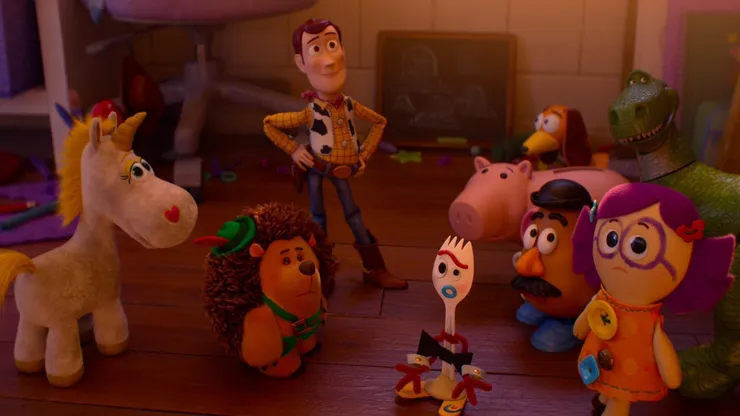
The film currently holds a 93% critics score on Rotten Tomatoes, extending a remarkable streak for a franchise that has rarely fallen out of favor with reviewers.
That score, however, does not put the newest installment at the top of the series. Instead, it lands “Toy Story 5” near the bottom of a series whose standards have remained unusually high for more than three decades. Audience reactions tell a slightly different story, with the latest chapter earning a 95% audience score, the strongest audience reception of any mainline “Toy Story” picture so far.
How ‘Toy Story 5’ Compares to the Previous Movies
Measured by critics’ scores on Rotten Tomatoes, the original “Toy Story” and “Toy Story 2” remain tied for first place with perfect 100% ratings. Those films continue to set the benchmark for the franchise and are among the most celebrated animated features ever released.
The next highest-ranked entry is “Toy Story 3,” which holds a 98% critics score. The 2010 title was widely praised for delivering an emotionally resonant conclusion to the saga at the time, and it remains one of Pixar’s most acclaimed releases.
“Toy Story 4” follows closely behind with a 97% critics score. Despite questions before its release about whether the franchise needed another sequel, the film earned strong reviews and eventually became one of the best-reviewed entries in the series.
That leaves “Toy Story 5” in fifth place among the five mainline movies, with its 93% critics rating. While that ranking may appear modest compared to its predecessors, the score still places it comfortably within Rotten Tomatoes’ “Certified Fresh” territory and well above the threshold most studios would consider a success.
Audience scores paint a different picture. “Toy Story” stands at 92%, “Toy Story 2” at 87%, “Toy Story 3” at 90%, and “Toy Story 4” at 94%. With a 95% audience rating, “Toy Story 5” currently leads the franchise among moviegoers. The film centers on Jessie, Woody, and Buzz confronting a new challenge as Bonnie becomes attached to a tablet named Lilypad, reflecting the story’s broader focus on technology’s growing role in childhood play.