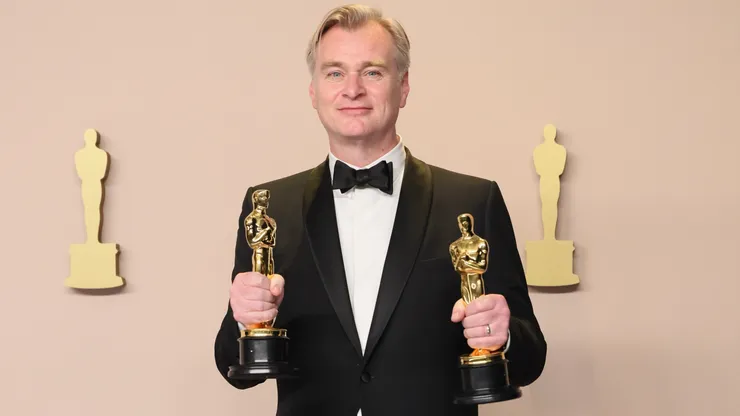
If there is one filmmaker in modern Hollywood who has earned the right to lecture studios on how to handle a massive budget, it’s Christopher Nolan. From delivering a near-billion-dollar biographical drama about a theoretical physicist in Oppenheimer to convincing executives to spend $160 million on an original script about dream-heists (Inception), Nolan has continually proven that audiences will reward intellectual ambition.
With his massive, star-studded adaptation of The Odyssey swinging into theaters next month, the Oscar-winning director sat down for a wide-ranging, candid interview with The New York Times.
Nolan didn’t hold back, directly addressing Hollywood’s current era of franchise fatigue, formulaic writing, and corporate risk aversion. According to the director, the industry’s current obsession with recycling familiar intellectual property under the guise of financial safety is fundamentally broken.
The Illusion of Safety: “The Audience Is Looking for Something New”
In the interview, Nolan challenged the core philosophy governing modern studio boardrooms. As production budgets balloon, financiers routinely lean on safe bets—sequels, remakes, and tightly monitored creative formulas—to protect their bottom lines. Nolan argues that this exact line of thinking achieves the exact opposite result.
“If you’re really interested in movies and the history of movies, the one thing you see absolutely is that you have to take risks to succeed,” Nolan explained. “The biggest risk with blockbuster films is to play it safe.”
When asked why studios continue to struggle to recapture the cultural lightning-in-a-bottle of past eras, his assessment was blunt:
“[It] doesn’t work. The audience is looking for something new.”
To ground his point, Nolan reflected on his 2000 breakthrough thriller, Memento. He recalled pitching the reverse-chronological screenplay to his wife and producing partner, Emma Thomas. While she loved the script, she initially worried that the unconventional, backward storytelling structure was a massive gamble that might alienate distributors.
Nolan countered that the formal risk was exactly what would make the movie stand out. While distributors initially “didn’t get it,” the audience ultimately did. For Nolan, the true gamble isn’t the moviegoers—it’s the gatekeepers. “The risk is the intermediaries—the financiers, the studio,” he noted. “If you can get to the audience… in the past we’ve been well rewarded for having faith in them.”
The 12-Time ‘Star Wars’ Experience: The Pure Essence of Cinema
Nolan’s unwavering belief in the power of immersive, original world-building isn’t just a professional stance; it’s rooted in his earliest cinematic memories. During the NYT conversation, the director revealed a delightful piece of personal trivia that perfectly encapsulates his love for the theatrical experience: Christopher Nolan watched STAR WARS 12 times in theaters when it was first released.
For a young Nolan sitting in the dark in 1977, George Lucas’s space opera wasn’t just entertainment—it was a spiritual awakening regarding what the silver screen was capable of achieving.
“That, for me, was just the essence of this medium — create an entire world that you can understand and live in, that’s absolutely different from everyday life. That’s the great joy of movies.”
Betting on ‘The Odyssey’
Nolan’s comments carry an immense amount of weight as the industry prepares for the July release of The Odyssey. While some internet critics have pointed out the slight irony of a director preaching “originality” while adapting a 2,700-year-old epic poem by Homer, film purists know exactly what Nolan means. The risk doesn’t lie in the familiarity of the source material; it lies in the refusal to compromise on scale, narrative complexity, and practical filmmaking.
By prioritizing formal innovation, real locations, and trusting the intelligence of the person sitting in the auditorium, Christopher Nolan continues to show Hollywood that the safest path to immortality is to step completely off the beaten path.