The 1990s represented a unique “Goldilocks” period in cinema history, where the unchecked imagination of the blockbuster era met the refined grit of the independent film revolution. It was a decade where practical effects reached their zenith just as digital sorcery began to hint at the future, resulting in movies that feel tactile, authentic, and remarkably durable. Whether it was the birth of the “Cool Crime” genre or the peak of the high-concept thriller, the films of this era captured a specific lightning in a bottle that modern algorithms often fail to replicate. As we look back from 2026, these 25 masterpieces haven’t just survived the passage of time—they have matured into the definitive blueprints for everything we love about the silver screen today.
Pulp Fiction (1994)
Quentin Tarantino’s non-linear crime opus didn’t just win the Palme d’Or; it completely rewrote the rulebook for cinematic dialogue and structural storytelling. By weaving together the mundane conversations of hitmen with a hyper-stylized world of “Royales with Cheese” and adrenaline shots, the film transformed independent cinema into a global powerhouse. Even decades later, the electric chemistry between John Travolta and Samuel L. Jackson remains the gold standard for on-screen charisma and cool.
The Matrix (1994)
Released at the very tail end of the millennium, the Wachowskis’ cyberpunk masterpiece anticipated the digital anxieties of the 21st century with uncanny precision. Its introduction of “bullet time” revolutionized action choreography, but it is the film’s philosophical depth regarding simulated reality that keeps it evergreen. As we navigate our own modern eras of AI and virtual landscapes, the choice between the red and blue pill feels more like a contemporary necessity than a sci-fi trope.
Jurassic Park (1993)
Steven Spielberg’s prehistoric adventure remains a technical marvel that puts many modern, over-saturated CGI blockbusters to shame. By masterfully blending Stan Winston’s tactile animatronics with groundbreaking digital effects from ILM, the film created dinosaurs that feel heavy, dangerous, and terrifyingly real. It is a cautionary tale about scientific hubris that continues to thrill audiences, proving that great storytelling and revolutionary tech are a timeless combination.
The Silence of the Lambs (1991)
This remains the only horror-adjacent thriller to sweep the “Big Five” Academy Awards, and for good reason: it is a masterclass in psychological tension. Jodie Foster’s steely vulnerability as Clarice Starling provides the perfect foil to Anthony Hopkins’ elegant, skin-crawling portrayal of Hannibal Lecter. The film eschews cheap jump scares for a lingering, cerebral dread that explores the darkness of the human psyche with surgical, unforgettable precision.
Goodfellas (1990)
Martin Scorsese’s kinetic, cocaine-fueled look at the life of Henry Hill is arguably the greatest mob movie ever made, characterized by its breakneck pace and legendary long takes. The film captures the seductive allure of the lifestyle before documenting its inevitable, violent collapse with unblinking honesty. From the “Funny how?” scene to the frantic final day as a wiseguy, the performances by Ray Liotta and Joe Pesci crackle with a dangerous, unpredictable energy.
The Shawshank Redemption (1994)
Initially a box-office disappointment, this adaptation of a Stephen King novella found its immortality on home video and cable television to become the internet’s favorite film. It is a patient, soul-stirring meditation on hope, institutionalization, and the quiet power of friendship behind prison walls. Morgan Freeman’s iconic narration and Tim Robbins’ resilient performance culminate in a final act that offers one of the most earned and satisfying payoffs in movie history.
Seven (1995)
David Fincher’s nihilistic masterpiece took the “buddy cop” genre and dragged it into a rain-slicked, industrial hellscape that felt entirely original. The film’s grim aesthetic and obsession with the seven deadly sins build toward a climax that remains one of the most gut-wrenching twists in the medium. It solidified Brad Pitt as a serious actor and established Fincher as a director capable of finding a haunting, terrifying beauty in the darkest corners of urban decay.
Fight Club (1999)
A biting satire of consumerist culture and the crisis of modern masculinity, this film was wildly misunderstood upon its release but has since become a cult phenomenon. The visceral fight scenes are merely the entry point for a much deeper, more chaotic exploration of identity and corporate burnout. As the world becomes increasingly commodified, the anarchic philosophy of Tyler Durden continues to provoke and challenge viewers to question the systems they inhabit.
Toy Story (1995)
The film that launched Pixar and changed the face of animation forever is anchored by a screenplay that treats its toy protagonists with the emotional complexity of adult humans. Beyond being the first fully computer-animated feature, it is a timeless story about the fear of being replaced and the necessity of finding common ground. The rivalry-turned-friendship between Woody and Buzz Lightyear remains a cornerstone of the American cinematic experience for children and adults alike.
Saving Private Ryan (1998)
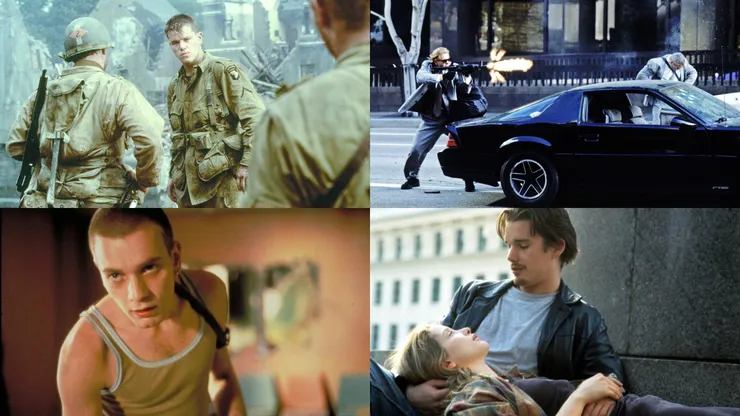
The opening twenty minutes of Steven Spielberg’s war epic redefined the way combat is depicted on screen, stripping away Hollywood romanticism for a visceral, terrifying realism. By using desaturated colors and handheld cameras, the film places the audience directly onto the blood-soaked sands of Omaha Beach. It is a hauntingly beautiful tribute to the “Greatest Generation” that balances its massive scale with an intimate, moving story of duty and sacrifice.
Schindlers List (1993)
Filmed in stark black-and-white, Spielberg’s most personal work serves as both a harrowing historical document and a profound exploration of the individual’s capacity for good. Liam Neeson delivers a career-best performance as a flawed businessman who finds his conscience amidst the unimaginable horrors of the Holocaust. It is a difficult, essential piece of art that reminds us that “he who saves one life, saves the world entire,” a message that never loses its urgency.
Heat (1995)
Michael Mann’s sprawling Los Angeles crime saga gave audiences the historic first on-screen pairing of Al Pacino and Robert De Niro. The film is celebrated for its tactical realism, particularly during the legendary downtown bank heist which remains the benchmark for action filmmaking. However, it is the weary, professional respect between the cop and the criminal that provides the film’s emotional backbone, set against a shimmering, lonely metropolitan backdrop.
Fargo (1996)
The Coen Brothers created a genre all their own with this “homespun noir” that balances gruesome violence with quirky, polite Midwestern charm. Frances McDormand’s portrayal of the pregnant, unflappable Police Chief Marge Gunderson is a breath of fresh air in a genre usually dominated by cynical men. It is a story about the banality of evil and the absurdity of greed, told with a specific, rhythmic wit that has since inspired a successful television anthology.
Scream (1996)
Wes Craven and Kevin Williamson revitalized the dying slasher genre by making the characters—and the movie itself—painfully aware of the “rules” of horror. By combining genuine scares with a meta-commentary on the medium, the film managed to be both a terrifying experience and a sharp cultural satire. It launched a massive franchise, but the original remains the sharpest of the bunch, anchored by a legendary opening sequence that subverted all expectations.
Titanic (1997)
James Cameron’s behemoth was a production plagued by rumors of disaster, only to become a global phenomenon that tied the record for the most Academy Awards. While the central romance between Jack and Rose captured the world’s heart, the film’s second half is a staggering feat of technical filmmaking and mounting dread. It remains a masterclass in how to combine intimate, character-driven storytelling with a massive, historically accurate spectacle that still feels monumental.
The Big Lebowski (1998)
This surreal, bowling-centric noir pastiche from the Coen Brothers is the ultimate “vibe” movie, focusing on a protagonist who just wants his rug back. Jeff Bridges created an immortal icon in “The Dude,” a man whose Zen-like laziness stands in hilarious contrast to the convoluted kidnapping plot swirling around him. It is a film that rewards repeated viewings, with every line of dialogue and strange supporting character contributing to its status as a foundational cult classic.
L.A. Confidential (1997)
A dense, impeccably acted revival of the classic film noir, this movie explores the rot beneath the glitzy surface of 1950s Hollywood. With a stellar ensemble cast including Guy Pearce, Russell Crowe, and Kim Basinger, it weaves a complex web of corruption, celebrity, and police brutality. It is a “grown-up” thriller of the highest order, proving that a well-crafted mystery with deep character motivations will always outshine empty spectacle.
Before Sunrise (1995)
Richard Linklater’s minimalist romance proved that a film consisting almost entirely of two people talking while walking through a city could be utterly spellbinding. Ethan Hawke and Julie Delpy share a natural, effortless chemistry as they navigate the streets of Vienna and the complexities of their own burgeoning connection. It is the beginning of one of cinema’s most beautiful trilogies, capturing the fleeting, electric magic of a single night that changes two lives forever.
Clueless (1995)
Amy Heckerling’s clever update of Jane Austen’s Emma remains the definitive time capsule of mid-90s fashion, slang, and teen culture. Alicia Silverstone’s performance as Cher Horowitz is a masterclass in comedic timing, turning a potentially vapid character into a genuinely well-meaning and lovable protagonist. The film’s wit is razor-sharp, its aesthetic is iconic, and its heart is surprisingly large, making it a perennial favorite for every new generation of viewers.
Groundhog Day (1993)
What began as a high-concept comedy evolved into a profound philosophical exploration of redemption and the nature of the human soul. Bill Murray’s transition from a cynical, misanthropic weatherman to a man of genuine character is handled with perfect comedic and dramatic balance. The “time loop” trope has been copied dozens of times since, but none have matched the original’s intelligence, heart, or Murray’s quintessential deadpan delivery.
Terminator 2: Judgment Day (1991)
James Cameron achieved the rare feat of creating a sequel that expanded upon and arguably surpassed its predecessor in every way. By turning the original film’s antagonist into a protector, the movie added a surprising emotional layer to its high-octane action. The liquid-metal T-1000 remains one of cinema’s most effective villains, and the film’s message about a self-determined future remains a powerful pillar of the sci-fi genre.
Unforgiven (1992)
Clint Eastwood’s elegiac Western served as a deconstruction of the very genre that made him a star, stripping away the myth of the heroic gunslinger. It is a grim, beautiful film about the weight of violence and the impossibility of escaping one’s past. By focusing on the messy, unglamorous reality of killing, Eastwood created a masterpiece that feels like a final word on the Old West, anchored by a chillingly quiet performance.
The Truman Show (1998)
Predicting the rise of reality television and the invasive nature of the surveillance state, this film features Jim Carrey’s first truly successful dramatic turn. It is a brightly colored nightmare about a man whose entire life is a staged television broadcast for a global audience. The film’s exploration of free will and the desire for authenticity in a manufactured world feels more prescient today in our era of social media curation than it did in 1998.
Leon: The Professional (1994)
Luc Besson’s stylish thriller about a lonely hitman and the young girl he takes under his wing is a unique blend of high-intensity action and unconventional emotional bonding. Jean Reno and a very young Natalie Portman share a complex, compelling screen presence that drives the film’s narrative forward. It is punctuated by a legendary, over-the-top performance by Gary Oldman, creating a visceral cinematic experience that remains a standout of the decade’s action output.
Trainspotting (1996)
Danny Boyle’s kinetic, surreal journey through the heroin subculture of Edinburgh used a high-energy soundtrack and bold visuals to depict a subject matter that is usually grimly realistic. Ewan McGregor’s “Choose Life” monologue became the anthem for a disillusioned generation, capturing the frantic highs and devastating lows of addiction. It is a film that moves with the speed of a chemical rush, leaving a lasting impact through its grit, humor, and unapologetic honesty.