A successful reboot requires a delicate balance: maintaining the core DNA of the intellectual property while stripping away outdated tropes. Whether it is a tonal shift from camp to grit, or a technical leap that brings a fantasy world to life, these 25 projects represent the gold standard of the “second chance.” As of 2026, these films and series stand as definitive proof that looking backward can occasionally be the best way for a franchise to move forward.
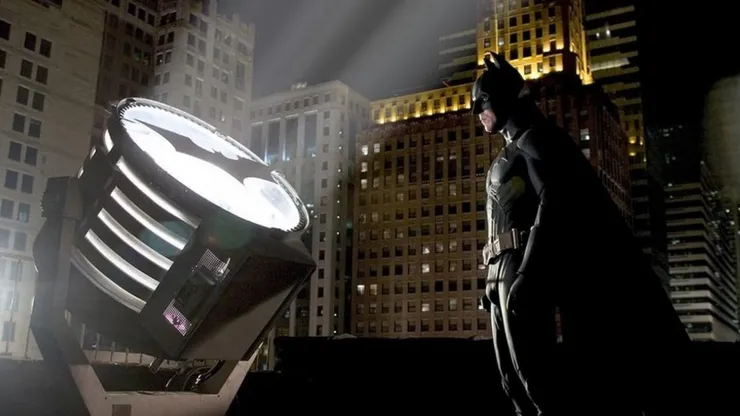
Batman Begins (2005)
After the neon-soaked camp of the late 90s nearly buried the Caped Crusader, Christopher Nolan rescued the franchise by grounding Bruce Wayne in a gritty, tactile reality. By focusing on the psychology of fear and the logistical origins of the Bat-suit, the film traded comic book tropes for a sophisticated crime thriller aesthetic. This tonal pivot not only saved the character but also paved the way for The Dark Knight, arguably the most influential superhero film ever made.
Casino Royale (2006)
James Bond was in desperate need of a refresh following the invisible cars and gadget-heavy antics of the Pierce Brosnan era. Daniel Craig stepped in as a “blunt instrument,” introducing a 007 who bled, felt heartbreak, and lacked the polished invulnerability of his predecessors. By returning to Ian Fleming’s literary roots, the reboot transformed Bond from a caricature into a vulnerable human being, sustaining the franchise for another fifteen years of critical and commercial success.
Star Trek (2009)
J.J. Abrams successfully bridged the gap between die-hard “Trekkies” and casual moviegoers by creating an alternate timeline that allowed for new adventures without erasing the original canon. The casting of Chris Pine and Zachary Quinto captured the essential spirit of Kirk and Spock while injecting the series with a kinetic, high-budget energy it had lacked for decades. It remains a masterclass in how to respect a dense legacy while making it accessible to a modern, action-oriented audience.
Rise of the Planet of the Apes (2011)
Eschewing the prosthetic makeup of the 1968 classic, this reboot utilized groundbreaking motion-capture technology to bring Caesar the ape to life with startling emotional depth. Andy Serkis’s performance provided a soul to the digital effects, shifting the narrative perspective to the animals’ struggle for autonomy. The resulting trilogy is widely considered one of the most consistent and intellectually stimulating sci-fi sagas of the 21st century.
Spider-Man: Homecoming (2017)
Following two separate iterations of the character within a decade, Marvel Studios successfully integrated Peter Parker into the MCU by leaning into the “John Hughes” high school vibe. Tom Holland’s youthful energy and the decision to skip the well-worn Uncle Ben origin story allowed the character to feel fresh again. By focusing on a “neighborhood” hero trying to prove himself to the Avengers, the reboot found a unique emotional hook that justified the character’s third cinematic life.
Mad Max: Fury Road (2015)
George Miller returned to the Wasteland thirty years after his original trilogy to deliver a relentless, high-octane spectacle that redefined the action genre. While Tom Hardy took over as Max Rockatansky, the film succeeded by placing Charlize Theron’s Imperator Furiosa at the heart of the story. Its reliance on practical stunts and vivid, saturated color palettes offered a refreshing alternative to the CGI-heavy blockbusters of the mid-2010s.
It (2017)
The 1990 original was a nostalgic favorite, but the 2017 big-screen reboot delved deeper into the psychological trauma of Stephen King’s novel. Bill Skarsgård’s interpretation of Pennywise provided a more visceral, alien threat compared to Tim Curry’s theatrical clown. By splitting the massive book into two distinct timelines, the first film was able to focus entirely on the “Losers’ Club,” creating a coming-of-age horror story that resonated globally.
Halloween (2018)
Director David Gordon Green revitalized the slasher genre by ignoring every sequel in the franchise and acting as a direct follow-up to the 1978 original. Jamie Lee Curtis returned as a battle-hardened, traumatized Laurie Strode, shifting the dynamic from “final girl” to an active hunter. This creative choice stripped away the convoluted cult lore of previous sequels, returning Michael Myers to his roots as an unknowable, terrifying force of nature.
The Parent Trap (1998)
Nancy Meyers’ reimagining of the 1961 Hayley Mills film is one of the rare cases where a Disney reboot became as iconic as the original. Lindsay Lohan’s dual performance as Hallie and Annie was a technical and comedic triumph for a child actor. With its sophisticated production design and timeless “summer camp” charm, the 1998 version remains the definitive version for the millennial generation and continues to be a Disney+ favorite in 2026.
Ocean’s Eleven (2001)
Steven Soderbergh took a mediocre 1960s Rat Pack vehicle and transformed it into the definitive heist film of the modern era. The reboot succeeded through its effortless style, sharp editing, and an ensemble cast that possessed genuine chemistry. It replaced the plodding pace of the original with a “cool” factor that spawned a successful trilogy and established a blueprint for the ensemble caper sub-genre.
Dredd (2012)
After the disastrous 1995 Sylvester Stallone version, Pete Travis and Alex Garland delivered a lean, ultra-violent, and visually stunning take on the 2000 AD comic character. Karl Urban famously kept his helmet on for the entire duration, staying true to the source material’s faceless justice. While it was a slow burn at the box office, it has become a cult classic, praised for its efficient storytelling and incredible use of slow-motion cinematography.
21 Jump Street (2012)
Turning a self-serious 1980s police procedural into a self-aware, meta-comedy was a gamble that paid off immensely for Phil Lord and Chris Miller. Jonah Hill and Channing Tatum’s unexpected chemistry anchored a film that mocked the very idea of reboots while delivering a genuinely hilarious action-comedy. It proved that a total tonal departure can be the most effective way to handle an outdated property.
Godzilla (2014)
Gareth Edwards successfully washed away the memory of the 1998 American attempt by returning the “King of the Monsters” to his roots as a terrifying force of nature. By emphasizing the sheer scale of the creature through “ground-level” perspectives, the film restored the sense of awe and dread missing from previous entries. It served as the foundation for the “MonsterVerse,” which continues to dominate the global box office in 2026.
The Invisible Man (2020)
Leigh Whannell took a classic Universal Monster and reinvented him as a metaphor for gaslighting and domestic abuse. By shifting the perspective to the victim, played brilliantly by Elisabeth Moss, the film utilized “empty space” to create unbearable tension. This modern, low-budget approach proved that classic horror icons are most effective when they reflect contemporary societal anxieties.
The Mummy (1999)
While many consider it a classic today, the 1999 Stephen Sommers film was a radical reboot of the 1932 Boris Karloff horror film. By leaning into the swashbuckling adventure of Indiana Jones and utilizing cutting-edge CGI, the film created a fun, romantic action epic. Brendan Fraser’s charismatic performance as Rick O’Connell helped the film become a massive success, far outshining the more recent 2017 attempt at the same property.
True Grit (2010)
The Coen Brothers returned to Charles Portis’s novel to deliver a version that was grittier and more linguistically accurate than the 1969 John Wayne classic. Hailee Steinfeld’s breakout performance as Mattie Ross provided the film with its true emotional center, while Jeff Bridges offered a more disheveled, realistic take on Rooster Cogburn. It remains one of the few Western reboots to surpass its predecessor in both critical acclaim and atmosphere.
Bumblebee (2018)
After the increasingly bloated and chaotic Michael Bay Transformers films, Bumblebee scaled things back to a heart-driven 1980s coming-of-age story. Director Travis Knight focused on the relationship between a girl and her car, using a simpler “Generation 1” design for the robots. This “soft reboot” proved that the franchise worked best when it prioritized character and emotion over endless metal-crunching explosions.
X-Men: First Class (2011)
Faced with a franchise that had grown stagnant after The Last Stand, Matthew Vaughn took the series back to the 1960s to explore the origin of the Magneto and Professor X friendship. The casting of Michael Fassbender and James McAvoy breathed new life into the characters, blending Cold War espionage with mutant politics. It successfully revitalized the brand for a new trilogy, proving that period pieces can work beautifully within the superhero genre.