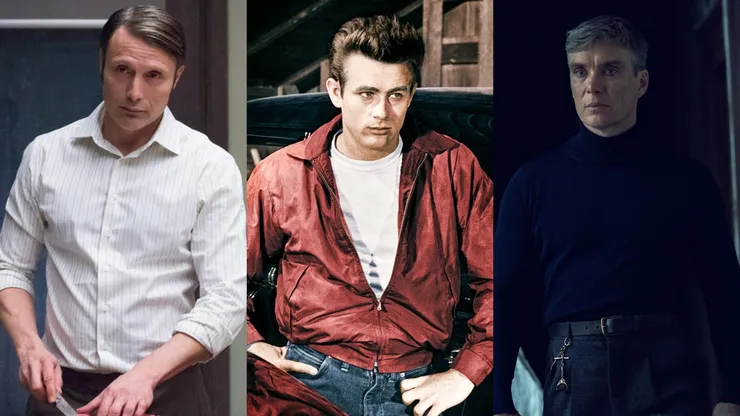
Certain screen presences have come to define not just eras, but entire sensibilities of “cool”. These are actors whose every role feels like a statement, whose filmographies chart more than performance, leaving a lasting cultural imprint — figures whose swagger, intensity or quiet command became shorthand for a moment in film.
From the trench‑coated detectives and noir anti‑heroes of classic Hollywood to the genre‑shifting virtuosos of modern cinema, their collective work illustrates how unforgettable characters can become touchstones of style, attitude and artistic gravitas.
The idea of an “iconic filmography” goes beyond box office success or awards shelf space; it lives in the way performances seep into the cultural unconscious, inspiring imitators and admiration across generations.
Cillian Murphy
Cillian Murphy’s rise from Irish theater to international cinematic prominence is one of the most compelling arcs of his generation. Born in Cork, Ireland, in 1976, he first garnered attention with the post‑apocalyptic thriller 28 Days Later (2002), where his portrayal of a frightened yet resilient survivor placed him on the global map.
From there, Murphy became a frequent collaborator with visionary director Christopher Nolan, appearing in works such as Inception (2010) and Dunkirk (2017), before anchoring Nolan’s 2023 biographical epic Oppenheimer as J. Robert Oppenheimer — a performance that earned him the Academy Award for Best Actor, making him the first Irish performer to win in that category.
Beyond historical dramas and sci‑fi thrillers, Murphy’s career spans blockbuster franchises and deeply personal projects. His signature role as Tommy Shelby in Peaky Blinders — a gritty period drama that ran from 2013 to 2022 and has now expanded into film — showcased his ability to inhabit morally complex antiheroes with shadowed interior lives, blending icy calculation with vulnerable ambition.
Outside of action and historical narrative, Murphy has also tackled reflective character pieces like Small Things Like These, which he produced and stars in, addressing Ireland’s painful social history through nuanced performance. His versatility and intensity have solidified him as one of his generation’s most enigmatic and magnetic actors.
Brad Pitt
Brad Pitt’s career is a masterclass in reinvention and range, capturing attention from early supporting looks to leading roles that linger in cultural memory. Born William Bradley Pitt in 1963 in Shawnee, Oklahoma, he broke through as a charming presence in Thelma & Louise (1991) before anchoring roles that would define 1990s and 2000s cinema.
Pitt navigated genres effortlessly — from the gritty detective chill of Seven to the anarchic edge of Fight Club, each performance staking his claim as a dynamic actor capable of depth beneath his smooth exterior.
Across more than three decades onscreen, his work has earned multiple Academy Awards, including Best Supporting Actor for Once Upon a Time in Hollywood and Best Picture as a producer on 12 Years a Slave.
In films like Moneyball, Inglourious Basterds, and Bullet Train, Pitt continues to redefine what it means to be a leading man in Hollywood. Whether portraying the unconventional sports manager Billy Beane with grounded humanity or the irreverent Lt. Aldo Raine with a tactical wit, his magnetism adapts to each narrative landscape.
Beyond blockbuster appeal, Pitt’s choices reflect a willingness to explore flawed, fascinating characters, making his filmography one of the most influential and cool in modern cinema — a blend of charisma, nuance, and enduring presence that resonates on both critical and popular fronts.
George Clooney
George Timothy Clooney’s filmography reads like a blueprint for smooth versatility in modern cinema, balancing blockbuster crowd‑pleasers with critically acclaimed character work. Born in Lexington, Kentucky, Clooney first garnered widespread recognition on television with ER before transitioning into film roles that showcased his effortless magnetism and wide range.
He became known for leading roles in thrillers and comedies alike, from the cult classic From Dusk till Dawn to the iconic ensemble heist film Ocean’s Eleven, where he played Danny Ocean — a charismatic mastermind whose suave confidence anchored one of the most beloved franchises of the early 2000s. These choices established Clooney as a leading man equally at ease in high‑stakes action and ensemble comedies.
What sets Clooney apart is his ability to pivot between tones without losing his signature cool: in the Coen brothers’ O Brother, Where Art Thou?, he brought comedic rhythm and Southern charm to life, while in the dark satire Burn After Reading, his performance blended dry wit with absurdism.
Beyond acting, Clooney has also found success behind the camera as a producer and filmmaker, earning multiple Academy Awards — including for his performance in Syriana and as a producer of Argo. His work in enigmatic roles like those in Michael Clayton and the whimsical mystery Hail, Caesar! adds layers to a filmography defined by charm, range, and enduring presence.
Matthew McConaughey
Matthew McConaughey’s career is a fascinating evolution from laid‑back charm to rugged dramatic intensity, a transformation so striking it even earned its own nickname in Hollywood — the “McConaissance”.
After breaking out in the cult coming‑of‑age comedy Dazed and Confused and spending much of the 2000s in romantic comedies, he shifted gears in the 2010s toward roles that revealed new layers of his talent. This transition began with gritty, unpredictable turns in films like The Lincoln Lawyer and Killer Joe, laying the groundwork for what would become the most acclaimed period of his career.
That shift culminated in performances that demanded both emotional depth and physical transformation. In Dallas Buyers Club, McConaughey lost nearly 50 pounds to play Ron Woodroof, a cowboy diagnosed with AIDS — a portrayal that won him the Academy Award for Best Actor and marked a defining breakthrough in dramatic cinema.
Beyond biographical drama, his turn as the brooding detective Rust Cohle in True Detective showcased a haunting, philosophical intensity, while roles in Interstellar and The Wolf of Wall Street displayed his range from existential father figure to high‑stakes supporting force. Together, these performances chart a career defined by reinvention, grit, and a legacy of unforgettable cinematic cool.
Mads Mikkelsen
Mads Mikkelsen’s career has been built on an uncanny ability to reinvent himself while maintaining a distinct presence that is cool without ever feeling contrived. A Danish actor born in Copenhagen, he first gained international attention with early roles in European cinema before becoming a global name with his chilling turn as Le Chiffre in Casino Royale, where he brought a layered menace to one of James Bond’s most iconic villains.
Over the years, Mikkelsen has embraced a remarkable range — from science fiction (Rogue One) to stylish historical dramas (A Royal Affair) and introspective character pieces — capturing audiences with performances that feel both effortless and meticulously crafted.
Yet perhaps the most resonant example of his cool screen persona is found in films like The Hunt and Another Round. In The Hunt, Mikkelsen portrays a man falsely accused of a heinous crime, offering a performance of heartbreaking nuance that earned critical acclaim and awards recognition in Europe.
Another Round, a film about four teachers testing a theory about alcohol’s effects on life and creativity, won the Academy Award for Best International Feature Film, with Mikkelsen’s portrayal of existential longing and vulnerability at its emotional center.
These roles showcase not just his physical command but an emotional depth that surprises — a blend of understated power, quiet desperation, and sly wit that makes him one of contemporary cinema’s most intriguing and cool presences.
Denzel Washington
Denzel Washington is widely regarded as one of the greatest actors of his generation, and his filmography is as varied as it is iconic. Born in Mount Vernon, New York, Washington first made a name on stage and television before breaking through in film with critically acclaimed performances.
Over his career, he has won two Academy Awards and countless other honors, showcasing his ability to bring intensity and humanity to every role he undertakes. Whether portraying historical figures like Malcolm X or flawed antiheroes in gritty crime dramas, his presence on screen exudes a blend of strength and vulnerability that has become his signature.
From classic works like Training Day, for which he won Best Actor portraying a corrupt, unforgettable cop, to powerful performances in Philadelphia, Man on Fire, and American Gangster, Washington brings a moral weight and cool authority to stories that span gritty real‑world narratives and expansive cinematic explorations.
His filmography also includes roles in Mississippi Masala and Mo’ Better Blues, each reflecting his capacity to inhabit characters with emotional depth and broad cultural resonance. Across decades, he has defined cool not as superficial swagger but as the quiet confidence of mastery — a presence that commands attention without ever resorting to spectacle.
Austin Butler
Austin Butler’s meteoric rise from television beginnings to Hollywood stardom encapsulates a new kind of cool — one forged through dedication, range, and deep character immersion. Born in Anaheim, California, he first appeared in teen dramas and sitcoms before breaking through in Quentin Tarantino’s Once Upon a Time in Hollywood, portraying cult figure Tex Watson with an intense brooding presence.
His breakthrough came with Baz Luhrmann’s biographical drama Elvis, a role that garnered him a Golden Globe and BAFTA Award, along with an Academy Award nomination, as he fully embodied the legendary musician’s charisma and vulnerability.
Butler’s cool extends beyond nostalgia or imitation; in films like The Bikeriders and the sci‑fi epic Dune: Part Two, he brings a layered intensity that’s both physical and psychological. In Masters of the Air, his portrayal of Major Gale “Buck” Cleven blends stoic resolve with emotional grit, proving his ability to anchor large ensemble narratives.
Jacob Elordi
Jacob Elordi represents a newer generation of actors whose cool is defined by emotional intensity and brave character choices. The Australian actor first gained attention in television before transitioning to film and prestige projects, notably gaining recognition for his role as Nate Jacobs in Euphoria, a performance that explored toxic masculinity and psychological tension with stark nuance.
As his career expanded, Elordi chose roles that challenged audience expectations, starring in critically discussed films like Saltburn and Priscilla, where his charisma and screen presence anchored complex narratives about wealth, identity, and interpersonal dynamics.
His choices reflect a deliberate avoidance of formulaic blockbusters in favor of films that push character boundaries, such as the haunting and atmospheric The Sweet East and the emotionally layered Oh, Canada.
Elordi’s cool emerges not from effortless charm, but from the way he embodies roles that interrogate deep, often uncomfortable themes with an introspective intensity. This blend of allure and psychological complexity positions him as one of Hollywood’s most intriguing up‑and‑coming talents, shaping cool for a new era of cinema.
Paul Newman
Paul Newman’s screen legacy remains one of the clearest definitions of “cool” in cinema history. Emerging as a leading figure in Hollywood in the 1950s, Newman’s voice, gaze, and effortless poise defined a generation of characters who were rugged yet charismatic, flawed yet magnetic.
From his early Academy Award–nominated roles in The Hustler and Cool Hand Luke to his Oscar‑winning performance in The Color of Money, Newman brought a striking combination of charm and hardened resolve to every role, forever imprinting his allure on audiences.
His filmography bridges genres — the smart crime caper Butch Cassidy & the Sundance Kid, the nostalgic masterpiece The Sting, and the poignant family drama The Verdict — each performance revealing a versatility grounded in layered simplicity.
Beyond his iconic blue eyes and effortless style, Newman’s cool stemmed from a deep authenticity: characters who lived fully on screen while retaining an everyman appeal that resonates decades later. His enduring impact reflects a timeless cool rooted in both performance and personality.
Robert Redford
Robert Redford’s place in cinematic history is as enduring as his cool‑eyed stare and effortless charm. Over a career that spanned more than six decades, he became one of Hollywood’s most iconic leading men, blending rugged adventure with emotional depth in films that ranged from Westerns and crime dramas to romantic epics.
Classics like Butch Cassidy and the Sundance Kid and The Sting showcased his natural charisma as a storyteller and performer, while his roles in All the President’s Men and Three Days of the Condor revealed an ability to ground political and espionage narratives with gritty authenticity. Redford’s presence wasn’t just about style — it was about embodying a particular Hollywood ideal of cool: calm, confident, and quietly compelling.
Beyond acting, Redford also made his mark as a director and cultural force, winning the Academy Award for Best Director for Ordinary People and founding the Sundance Institute, which forever transformed the independent film landscape.
Whether portraying a dogged journalist unraveling Watergate, a dreamy adventurer in The Natural, or a lone sailor battling the sea in All Is Lost, his filmography reflects a commitment to storytelling that embraces both scope and nuance.
Even in later years, his performances retained a weathered elegance, reminding audiences that true cinematic cool ages like fine character work — layered, reflective, and unforgettable.
Sean Connery
Sir Sean Connery’s career defined a particular breed of cool that transitioned seamlessly from suave spy to seasoned character actor. Best known as the first actor to portray James Bond in the official EON Productions films, he introduced the world to a spy who balanced charm, wit, and lethal precision — laying the foundation for one of cinema’s most enduring personas.
However, Connery’s cool wasn’t confined to 007; his filmography ranges from the paranoid thrills of Marnie to swashbuckling adventure in Indiana Jones and the Last Crusade, and later to commanding roles in The Untouchables and The Hunt for Red October.
Connery’s screen presence was characterized by an effortless blend of gravitas and charm, whether delivering dry one‑liners or anchoring intense dramatic stakes. His work in The Untouchables earned him an Academy Award for Best Supporting Actor, and his ability to inhabit roles that spanned genres — from action to historical drama — ensured that his cool was not merely surface‑level swagger, but a deeply rooted confidence in craft and character.
Robert Duvall
Robert Duvall’s career exemplified the kind of cool born from range, subtlety, and unflinching honesty. A veteran of stage and screen, he first garnered attention in To Kill a Mockingbird before becoming one of the most respected character actors of his generation.
Over more than seven decades, Duvall delivered unforgettable performances, from the rugged Marine Lt. Col. Bill Kilgore in Apocalypse Now to the measured consigliere Tom Hagen in The Godfather series. His ability to disappear into roles, whether gritty war films or deeply human dramas, reflected a rare versatility that elevated every narrative he touched.
While Duvall earned seven Academy Award nominations throughout his career, he won the Best Actor Oscar for Tender Mercies, portraying a country singer battling alcoholism with compelling vulnerability and dignity.
He also explored spiritual and personal transformations in films like The Apostle, which he also directed, bringing emotional gravitas and authenticity to stories that resonated with audiences and critics alike. Across genres and decades, Duvall’s cool was never flashy — it was the calm command of an actor fully present in every scene, no matter how small or grand.
Steve McQueen
Steve McQueen’s moniker as the “King of Cool” wasn’t just a marketing hook — it was an indelible truth of his screen presence. Emerging from television to become one of the defining stars of the 1960s and ’70s, McQueen specialized in roles that blended taciturn intensity with physical authenticity.
Whether portraying the antihero bounty hunter Josh Randall in Wanted Dead or Alive or the rebellious motorcycle racer in films like The Great Escape, McQueen’s performances were built on a minimalist style that eschewed excess in favor of raw energy and clarity.
McQueen’s filmography reads like a guide to cool under fire — from gripping car chases in Bullitt to the haunting prison break of Papillon, and the rugged endurance test of Le Mans.
He was an actor who personified unspoken grit and effortless charisma, performing his own stunts and bringing a physicality to roles that turned every look, every movement, into a statement of identity. His legacy persists not only in iconic action cinema but in the broader idea of what it means to be cool in film: quiet, dangerous, and unmistakably memorable.
Sidney Poitier
Sidney Poitier’s significance in cinema stretches far beyond performance — he was a transformative figure whose presence reshaped Hollywood’s cultural landscape. Breaking barriers in the 1950s and ’60s, Poitier became the first Black actor to win the Academy Award for Best Actor for his role in Lilies of the Field, setting a precedent for generations to come.
He starred in films that spoke directly to social issues, including A Raisin in the Sun, To Sir, with Love, and Guess Who’s Coming to Dinner, blending iconic screen presence with a dignified gravitas that challenged stereotype and expanded representation.
Poitier’s filmography also includes work in In the Heat of the Night, which earned critical acclaim and award nominations, and later mainstream fare like Sneakers, showcasing his adaptability across genres.
But his cool was never about detachment or spectacle — it was rooted in a quiet strength and moral clarity that resonated deeply during times of social change. His enduring legacy as both actor and director reflects a cool defined not by mere persona but by principled artistry and cultural impact.
James Dean
James Dean’s cinematic presence was brief yet seismic: in just three major films — East of Eden, Rebel Without a Cause and Giant — he became a symbol of postwar youth, disillusionment and raw emotional intensity that changed Hollywood forever.
Born in 1931 in Marion, Indiana, Dean embodied the restless spirit of his generation, bringing a vulnerability and brooding complexity to roles that captured teenage frustration and longing.
His breakout portrayal of Jim Stark in Rebel Without a Cause crystallized the image of the misunderstood outsider, making the film a cultural touchstone that resonated far beyond its original release.
Despite dying tragically at just 24 in a car accident — shortly before Rebel Without a Cause premiered — Dean’s legacy only grew. East of Eden showcased his dramatic range as Cal Trask, and Giant brought out his brooding magnetism in a sprawling family epic released posthumously, earning him two Academy Award nominations after death.
His meteoric impact — amplified by his off‑screen mystique and untimely loss — immortalized him not merely as a great actor but as a defining icon of cinematic cool, whose influence on generations of performers and audiences remains unmistakable.
Marcello Mastroianni
Marcello Mastroianni was the embodiment of European cinematic cool: a blend of effortless charm, melancholic introspection, and worldly sophistication that made him a defining face of Italian film during the postwar era.
Born in 1924 in Fontana Liri, Italy, Mastroianni became an international star through his collaborations with legendary director Federico Fellini, most notably as tabloid journalist Marcello Rubini in La Dolce Vita (1960), a film that helped redefine modern European cinema and influenced the global understanding of cinematic cool.
Beyond La Dolce Vita, his leading roles in 8½, La Notte and Divorce Italian Style revealed a remarkable range — from existential introspection to bittersweet romantic nuance.
Mastroianni’s screen persona was one of casual affability mixed with deep self‑reflection, a blend that allowed him to inhabit characters who seemed perpetually on the edge of introspection and desire. His legacy extends beyond Italian cinema; he became a symbol of sophisticated cool whose influence is still felt across European and world film.
Humphrey Bogart
Humphrey Bogart stands tall among cinema’s greatest icons, a star whose silhouette defined an era of gritty noir, romantic cool and enduring charisma. Born in 1899 in New York City, Bogart’s trajectory from stage actor to Hollywood legend saw him portray some of the most unforgettable characters in American film — from the hard‑boiled private detective Sam Spade in The Maltese Falcon to the world‑weary nightclub owner Rick Blaine in Casablanca.
These roles, among many others, solidified his reputation as the archetype of cool: cynical yet principled, tough yet vulnerable. Bogart’s filmography also boasts classics such as The Treasure of the Sierra Madre and In a Lonely Place, each performance showcasing his capacity to balance cynicism with emotional depth.
Unlike actors whose cool was defined by swagger alone, Bogart brought psychological complexity to his roles — a worn stoicism underscored by fragile humanity. Revered by the American Film Institute as the greatest male star of classic American cinema, his influence on screen acting and popular culture remains unmatched, echoing through decades of film noir and beyond.