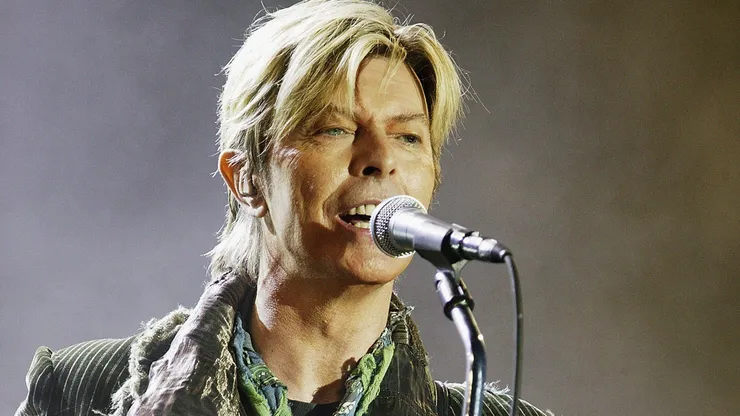
David Bowie didn’t just make music; he sculpted soundscapes that mirrored the restless energy of his era. From the glittering alienation of Space Oddity to the raw funk of Fame, each track carried a distinctive stamp of innovation, challenging conventions and redefining what popular music could express.
The “Bowie Effect” is less a moment in history than a continuous ripple through culture, visible in the artists who borrowed his daring, the audiences who embraced his transformations, and the sonic experiments that still resonate today.
Space Oddity
Before Bowie was a household name, he launched Major Tom into the cosmos, folding personal isolation into a broader mythos of exploration and alienation. The song’s eerie production and narrative of an astronaut cut adrift on radio static tethered rock music to science fiction and existential inquiry in a way few had attempted. Space Oddity became the gravitational well around which Bowie’s identity — restless, curious, shape‑shifting — would begin to orbit.
Changes
If Bowie needed a manifesto, this was it. Written during a pivotal period before fame fully landed, Changes captures an artist in rebellion against consistency itself, embracing transformation as both philosophy and creative practice. Its central piano hook and reflective lyrics about reinvention have since become shorthand for Bowie’s career and a touchstone for any artist daring to redefine themselves.
Heroes
Not initially a chart smash, Heroes grew into one of Bowie’s most iconic anthems, transcending its origins to become a global hymn of possibility. Co‑written with Brian Eno during the Berlin years, its soaring guitars and defiant optimism lent voice to a generation dreaming beyond division — literally and metaphorically. The song’s afterlife in films, sporting events and covers speaks to its universal resonance.
Life On Mars?
Surreal, cinematic, and wonderfully unclassifiable, Life On Mars? merges pop grandeur with poetic abstraction. Its lush piano and string arrangements create a dreamscape in which Bowie interrogates spectacle, media and loneliness. This track, from the Hunky Dory album, helped establish him as a lyricist with both theatrical imagination and emotional depth.
The Jean Genie
With one foot in gritty blues riffs and the other in glam strut, The Jean Genie channels raw energy and charismatic swagger. Inspired by a mythical wanderer in the landscape of early ’70s rock, the song bridges downtown cool with urban mythology. It stands as one of Bowie’s most immediate and indispensables tracks from the Aladdin Sane era.
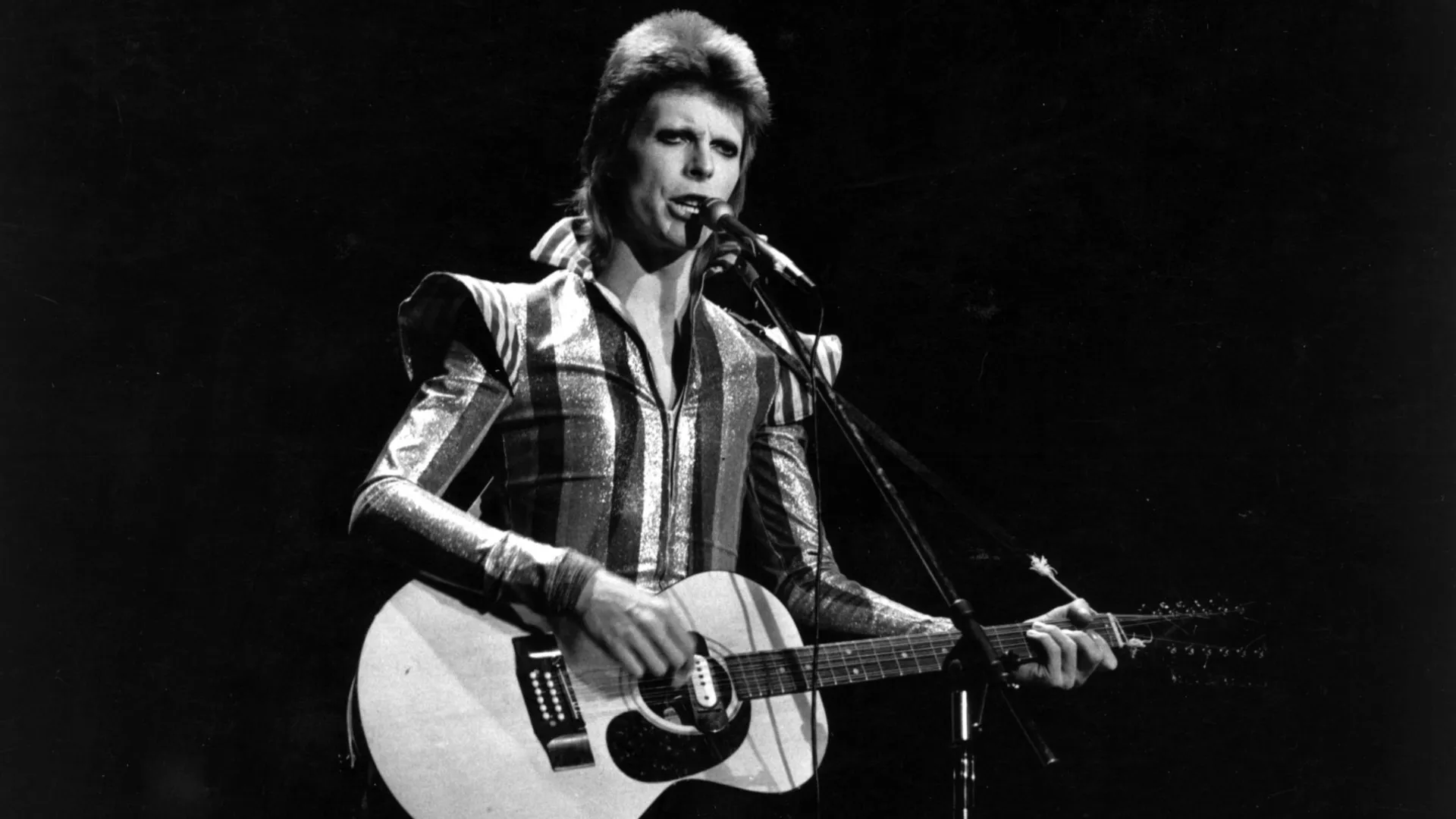
(Source: IMDb)
Rebel Rebel
Few Bowie songs are as immediate as Rebel Rebel, with its unforgettable guitar riff and lyrics that blur gender roles and identities. Arriving at the peak of his glam rock phase, the track signaled not just sonic innovation but a cultural shift — a celebration of ambiguity, flair and rock rebellion that helped define the look and feel of the ’70s.
Starman
Starman extended Bowie’s cosmic narrative into a message of hope broadcast from radio waves. Its chorus promised a salvific figure for disaffected youth — an alien who sang like a rock star, spoke like a prophet, and offered something beyond the ordinary. The song’s infectious pop sensibility helped propel Bowie into mainstream consciousness.
Fame
Co‑written with John Lennon and built around an irresistible funk groove, Fame marked Bowie’s first No. 1 in the U.S. and a sharp critique of celebrity culture. Its biting lyrics examine the paradox of wanting fame and being disillusioned by it, wrapped in a sound that was at once danceable and sharply satirical — a true crossroads of rock, soul and pop.
Let’s Dance
With Nile Rodgers behind the boards and Stevie Ray Vaughan on guitar, Let’s Dance married Bowie’s avant‑garde instincts with mainstream pop power. The title track became emblematic of Bowie’s ’80s reinvention, ushering his music into arenas and airwaves worldwide while remaining stylish, exuberant, and unmistakably his own.
Modern Love
The kinetic pulse and joyful urgency of Modern Love transformed a deeply personal collision of faith and doubt into an anthem for both dancefloors and introspective listeners. Its fusion of rock, soul and pop sensibilities captures Bowie at a moment where he could synthesize accessibility with complexity.
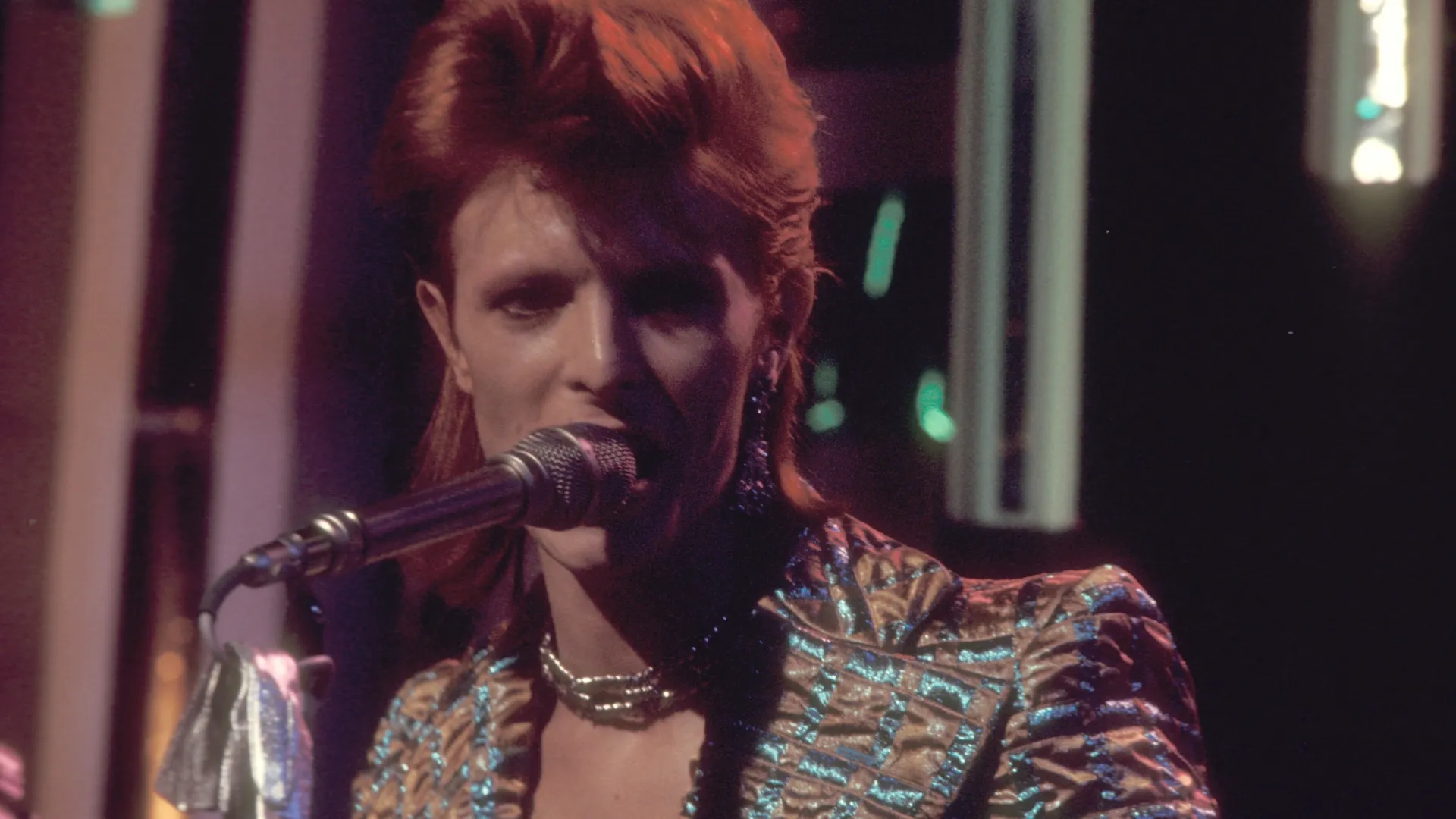
(Source: IMDb)
Ashes to Ashes
Revisiting Major Tom’s fractured lineage, Ashes to Ashes is cinematic art‑pop with a reflective heart. Its lush production and introspective lyrics refracted Bowie’s past through a new, more experimental lens. The song’s status as one of his most beloved tracks underscores his ability to reinvent previous themes into something fresh and haunting.
Under Pressure (with Queen)
Though technically a collaborative cut, Under Pressure stands as a high‑water mark for rock solidarity. The interplay between Freddie Mercury’s soaring vocals and Bowie’s cool clarity transforms a spontaneous jam into a timeless meditation on stress, love and human connection. It became a staple of both artists’ legacies, echoing through decades of culture.
Ziggy Stardust
This eponymous track doesn’t just introduce a character; it encapsulates an era. Bowie’s fictional alter ego blurred lines between performance, identity and myth, forging a narrative that turned rock stars into demi‑gods and challenged audiences to think of persona as performance art. Its impact on glam rock and alternative culture is still felt.
Young Americans
In a bold stylistic pivot, Bowie embraced soul and R&B with Young Americans. Its smooth grooves and reflective lyrics about identity, society and authenticity demonstrated his willingness to cross genre boundaries and laid groundwork for blue‑eyed soul influences in rock and pop.
Blackstar
Bowie’s final single before his passing, Blackstar is at once enigmatic, defiant and transcendent. Released alongside an album of the same name just days before his death, the song’s haunting jazz‑inflected sound and cryptic lyrics read like a farewell — a final act of artistic audacity that reshaped how we think about mortality and legacy in pop music.