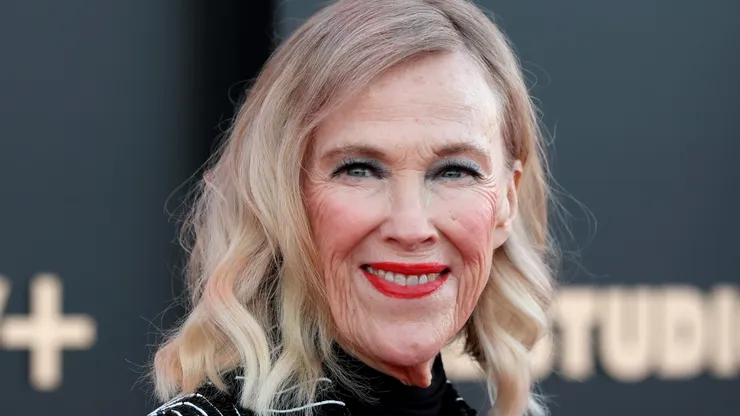
In the months following the death of Catherine O’Hara, the creators of “The Studio” are preparing audiences for a second season shaped by both narrative recalibration and real-world grief.
In a recent interview with The Times of London, Seth Rogen and Evan Goldberg have confirmed that the series will directly acknowledge the absence of its late star, who died in January at 71.
A Season Rewritten After Loss
“It has been an unbelievable challenge,” Goldberg said, pointing to both the emotional toll and the practical disruption to a season that had been planned with O’Hara at its center. “Obviously emotionally, dealing with the loss, but also when it comes to the show itself.”
Source: Kevin Winter/Getty Images
The shift has required a structural rethink. “We wrote it for her to be there. We had it all set,” Goldberg added, noting that “the shock waves permeate throughout the entire new season,” and describing the process plainly: “It’s been difficult. She was the anchor and now the anchor is gone”
Rogen, meanwhile, framed the creative direction in broader thematic terms. “If anything, we’re acknowledging the idea that we are a little anchorless,” he said, adding that the entry will reflect a feeling that “is a part of life and what we all experience. And so while we try to not dwell too much on heavy themes in this show, they will be there in this second season. We are not ignoring it.””
O’Hara’s presence in the first installment was foundational. She played Patty Leigh, a former studio head who remained embedded in the company’s inner workings after her dismissal, acting as both a mentor and an unpredictable influence on the new leadership.
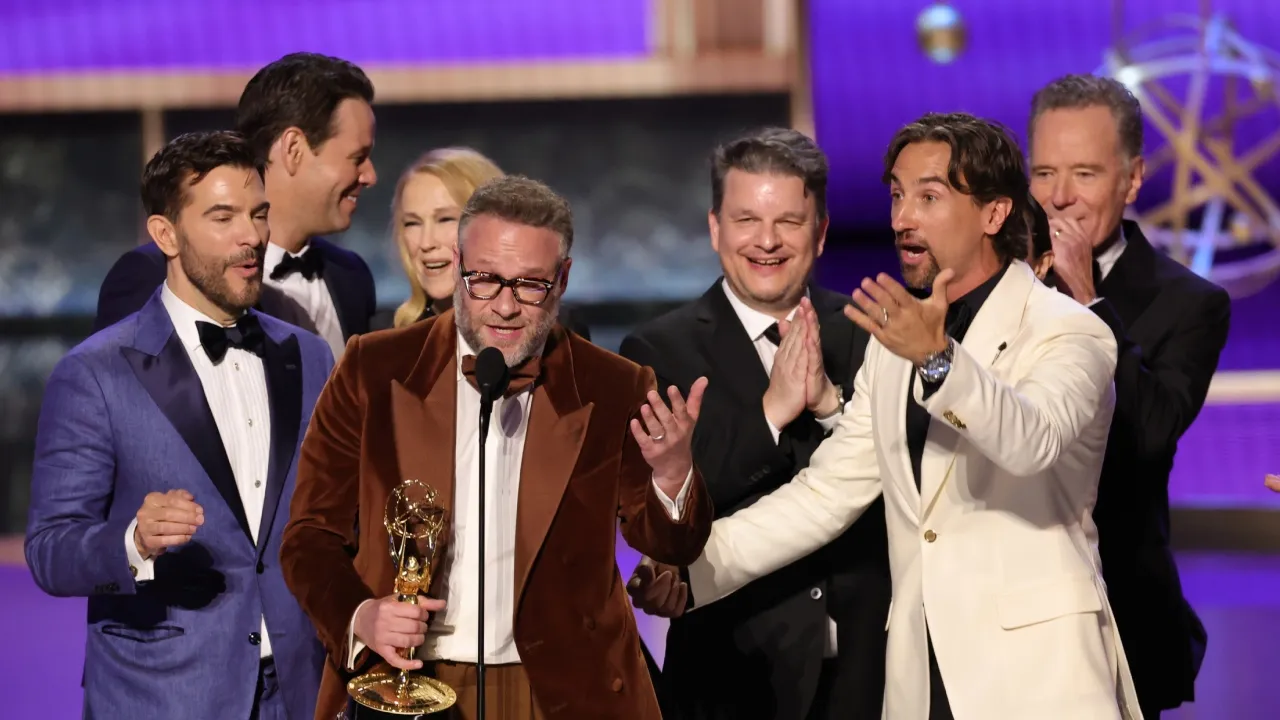
The Apple TV+ comedy, which centers on a studio executive navigating the tension between artistry and corporate expectations, quickly became a critical standout in its debut, earning widespread recognition and major awards attention.
O’Hara died on January 30 from a pulmonary embolism linked to an underlying cancer diagnosis that she had managed privately. She did not film scenes for the second part, leaving the production to move forward while incorporating her absence into the narrative itself.