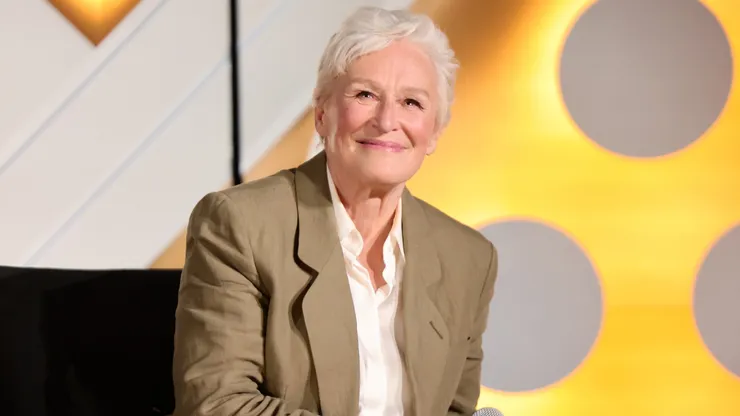
Few careers in Hollywood carry the statistical weight of Glenn Close’s relationship with the Academy Awards. Across more than four decades and performances in films such as Fatal Attraction, Dangerous Liaisons and The Wife, she has accumulated eight acting nominations without a single win, a record she shares in rarefied company with Peter O’Toole.
The Academy has, in contrast, occasionally used its Honorary Oscar to recognize artists whose bodies of work define eras of cinema, including figures who—like Close—remained persistently close to competitive wins without securing them. O’Toole, for instance, received such an award in 2003 after eight unsuccessful nominations.
The Longest Almost: Glenn Close and the Oscar That Never Came
Glenn Close’s place in Academy Awards history is defined less by absence than by accumulation. She has earned eight Oscar nominations without a competitive win, a record she shares with Peter O’Toole, placing both at the top of one of the most unusual statistical categories in Hollywood.
The nominations stretch from The World According to Garp (1982) to Hillbilly Elegy (2020), tracing more than 35 years of performances that repeatedly landed her in the center of Oscar conversations, even when the final result went elsewhere.
What makes the pattern even more striking is the way it intersects with the Academy’s own history of recognition. O’Toole eventually received an Honorary Oscar in 2002, a symbolic acknowledgment often reserved for careers considered complete in their cultural impact.
Close, however, has never been granted that particular form of recognition, despite a résumé that includes three Emmy Awards, three Tony Awards, and some of the most iconic performances in modern American cinema.
Why the Academy Still Hasn’t Given Glenn Close an Honorary Oscar
Despite being one of the most nominated actors in Academy Awards history, Glenn Close has never been granted an Honorary Oscar, a gap that becomes more notable when compared with peers.
According to industry reporting and awards analysis, the Academy’s Honorary Award is not automatically tied to nomination records or even career longevity, but is instead determined by the Academy’s Board of Governors, which evaluates timing, cultural framing, and whether the honor fits a “career milestone” moment rather than an ongoing competitive arc.
Another key factor frequently mentioned in film-industry discussions is timing and positioning: Honorary Oscars are often awarded when the Academy considers a performer’s competitive Oscar journey effectively complete.
In Close’s case, however, she has remained intermittently active in major film projects and continued to be seen as “Oscar-eligible”, which can delay that transition into legacy recognition. There is also recurring reporting that she has been proposed for an Honorary Oscar multiple times—at least four occasions in the past decade—without final selection.
Taken together, the situation places Close in a rare institutional limbo: widely celebrated, historically recognized through eight nominations, yet still not formally placed into the Academy’s honorary canon.