Harvey Weinstein has given his first extended interview since his arrest to The Hollywood Reporter, speaking from inside Rikers Island about life behind bars and the lasting impact of the allegations that reshaped the film industry.
Once one of Hollywood’s most powerful figures, Weinstein now spends his days largely confined to a medical unit at the notorious jail while a complex web of legal battles continues to unfold in both New York and California.
Inside Harvey Weinstein’s Life at Rikers Island
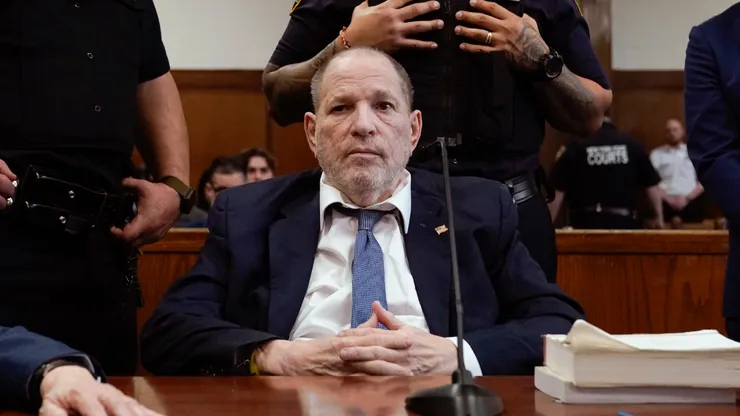
When the former mogul entered the room for the interview, the contrast with his old Hollywood persona was unmistakable, The Hollywood Reporter informed. The producer who once commanded Oscar campaigns and red carpets arrived quietly in a wheelchair, escorted by a corrections officer. Now 73 and battling multiple health problems, Weinstein said his world has shrunk to the narrow confines of a jail cell where he spends nearly all of his time.
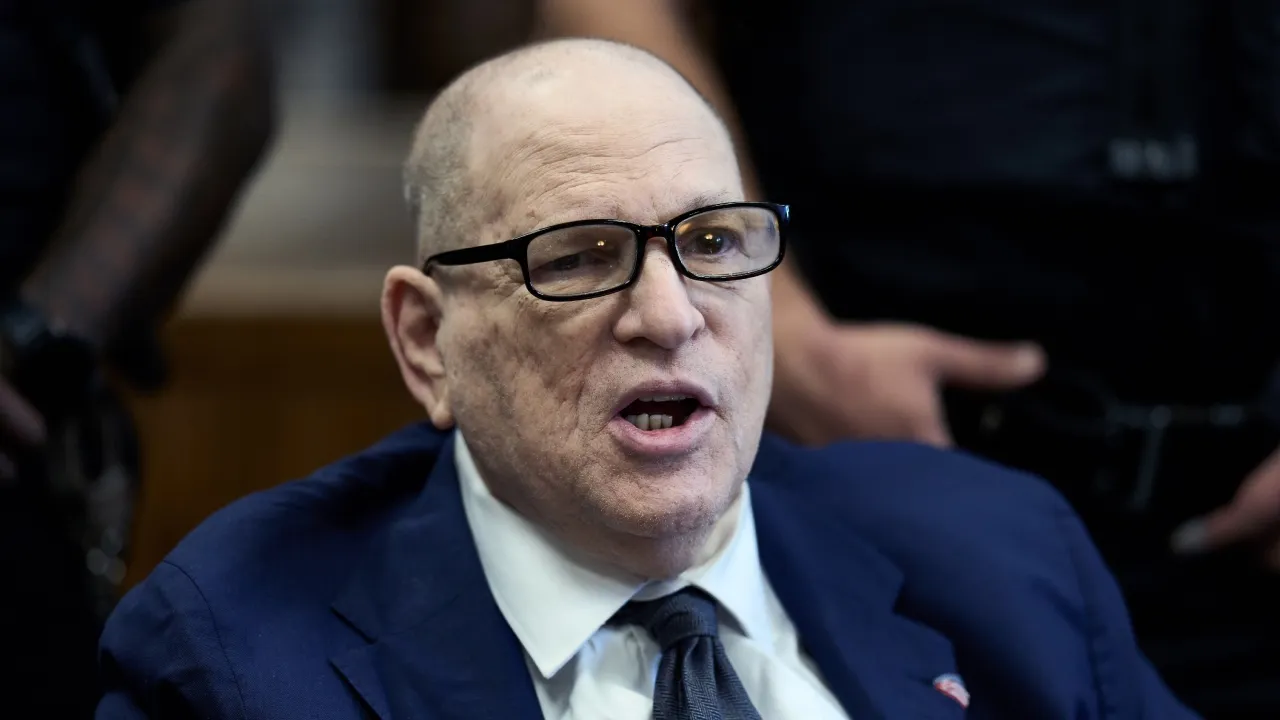
Source: Curtis Means-Pool/Getty Images
“I spend almost all of it in my cell,” Weinstein said when asked about his daily routine. “Mostly I’m in my cell 23 hours a day.” He described minimal human contact beyond guards and nurses, explaining that his status as a high-profile inmate makes it difficult for jail officials to house him with the general population.
Health concerns loom heavily over his time at Rikers. Weinstein said recent medical issues have left him increasingly fearful about his future behind bars. “I have bone marrow cancer,” he said at one point during the conversation. “I’m dying here.” The producer added that the prospect of spending the remainder of his life incarcerated is something that “scares the s**t out of me.”
Despite acknowledging that his behavior with women during his years in Hollywood could be aggressive and inappropriate, Weinstein continued to deny committing assault. “Did I overplay my hand? Yes,” he said. “But did I ever s**ually assault a woman? No.” His stance remains unchanged even after multiple criminal cases and the public accusations of dozens of women since 2017.
Still, Weinstein offered a limited expression of regret about aspects of his past. “I apologize to those women,” he said. “I’m sorry. I shouldn’t have been with them in the first place.” At the same time, he maintained that the most serious allegations against him are false, insisting, “I will be proven innocent.”
For the man who once dominated Hollywood’s awards circuit, the conversation underscored a stark reality: his story is now defined less by the films he championed than by the scandal that brought his empire crashing down.