Fame today is less a distant spotlight and more a constant environment. With cameras in pockets, feeds that never pause and an industry built around instant visibility, public figures often exist inside a space where personal and professional boundaries blur almost in real time.
In response to that reality, a number of well-known actors, musicians and cultural figures have started to draw sharper lines around what they choose to share. Not as an escape from attention, but as a way of controlling its terms.
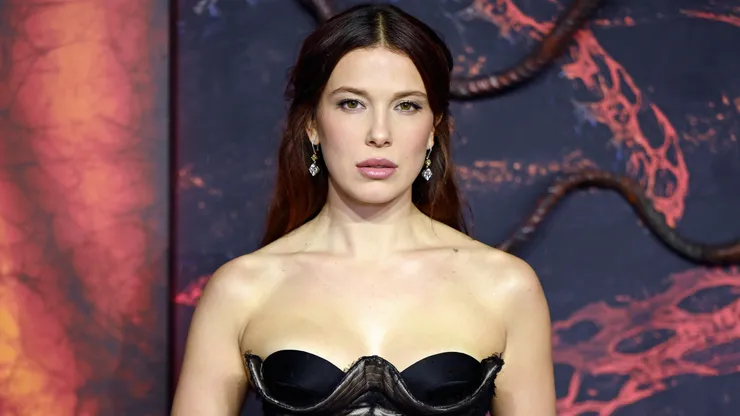
Millie Bobby Brown
Since growing up in front of the cameras in Stranger Things, Millie Bobby Brown has had to deal with constant exposure that began at a very young age. Over time, the British actress has taken an increasingly firm stance against invasive interviews and comments about her appearance, especially as media coverage started focusing more on her personal life than on her career.
On several occasions, she has made it clear that certain boundaries should not be crossed, particularly when it comes to her body, her development, or her private life. She has even publicly criticized articles that, in her view, “break down” her image instead of discussing her work, emphasizing that fame should not justify harassment disguised as journalism.
In addition, after having her first child with her partner Jake, the actress also had to set clear limits with paparazzi. During an afternoon while she was out with her husband and her best friend Noah, photographers attempted to take pictures and physically stepped into Millie and her daughter’s path, prompting her to directly stop them and assert those boundaries.
Beyonce
Beyoncé is one of the most extreme examples of modern media control. Since around 2013, she has largely stopped doing traditional in-depth interviews, especially “sit-down press”.
Instead, she opts for total narrative control, using visual albums, documentaries, and carefully crafted releases to communicate directly with the public. A key example is her album Beyonce (2013), released without prior promotion, breaking the traditional model of interviews and press cycles.
Rather than explaining her work to journalists, she has preferred to include personal essays or tightly controlled editorial pieces in magazines like Vogue, where the content is highly curated by her team. Media reports suggest that even when she does give occasional interviews, the conversation is often highly structured or replaced with written material she provides.
Taylor Swift
Taylor Swift evolved from being highly accessible in interviews to a far more strategic public figure after years of intense media coverage of her private life. Following public conflicts with media outlets and industry figures, her team strengthened a more controlled communication system, where interviews became selective, carefully planned, and aligned with each musical “era”.
In practice, this means she avoids spontaneous interviews or high-risk media situations. She prefers long-form formats with selected journalists and often uses her music or documentaries (Miss Americana) to address sensitive topics instead of discussing them in real time with the press. She has also set clear boundaries around questions about her romantic life, which are generally avoided unless she chooses to bring them up herself.
Keanu Reeves
Keanu Reeves is one of the most consistent examples of absolute privacy within mainstream Hollywood. He does not use official social media and rarely participates in interviews unrelated to film projects. His media behavior is deliberately minimalistic: he promotes movies but avoids turning his personal life into public content.
A recurring detail in profiles about him is his low-key lifestyle even in public spaces: using public transportation, maintaining a low presence at Hollywood social events, and keeping his relationships entirely private. When asked personal questions in interviews, he typically redirects them to his work or responds briefly without sharing intimate details.
Rihanna
Rihanna changed her relationship with the press after years of intense exposure during her most active music era. Today, she has drastically reduced promotional interviews, and her public presence is focused almost exclusively on strategic brand launches like Fenty Beauty and Fenty Skin.
A key point is that she has openly said she feels uncomfortable with constant exposure, describing fame as “exhausting” in past interviews. Nowadays, she rarely participates in traditional press circuits and prefers to communicate updates through specific events or carefully planned appearances rather than extensive media tours.
Leonardo DiCaprio
Leonardo DiCaprio maintains a strict separation between his career and his private life. While he is highly visible during film campaigns or environmental initiatives, he consistently avoids discussing personal matters in interviews.
His media pattern is clear: interviews focused exclusively on film or activism, without shifting toward relationships, routines, or daily life. Even during periods of intense media attention—such as awards seasons or major premieres—his team carefully filters questions to avoid unnecessary personal exposure.
Emma Watson
Emma Watson has been very open about the psychological impact of constant exposure since her childhood with Harry Potter. This experience led her to develop a highly controlled relationship with the press, including extended breaks from acting and a notable reduction in her media presence.
An important aspect is her decision not to share intimate details in interviews, steering conversations toward activism, education, and feminism instead. She has also significantly limited her presence on social media, explaining that digital and media exposure can create constant pressure on her personal life and professional decisions.
Zendaya
Zendaya’s approach to media privacy is built on a consistent principle: selective openness with firm personal boundaries. In multiple recent interviews, she has stated that while being a public figure involves exposure, there are “some things meant only for herself and loved ones”, reinforcing her intention to separate her personal life from her public identity.
A clear example is how she handles relationship scrutiny and paparazzi attention. Rather than directly addressing rumors or details about her private life, she often chooses neither to confirm nor deny specifics, instead emphasizing balance and emotional protection. She has also said she is “very adamant to keep [her] private life private”, especially given how much of her life is already public through her career.
Henry Cavill
Henry Cavill isn’t someone who completely avoids the press; rather, he operates under a very specific model: he fulfills promotional duties but doesn’t negotiate his private life. One concrete example is his response to the attention on his romantic life. In 2021, when his relationship with Natalie Viscuso became public, he used Instagram as a direct channel to ask for respect regarding speculation and invasive comments.
Cillian Murphy
Cillian Murphy is widely recognized in the film industry not only for his work in productions such as Peaky Blinders and Oppenheimer, but also for his conscious decision to stay away from the traditional celebrity circuit.
Unlike many contemporary stars, he avoids social media and rarely takes part in long-form interviews, which reinforces his image as a reserved actor focused solely on his craft. On multiple occasions, he has stated that he is not interested in building a “personal brand” around his private life.
He has even emphasized that he prefers his life off-screen not to become part of public consumption, maintaining a clear separation between his profession and his family environment. His discomfort with media exposure and events such as red carpets is well known within the industry.
Also, he has been very clear about his philosophy regarding fame: he wants his work to speak for itself, avoiding media noise and overexposure. He has mentioned that he is not interested in feeding celebrity culture and deeply values privacy as a form of personal and family balance.