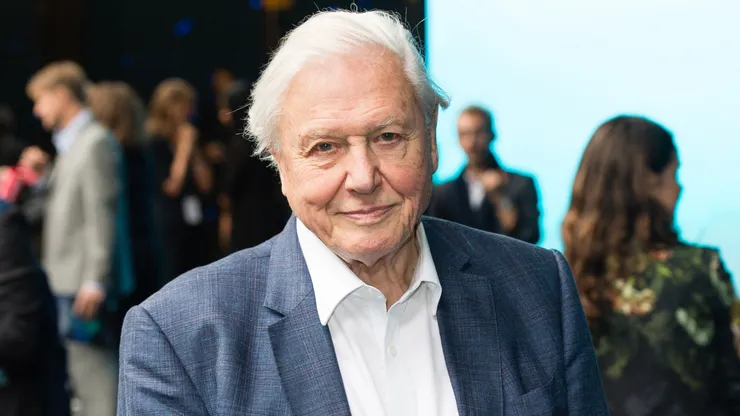
For nearly a century, the voice of David Attenborough has floated through jungles, oceans, deserts, and frozen landscapes like a calm guide leading humanity through the last untouched corners of Earth. Generations grew up listening to him describe the dance of birds of paradise, the silence beneath Antarctic ice or the fragile rhythm of life inside coral reefs.
As he turns 100 today, his legacy feels larger than television itself. Across more than seven decades at the BBC and beyond, he helped pioneer color broadcasting, narrated landmark series like Planet Earth and Blue Planet, and became one of the world’s most trusted voices on climate change and conservation.
David Attenborough Began His Career Before Television Became Global Entertainment
When David Attenborough joined the BBC in 1952, television itself was still experimental in many parts of the world. Wildlife documentaries barely existed in the form audiences recognize today.
Nature programs were usually limited, studio-based productions with static cameras and little sense of adventure. Attenborough entered broadcasting at exactly the moment television was beginning to imagine something bigger.
His breakthrough came through Zoo Quest, a pioneering series launched in 1954 that followed expeditions across Africa, Asia, and South America in search of rare animals for London Zoo. The show introduced viewers to landscapes and creatures many had never seen before.
Unlike traditional presenters, Attenborough appeared genuinely fascinated by everything around him — from giant reptiles to remote jungles — and that curiosity became central to his appeal.
How David Attenborough Helped Transform Modern Television
During the 1960s, Attenborough moved into leadership roles at the BBC and became instrumental in pushing British television into the color era. He helped expand educational and cultural programming while supporting innovative documentary filmmaking techniques that would later influence broadcasters around the world.
Even after becoming an executive, however, Attenborough missed filmmaking itself. Eventually, he stepped away from management and returned to documentaries full time — a decision that permanently changed wildlife television. His projects became increasingly ambitious, blending science, storytelling, and cinematic visuals on a scale rarely attempted before.
Life on Earth Turned David Attenborough Into a Global Icon
Everything changed in 1979 with Life on Earth, the groundbreaking documentary series that explored the evolution of life across the planet. Filmed in dozens of countries, the series became famous for its extraordinary visuals and unforgettable moments — especially Attenborough’s gentle interaction with mountain gorillas in Rwanda, one of the most iconic scenes in documentary history.
The success of Life on Earth established the blueprint for modern nature documentaries. It proved audiences would watch complex scientific storytelling if it was presented with emotion, beauty, and wonder. The series later inspired major productions such as The Living Planet, The Trials of Life, Planet Earth, Blue Planet, and Frozen Planet.
Why David Attenborough Became Known as “The Voice of Nature”
Few television voices became as recognizable as Attenborough’s. Calm, warm, and almost hypnotic, his narration gave emotional weight to images of oceans, rainforests, deserts, and Arctic landscapes. Over decades, audiences began associating his voice with nature itself.
What separated Attenborough from many broadcasters was his ability to combine scientific precision with emotional storytelling. He could explain animal behavior with the detail of a zoologist while still sounding poetic. His documentaries often felt less like lectures and more like journeys through another world.
That reputation eventually turned him into one of Britain’s most respected public figures. Admirers over the years included Barack Obama, Queen Elizabeth II, and younger generations of artists and activists who grew up watching his documentaries.
Climate Change Became Central to David Attenborough’s Later Work
As environmental destruction accelerated across recent decades, Attenborough’s documentaries became noticeably more urgent. Having spent over 70 years filming ecosystems around the world, he personally witnessed disappearing species, melting ice caps, collapsing coral reefs, and massive deforestation.
Rather than simply celebrating nature, his later work increasingly focused on warning audiences about climate change and biodiversity loss. Productions like Climate Change: The Facts, Our Planet, and A Life on Our Planet carried a more direct environmental message than his earlier documentaries.
Still, Attenborough rarely approached these issues with anger. Instead, he spoke with a kind of reflective sadness — the perspective of someone who had seen the planet transform dramatically within a single lifetime.
David Attenborough Turns 100 With a Legacy Few Public Figures Could Match
On May 8, 2026, David Attenborough officially turned 100 years old, marking a milestone celebrated across Britain and beyond. The BBC organized special tributes, documentaries, concerts, and public events honoring his extraordinary career, while social media filled with messages describing him as a “national treasure” and “the voice of nature.”
His influence now stretches far beyond television. Attenborough helped shape public conversations about conservation, inspired generations of scientists and filmmakers, and changed the way millions of people understand the natural world. More than 20 animal species have even been named after him — a rare scientific tribute that reflects just how deeply his work impacted both culture and environmental awareness.