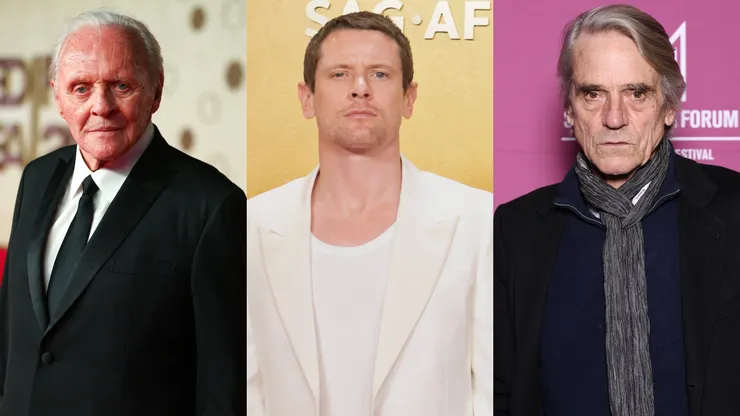
There’s a reason some actors keep circling back to darkness. Villains, unlike heroes, are thrive on contradiction, ambiguity and psychological depth. Industry observers often note that the most memorable antagonists are built on nuance: a precise voice, a commanding physical presence, and an inner life that feels disturbingly real.
In that space, performers aren’t just playing evil: they’re dissecting it, stretching it, sometimes even humanizing it. It’s no coincidence that portrayals like the Joker or Hannibal Lecter have become cultural landmarks, redefining what audiences expect from cinematic storytelling.
Christopher Lee
Christopher Lee didn’t just play villains—he helped define how they look, move, and sound in modern cinema. His work in the Hammer Horror films made him the definitive face of Dracula for years, bringing a commanding physical presence and a dark elegance that contrasted with more primitive versions of the character.
His classical training and deep voice allowed him to craft antagonists who felt calculated, almost historical—closer to mythological figures than simple “bad guys.” Over time, Lee carried that same interpretive weight into global franchises.
In The Lord of the Rings, his Saruman isn’t an impulsive villain, but an ideological one—someone who believes he’s right. A similar dynamic appears with Count Dooku in Star Wars, where he blends nobility with betrayal. That pattern—villains with internal logic—is what made his filmography so dominated by memorable antagonists.
Most notable villains:
- Count Dracula (Dracula, Hammer series)
- Saruman (The Lord of the Rings)
- Count Dooku (Star Wars)
- Francisco Scaramanga (The Man with the Golden Gun)
- Lord Summerisle (The Wicker Man)
Willem Dafoe
Willem Dafoe belongs to that category of actors who make villains unpredictable. His highly expressive, almost elastic face allows him to shift from calm to madness in seconds—a trait he used masterfully as Norman Osborn in Spider-Man.
His Green Goblin is not just violent, but psychologically fractured, making him far more unsettling than a conventional antagonist. Beyond mainstream cinema, Dafoe has built a parallel career in independent film where he explores more abstract forms of evil.
In many of his performances, the villain isn’t necessarily a classic “bad guy,” but a figure representing obsession, guilt, or loss of control. That versatility has made him one of the most fascinating actors when it comes to darker roles.
Most notable villains:
- Green Goblin / Norman Osborn (Spider-Man)
- Max Schreck (Shadow of the Vampire)
- Bobby Peru (Wild at Heart)
- Thomas Wake (The Lighthouse)
- Jesus (The Last Temptation of Christ) — ambiguous portrayal
Anthony Hopkins
Anthony Hopkins forever changed the way villains are portrayed with Hannibal Lecter. His approach was counterintuitive: instead of exaggerating, he stripped everything down to a minimum.
Inspired by animal behavior and real-life criminals, he created a character who barely moves yet completely dominates the scene. That restraint was key to generating discomfort in the audience.
The impact was so significant that his performance won the Academy Award for Best Actor, despite limited screen time. Since then, Hopkins has explored various types of antagonists, but always with a common thread: intelligence and control. His villains don’t react—they anticipate. And that makes them far more dangerous.
Most notable villains:
- Hannibal Lecter (The Silence of the Lambs, Hannibal, Red Dragon)
- Dr. Frederick Treves (ambiguous in The Elephant Man)
- Odin (authoritative tone in Thor, not a pure villain but dominant)
- Sir John Talbot (The Wolfman)
- Titus Andronicus (Titus)
Dennis Hopper
Dennis Hopper represents chaos in its purest form. Unlike actors who construct villains through precision, Hopper seemed to unleash something far more visceral. His Frank Booth in Blue Velvet is a perfect example: violent, unpredictable, and deeply uncomfortable to watch.
The performance was so intense that it redefined what an antagonist could be in modern cinema. In later years, Hopper channeled that same energy into more commercial roles, such as the terrorist in Speed.
Even in that context, he maintained a sense of real danger—as if the character could lose control at any moment. That quality made him a villain difficult to categorize and, above all, impossible to ignore.
Most notable villains:
- Frank Booth (Blue Velvet)
- Howard Payne (Speed)
- King Koopa (Super Mario Bros.)
- Clifford Worley (True Romance)
- Ripley (Apocalypse Now) — morally ambiguous role
Jason Isaacs
Jason Isaacs has built his career around a clear idea: the villain as a figure of power. In Harry Potter, his Lucius Malfoy doesn’t need to raise his voice to command respect; he does it through gestures, silences, and an aristocratic presence that suggests superiority.
That portrayal helped define the character as one of the most elegant antagonists in the saga. Outside that universe, Isaacs has played numerous military officers and authority figures with a dark edge.
What’s interesting is that he rarely presents them as caricatures—his characters believe they’re doing the right thing. That conviction—more than explicit malice—is what makes his villains particularly effective.
Most notable villains:
- Lucius Malfoy (Harry Potter)
- Colonel William Tavington (The Patriot)
- Captain Hook (Peter Pan, 2003)
- Zhukov (authoritative tone in The Death of Stalin)
- Hap Percy (The OA)
Ralph Fiennes
Ralph Fiennes has a unique ability to turn coldness into something deeply unsettling. His Amon Göth in Schindler’s List is not an exaggerated villain, but a terrifyingly human one—a Nazi officer who shifts between brutality and moments of apparent normalcy.
That duality was key to making the performance one of the most impactful in contemporary cinema. Years later, as Voldemort, Fiennes brought that same precision into a more fantastical realm.
He avoided caricature by focusing on the character’s psychology—his obsession with purity and his fear of death. The result was an antagonist who, despite his supernatural nature, feels driven by recognizable emotions.
Most notable villains:
- Lord Voldemort (Harry Potter)
- Amon Göth (Schindler’s List)
- Francis Dolarhyde (Red Dragon)
- M (No Time to Die, antagonist version)
- Harry Waters (In Bruges, dark and violent role)
- Chef Slowik (The Menu)
Tom Hardy
Tom Hardy builds villains as much through the body as through the mind. To play Bane in The Dark Knight Rises, he completely transformed his physique and developed a distinctive voice that became one of the character’s most talked-about traits.
But beyond the external, his Bane conveys an ideological calm that makes him even more dangerous: he doesn’t act on impulse, but out of conviction. This interest in extreme characters was already present in Bronson, where he portrayed a real-life prisoner known for his violence and theatricality.
Hardy doesn’t soften his villains; on the contrary, he pushes them to the limit, exploring both their brutality and their charisma. That combination creates figures who, while unsettling, are magnetic.
Most notable villains:
- Bane (The Dark Knight Rises)
- Charles Bronson (Bronson)
- John Fitzgerald (The Revenant)
- Alfie Solomons (Peaky Blinders, antihero/villain)
- Eddie Brock / Venom (villain/antihero duality)
Gary Oldman
Gary Oldman doesn’t just play villains—he reinvents them. His chameleon-like ability allows him to completely transform from one film to another, both in appearance and energy.
In Léon: The Professional, his corrupt agent Norman Stansfield is erratic, theatrical, and terrifying, with emotional outbursts that make him impossible to predict. On the other hand, in Bram Stoker’s Dracula, he takes a completely different approach, more operatic and tragic.
Oldman understands that a villain doesn’t always need to be hated—sometimes, they need to be understood. That versatility has made him one of the most respected actors when it comes to exploring different faces of darkness.
Most notable villains:
- Norman Stansfield (Léon: The Professional)
- Count Dracula (Bram Stoker’s Dracula)
- Drexl Spivey (True Romance)
- Zorg (The Fifth Element)
- Sirius Black (initially presented as a villain in Harry Potter)
Jack O’Connell
Jack O’Connell brings a more contemporary vision of the villain—less stylized, more raw. In Eden Lake, his portrayal of a violent young man is especially unsettling because it avoids exaggeration. There are no grand speeches or theatrical gestures—just a latent aggression that can erupt at any moment.
This realist approach carries through many of his roles, where antagonists are not distant figures, but people shaped by their environment. O’Connell explores the social context behind violence, adding a layer of discomfort: his villains don’t feel impossible, but all too possible.
Most notable villains:
- Brett (Eden Lake)
- Eric Love (Starred Up, violent antihero)
- Roy Goode (Godless, dark/ambiguous tone)
- Patrick (Money Monster, criminal role)
- Violent characters in early British dramas
Brian Cox
Brian Cox commands the screen through authority. His version of Hannibal Lecter in Manhunter was the first on film, and although briefer than later portrayals, it established a distinct foundation—less theatrical, more clinical.
Cox opted for a cold, almost administrative approach to horror, giving the character a disturbing quality. Decades later, in Succession, he returned to exploring power from a darker angle.
Logan Roy is not a traditional villain, but his manipulation, emotional harshness, and absolute control place him firmly in antagonistic territory. Cox shows that the modern villain doesn’t always need to commit visible crimes—abuse of power can be just as impactful.
Most notable villains:
- Hannibal Lecter (Manhunter)
- Logan Roy (Succession, central antagonist)
- William Stryker (X2: X-Men United)
- Agamemnon (Troy, authoritative figure)
- The Chief (Super Troopers, corrupt tone)
Jonathan Pryce
Jonathan Pryce builds villains from ideological conviction rather than violence. His High Sparrow in Game of Thrones is a perfect example: a religious leader who doesn’t need to shout or physically intimidate to assert power.
His strength lies in an absolute faith in his cause, which makes him a particularly unsettling antagonist—one who genuinely believes he’s doing the right thing. Throughout his career, Pryce has explored authority figures with a darker side, often tied to power structures like politics or religion.
Even in more classical roles, his acting style leans toward subtlety, crafting characters who manipulate through intellect. This ability positions him as a quieter kind of villain, but no less effective.
Most notable villains:
- High Sparrow (Game of Thrones)
- Elliot Carver (Tomorrow Never Dies)
- Governor Swann (ambiguous tone in Pirates of the Caribbean)
- Juan Perón (authoritarian figure in Evita)
- The Engineer (Miss Saigon, stage role – manipulative character)
Javier Bardem
Javier Bardem redefined the modern villain with Anton Chigurh in No Country for Old Men. His performance completely breaks away from traditional conventions: there are no clear motivations or explanatory speeches.
Chigurh operates almost like a force of nature, guided by a personal logic that blends fate, chance, and violence. This approach earned him an Academy Award and made the character one of the most studied antagonists in recent cinema.
What’s interesting is that Bardem doesn’t repeat himself. In Skyfall, for instance, he creates a completely different kind of villain—more expressive, more personal, driven by resentment. That versatility shows his interest isn’t just in playing “bad guys,” but in exploring different forms of threat—from the philosophical to the visceral.
Most notable villains:
- Anton Chigurh (No Country for Old Men)
- Raoul Silva (Skyfall)
- Captain Salazar (Pirates of the Caribbean: Dead Men Tell No Tales)
- Felix Reyes (Collateral, brief but antagonistic role)
- Armando Salazar (Pirates of the Caribbean)
Jeremy Irons
Jeremy Irons belongs to a different tradition: the elegant villain. His Scar in The Lion King is one of the most iconic animated antagonists, largely thanks to his voice—ironic, refined, almost seductive.
Irons makes the character as charismatic as he is dangerous, a combination that makes him unforgettable within the Disney universe. In live action, he maintains that same sophistication.
In Die Hard with a Vengeance, his antagonist blends strategic intelligence with a theatrical flair that elevates every scene. Irons understands that a villain shouldn’t just be feared, but also fascinating, and he builds characters who capture attention even when they’re off-screen.
Most notable villains:
- Scar (The Lion King)
- Simon Gruber (Die Hard with a Vengeance)
- Claus von Bülow (Reversal of Fortune, ambiguous)
- Rodrigo Borgia (The Borgias, manipulative figure)
- Alfred Pennyworth (alternate version in Batman v Superman, darker tone of the universe)