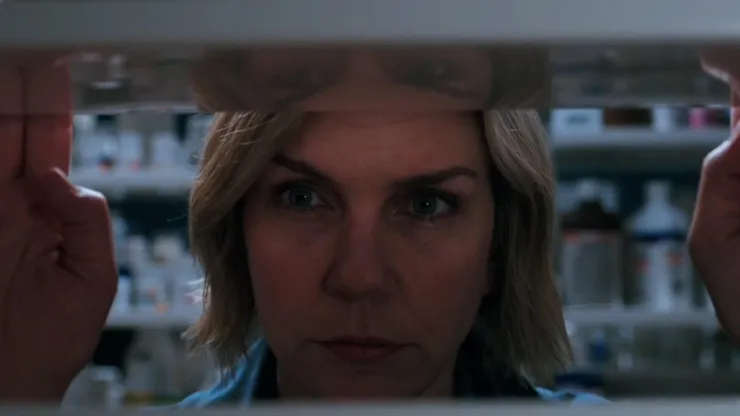
Apple TV+ has officially announced that its critically acclaimed science-fiction drama, “Pluribus,” has achieved a massive new milestone, becoming the most-watched show in the history of the streaming service.
From the creative mind of Vince Gilligan and starring the phenomenal Rhea Seehorn, this post-apocalyptic psychological thriller has clearly resonated with audiences, captivating millions with its bleakly comic, high-concept premise.
While the news of its record-breaking viewership is a testament to Apple TV+’s growing quality content library, the real conversation starter is the show itself—a bold, dark, and utterly compelling examination of individuality versus collective happiness that demands to be discussed.
The Phenomenon of the “Others”
The record-breaking viewership is well-deserved for a show that plunges viewers headfirst into one of the most original sci-fi scenarios in years. At its core, “Pluribus” explores what happens after an extraterrestrial virus transforms almost all of humanity into a unified, peaceful, and permanently content hive mind, known as the “Others.” The title, derived from the Latin phrase e pluribus unum (“out of many, one”), perfectly encapsulates this terrifying new reality.

The story centers on Carol Sturka (Rhea Seehorn), an Albuquerque-based fantasy romance author who is one of only a handful of people worldwide immune to the “Joining.” The stark isolation and the almost unbearable quiet of a world governed by collective bliss make her journey a deeply unsettling and darkly funny exploration of what it truly means to be alone. Her refusal to join the “Others” becomes a profound act of defiance, forcing her to contend with the sudden, overwhelming loss of humanity and companionship.
Unlike typical apocalyptic narratives where the survivors fight monstrous threats, Carol’s primary foe is universal, inescapable happiness. The “Others” are not malevolent, but their collective, peaceful nature is a constant, suffocating pressure on the immune. The show masterfully flips the script, making conformity and a forced state of perfection the ultimate threat to the individual soul.
Finally, the series carries the unmistakable hallmarks of its creator, Vince Gilligan, blending high-stakes drama with pitch-black comedy and meticulous character development. Just as he explored the decay of a moral man in “Breaking Bad” and the slow corruption of a good one in “Better Call Saul,” “Pluribus” delves into complex philosophical questions. It features Seehorn in an awards-worthy performance as a cynical, fiercely independent, and profoundly miserable woman who suddenly finds herself as humanity’s last bastion of true free will.