When the Rock and Roll Hall of Fame unveiled its 17 nominees at the end of February, it set off weeks of passionate discussion among fans and industry insiders alike.
As the induction ceremony approaches this fall, the question now is not just who made the list, but which of these figures has the legacy, influence, and staying power to earn a place in music history. Here, a closer look at the artists and bands in contention.
Mariah Carey

Mariah Carey, often called the “Songbird Supreme,” returns to the Rock & Roll Hall of Fame nominee list once again, bringing a vocal range and chart history that few artists have matched. With a five-octave range, signature whistle register, and 19 Billboard Hot 100 No. 1 hits, her success in pop and R&B has made her one of the best-selling and most influential artists of her generation. While her place in a traditionally rock institution sparks debate, her impact on the architecture of modern popular music is widely acknowledged, and this nomination honors her enduring legacy.
The Black Crowes
Back on the ballot after a previous nomination, the Robinson brothers once again represent the band’s blues-infused Southern rock sound. Their 1990 debut, Shake Your Money Maker, helped reintroduce a raw, classic-rock style to mainstream audiences at the start of the decade and established them as one of the era’s most prominent revivalist acts. With decades of touring and a catalog rooted in vintage influences, they remain a notable contender for induction.
Jeff Buckley
The late singer-songwriter earns his first appearance on the nominee list, a recognition that reflects the enduring impact of his singular catalog. Though his career was tragically cut short, his 1994 debut Grace has remained a touchstone for generations of listeners and has been cited as an influence by numerous indie and alternative artists. This nomination serves as a tribute to a voice and body of work that continue to resonate nearly three decades later.
Phil Collins
Already a resident of the Hall as a member of Genesis, Phil Collins earns a first solo nomination for his formidable individual career. From the distinctive impact of “In the Air Tonight” to a decade of chart dominance in the 1980s with a string of hit singles, his work as a singer, songwriter and multi-instrumentalist helped define a major strand of pop and adult-oriented rock. Few artists have found success both in a major progressive rock band and as a solo pop artist with such broad commercial reach.
Lauryn Hill
Nominated for the Rock & Roll Hall of Fame’s Class of 2026, Lauryn Hill makes her first appearance on the ballot as a solo artist. Her lone studio album, The Miseducation of Lauryn Hill, blended hip-hop, soul, R&B, and reggae into a landmark release that won five Grammy Awards, including Album of the Year, and remains one of the most acclaimed records of its era. Nearly three decades later, its influence and cultural resonance continue to shape conversations around artistry, identity, and social consciousness
Melissa Etheridge
A first-time nominee this year, Melissa Etheridge is known for her roots-infused rock sound and emotionally direct songwriting. Bursting onto the scene in the early 1990s with guitar-driven anthems and a distinctive voice, she was one of the few openly LGBTQ+ artists achieving mainstream success in that era. Her long career and influence on American rock and singer-songwriter music make her nomination a recognition of her enduring impact.
Billy Idol
A returning nominee, Billy Idol began his career in the London punk scene with Generation X before becoming a solo artist whose snarling look and MTV videos helped define 1980s rock-pop culture. With hits like “Dancing with Myself”, “White Wedding”, and “Rebel Yell”, he brought punk-infused energy into the mainstream and became one of the era’s most recognizable figures.
INXS
Appearing on the ballot for the first time in 2026, the Australian band achieved global success in the 1980s under the leadership of frontman Michael Hutchence. Blending new wave textures with funk-inflected, danceable rock, they scored international hits like “Need You Tonight” and “New Sensation,” becoming one of the decade’s defining acts. Their nomination recognizes a group whose sound and image helped shape the mainstream rock landscape of their era.
Iron Maiden
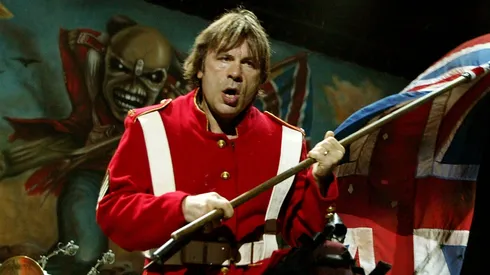
Nominated for the third time, Iron Maiden return to the ballot as one of the most prominent bands to emerge from the New Wave of British Heavy Metal. Known for their intricate compositions, galloping bass lines, and Bruce Dickinson’s commanding vocals, they have remained a dominant force in metal for more than four decades. Their continued absence from the Hall has been a frequent point of debate among fans and critics alike.
Joy Division/New Order
Nominated together for the third time, Joy Division and New Order are recognized as two chapters of the same Manchester story. After the death of Ian Curtis, the remaining members transformed Joy Division’s stark post-punk foundation into New Order’s influential blend of alternative rock and electronic dance music, helping shape the sound of the 1980s and beyond.
New Edition
Earning their first Rock & Roll Hall of Fame nomination, the Boston group is widely regarded as a key blueprint for the modern boy band format. Emerging in the early 1980s, they carried forward the harmony-driven pop-soul tradition associated with groups like The Jackson 5 while later connecting to the New Jack Swing movement through solo and spin-off projects.
Oasis
Returning to the Rock & Roll Hall of Fame ballot in 2026 following their high-profile 2025 reunion, Oasis remain one of the defining bands of the Britpop era. Led by brothers Liam and Noel Gallagher, their 1994 debut Definitely Maybe helped reignite guitar-driven British rock with a melodic sensibility often compared to The Beatles.
Pink
Since her debut in 2000, Pink has evolved from a pop-R&B newcomer into an artist known for incorporating rock influences into her music and high-energy arena performances. Recognized for her aerial stage production and themes of empowerment and resilience, she has sustained commercial success across multiple decades. Her first Rock & Roll Hall of Fame nomination in 2026 acknowledges a career that has bridged pop and rock audiences in the 21st century.
Sade
Sade Adu and her band, Sade, have been eligible for years, and this marks only their second appearance on the Rock & Roll Hall of Fame ballot. Their blend of sophisticated soul, jazz, and pop has had a lasting impact, particularly within hip-hop and R&B production circles. Their nomination recognizes a catalog defined by restraint, atmosphere, and enduring commercial success.
Shakira
Shakira earns her first nomination, reflecting the global influence of Latin music on the broader pop and rock landscape. Emerging from a Latin rock foundation before crossing into mainstream pop, she built an international career defined by distinctive vocals and cross-cultural musical fusion.
Luther Vandross
Luther Vandross earns his first Rock & Roll Hall of Fame nomination this year, recognizing a career defined by vocal precision, songwriting craft, and production expertise. One of the most celebrated R&B vocalists of his era, he helped shape the sound of sophisticated soul in the 1980s and 1990s. His influence continues to resonate across contemporary R&B, making his place on the ballot both overdue and consequential.
Wu-Tang Clan
Wu-Tang Clan make their first appearance on the Rock & Roll Hall of Fame ballot this year, bringing the legacy of Enter the Wu-Tang (36 Chambers) to the forefront. Under the direction of RZA, the nine-member collective reshaped 1990s hip-hop with stark, cinematic production and complex lyricism. Their group-and-solo blueprint redefined how a rap collective could operate commercially and artistically, making their nomination a significant moment for hip-hop’s place in the Hall.