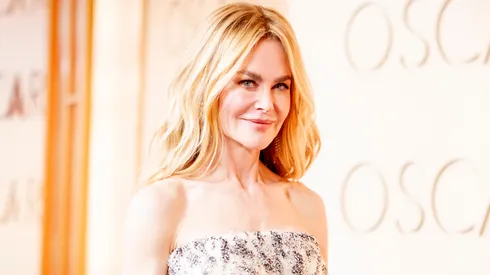
In a revelation shaped as much by grief as by intention, Nicole Kidman has stepped into unfamiliar territory, sharing that she is training as a death doula—a role far removed from the controlled emotional arcs of cinema.
The decision emerged after the death of her mother in 2024, an experience the actress has described as both intimate and quietly unsettling, marked by the realization that even the most devoted families cannot always provide the constant emotional presence a dying person may need.
Why Is Nicole Kidman Training as a Death Doula?
Nicole Kidman decided to train as a death doula after witnessing the emotional gaps in end-of-life care while her mother was dying, realizing that even close families cannot always provide constant presence and impartial comfort.
Her decision is rooted in a deeply personal experience. Following the passing of her mother in 2024, Kidman spoke candidly about the emotional weight of those final moments, describing a sense of absence that lingered despite the family’s best efforts. According to the San Francisco Chronicle, she explained:
“As my mother was passing, she was lonely, and there was only so much the family could provide. Between my sister and I, we have so many children and our careers and our work, and wanting to take care of her because my father wasn’t in the world anymore, and that’s when I went, ‘I wish there was these people in the world that were there to sit impartially and just provide solace and care”.
That reflection became the turning point. Rather than framing death as a purely medical process, Kidman began to see it as an emotional and human transition that often lacks dedicated support.
What Is a Death Doula?
Death doulas—still a relatively under-recognized role—step into that space, offering presence without the clinical boundaries that define doctors or hospice workers. They are there to listen, to sit in silence if needed, and to ease the psychological burden for both the dying and their loved ones.
Kidman’s move also mirrors a broader cultural shift: a growing openness to discussing death not as something to avoid, but as a phase that deserves intention and care.
In many ways, her interest aligns with the themes that have long defined her career—intimacy, vulnerability, and the complexity of human connection—but this time, the stakes are no longer fictional.
By training in this field, she is not stepping away from storytelling, but into a different kind of narrative—one that unfolds quietly, at the edge of life, where presence itself becomes the most meaningful act.