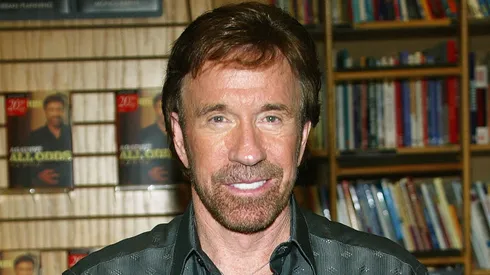
The passing of Chuck Norris at 86 closes the chapter on a career that never followed a single lane for long. According to a statement shared by his family on social media, the martial artist turned actor died peacefully, surrounded by those closest to him, after a recent hospitalization.
In remembering him, beyond the films and the mythology that grew around his name, one of his most enduring legacies played out in a far less glamorous setting, selling fitness equipment to late-night viewers who kept coming back for decades.
The Infomercial That Became a Movement
Norris’s transformation into a fitness mogul did not begin in a gym chain or a glossy magazine spread, but in the unassuming space of late-night television. Beginning in the mid-1990s, he partnered with Christie Brinkley to promote the Total Gym, a compact home workout system that would go on to become a staple of cable programming across the globe. What started as a straightforward endorsement evolved into one of the longest-running infomercial campaigns ever produced.
The pitch was simple but effective. Viewers were told they could achieve a full-body workout in minutes a day, guided by a figure whose physical credibility was difficult to question. Unlike many celebrity endorsements, Norris’s connection to the product felt personal. He had incorporated the machine into his own routine, and that consistency became central to the brand’s appeal.
Over time, the campaign expanded far beyond a single product. Norris leveraged his reputation as a disciplined martial artist to build a broader lifestyle identity, one that included books, training philosophies, and organizations like the United Fighting Arts Federation. His Kickstart Kids initiative further reinforced that image, positioning him as a mentor figure invested in long-term personal development rather than quick fixes.
The cultural timing proved ideal. As the “Chuck Norris Facts” phenomenon took off in the mid-2000s, the infomercials gained a second life, blending sincerity with a growing sense of irony. Rather than resist the joke, Norris leaned into it, allowing the humor to amplify his reach while maintaining the core message of discipline and longevity.
Today, as the world grieves a legend, those late-night appearances take on a different weight. The Total Gym was never just a product Norris endorsed, but the cornerstone of a business that translated his discipline into something tangible for millions. Over time, that consistency turned a simple infomercial into a lasting fitness empire.