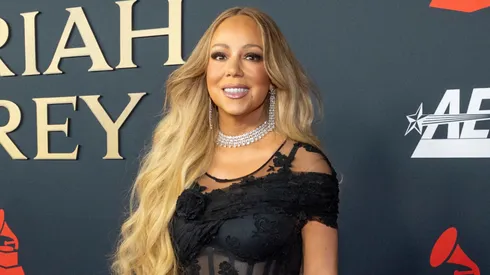
There are voices that define eras, and then there is Mariah Carey—a singer whose five-octave range and songwriting instincts helped shape the sound of modern pop and R&B. Emerging in 1990 under Columbia Records, she quickly became a chart phenomenon, blending gospel roots with radio-ready hooks.
Turning 57 is less a milestone than a reminder of endurance in an industry that rarely slows down. From the quiet vulnerability of early ballads to the genre-defining impact of tracks like Fantasy and the cultural permanence of All I Want for Christmas Is You, her music has continuously resurfaced across generations.
We Belong Together (2005)
At the top sits a song that feels almost inevitable in hindsight. “We Belong Together” didn’t just succeed—it dominated, becoming one of the defining tracks of the 21st century and reaffirming Mariah Carey’s place at the top of the industry.
Its impact is rooted in timing as much as execution. Arriving when her career demanded reinvention, the song delivered both critical and commercial validation. In doing so, it proved that longevity in pop music isn’t accidental—it’s built on moments like this, where artistry and opportunity align perfectly.
One Sweet Day (1995)
A collaboration with Boyz II Men, “One Sweet Day” captured a moment of collective grief and turned it into something enduring. Its 16-week run at No. 1 was unprecedented at the time, marking a high point in both artists’ careers.
Yet its legacy extends beyond numbers. The song’s themes of loss, remembrance, and hope have allowed it to resonate across generations, making it one of the most emotionally significant recordings in Mariah Carey’s catalog.
Without You (1994)
Covering an already well-known song is a challenge, yet Mariah Carey turned “Without You” into something entirely her own. Her interpretation elevates the emotional intensity, building from restrained verses to a powerful, climactic chorus.
What stands out is her control. Every vocal choice feels deliberate, transforming the song into a showcase not just of range, but of storytelling. It’s a reminder that great performances are as much about interpretation as they are about technique.
All I Want for Christmas Is You (1994)
Few songs have achieved the kind of cyclical dominance that “All I Want for Christmas Is You” enjoys. Initially released as part of a holiday album, it has since become a seasonal phenomenon, returning to the top of the Billboard Hot 100 decades after its debut.
Its construction is deceptively simple: a blend of nostalgic production, timeless melody, and universal theme. The result is a track that transcends its category, functioning less as a holiday song and more as a recurring global event.
Emotions (1991)
By the time “Emotions” arrived, Mariah Carey was no longer just a promising debut artist—she was a phenomenon under scrutiny. The track leaned into disco influences inspired by acts like The Emotions, giving her the perfect framework to expand her vocal identity beyond the ballads that first defined her.
What ultimately made the song stand out was its technical audacity. The whistle register wasn’t just a flourish; it became a signature. In doing so, Mariah redefined what mainstream pop vocals could sound like in the early ’90s, raising the bar for an entire generation of singers.

We Belong Together (2005)
Released during a pivotal moment in her career, “We Belong Together” wasn’t simply a hit—it was a recalibration. After a period of commercial inconsistency, the track restored Mariah Carey’s dominance, spending 14 weeks atop the Billboard Hot 100 and becoming one of the defining songs of the 2000s.
Its brilliance lies in its restraint. Rather than relying on vocal fireworks, the production strips everything back, allowing emotion to take center stage. That decision paid off, turning a song about heartbreak into one of the most universally resonant singles of its era.
Hero (1993)
Originally written for another artist, “Hero” evolved into one of Mariah Carey’s most personal recordings. Built around a simple piano-driven arrangement, the song places emphasis on lyrical clarity and emotional sincerity rather than technical complexity.
Over time, its meaning expanded far beyond its initial release. “Hero” became a staple at benefit concerts, memorials, and global events, transforming into a cultural anthem. Its longevity speaks to a different kind of power—one rooted not in charts, but in connection.
Always Be My Baby (1995)
There’s an effortless quality to “Always Be My Baby” that masks its precision. Released during one of the most prolific phases of her career, the track blends smooth R&B textures with pop sensibility, creating a sound that feels both intimate and widely accessible.
That balance is what has allowed the song to endure. Decades later, it remains a staple across radio and streaming platforms, proving that subtlety—when executed well—can be just as impactful as vocal intensity.
Vision of Love (1990)
A debut single rarely arrives with the authority of “Vision of Love.” From its opening notes, the song introduced a vocal style that was both technically complex and emotionally direct, immediately setting Mariah Carey apart from her peers.
Equally significant was its influence. The song’s use of melisma and dynamic phrasing became a blueprint for countless artists who followed, reshaping the sound of contemporary R&B and pop vocals in the decades that came after.
Fantasy (1995)
At first listen, “Fantasy” feels light and carefree, built around a catchy sample and an upbeat tempo. Yet beneath that surface lies one of the most important shifts in pop music during the ’90s.
By collaborating with Ol’ Dirty Bastard on its remix, Mariah blurred the lines between pop and hip-hop in a way that would soon become industry standard. It wasn’t just a hit—it was a turning point in how genres could coexist on the charts.