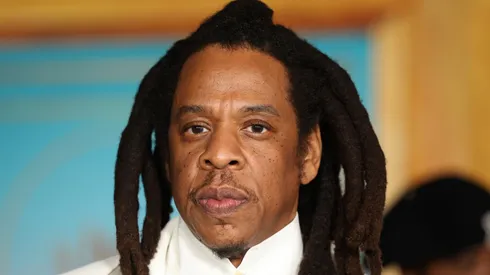
In a recent interview with GQ, Jay-Z made it clear he has no interest in being cast as a supporting character in someone else’s feud. He addressed the backlash over his decision to back Kendrick Lamar for the Super Bowl halftime show, a choice some fans interpreted as a slight toward Drake.
Jay-Z Isn’t Interested in Rap Politics
For Jay-Z, the controversy says more about the current climate than it does about his intentions. Asked whether selecting Lamar amounted to picking sides, he brushed off the premise entirely. “I chose the guy that was having a monster year. I think it was the right choice,” he said, framing the decision as a straightforward call rather than a coded message.

What seems to frustrate him is the expectation that every move in hip hop must be decoded for hidden allegiances. “What do I care about them two guys battling? What’s that got to do with me? Have at it,” he added, dismissing the idea that he should be entangled in their rivalry. At one point, he even laughed off the notion that he would quietly conspire against Drake, calling that narrative illogical.
That distance extends to how he views the feud itself. While clashes have long been embedded in hip hop’s DNA, Jay-Z suggested the current version comes with baggage that didn’t exist in earlier eras. He pointed to the genre’s foundational elements, noting that battling remains one of its pillars, but questioned whether today’s environment enhances or distorts it.
“We love the excitement and I love the sparring, but in this day and age, there’s so much negative stuff that comes with it that you almost wish it didn’t happen,” he said. The shift, in his view, is less about the artists and more about the ecosystem around them.
That ecosystem, he argued, has turned competition into something more personal and corrosive. “Now, people that like Kendrick hate Drake, no matter what he makes. It’s like an attack on his character,” he observed, adding that the escalation, particularly online, often spills beyond music. “It’s too far. It’s bringing people’s kids in it. I don’t like that.”
If there’s a throughline in Jay-Z’s comments, it’s a refusal to let spectacle override perspective. He’s seen how these rivalries build, recalling his own history with Nas as something that developed over time rather than exploding overnight. The difference now, he suggests, is that the aftermath lingers longer and hits harder, amplified by platforms that never let the moment pass.