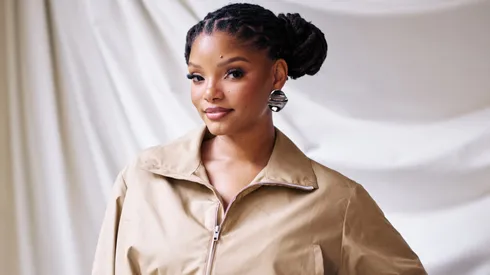
There is a particular kind of transition that defines a new generation of performers—the moment when a voice recognized in one space begins to echo across others. For Halle Bailey, that shift unfolded in real time.
First introduced to a wider audience as one half of Chloe x Halle under the mentorship of Beyonce, her early work blended tight harmonies with understated production, quietly building a reputation rooted in musical precision rather than spectacle.
That foundation made her leap to the screen feel less like a reinvention and more like an expansion. With her casting as Ariel in The Little Mermaid, she entered a different kind of spotlight—one shaped by legacy, expectation and global attention.
Top Halle Bailey’s Movies and Breakout Roles
The Little Mermaid (Ariel)
Halle Bailey takes on the role of Ariel in Disney’s live-action reimagining of The Little Mermaid, a production that places her at the center of one of the studio’s most iconic modern adaptations. The film combines large-scale visual effects with musical performance, requiring her to balance acting with the vocal demands of some of the franchise’s most recognizable songs.
Her casting became a global talking point long before release, and once the film arrived, her performance stood as a defining moment in her career trajectory. It marked her transition from recording artist to full-fledged leading actress in a major Hollywood production, anchoring a story that has been part of Disney’s cultural identity for decades.
The Color Purple (Young Nettie)
In The Color Purple, Halle Bailey portrays Young Nettie, the early-life version of a character central to the emotional structure of the story. The film itself is a musical adaptation of Alice Walker’s celebrated novel, brought to the screen through a high-profile production backed by major industry figures.
Although her screen time is more limited compared to leading roles, her performance contributes to the emotional foundation of the narrative. It places her within a broader ensemble cast where music, drama, and generational storytelling intersect, reinforcing her presence in projects that blend performance with strong cultural legacy.

Her Top 10 Songs — Chloe x Halle and Halle Bailey
“Do It”
“Do It” became a defining moment in Chloe x Halle’s mainstream breakthrough, built on a minimal beat that places full emphasis on vocal precision and rhythmic control. The track reflects a shift in their sound toward tighter production and a more confident, stylized R&B identity.
Beyond its sonic appeal, the song gained momentum through digital virality and playlist dominance, helping Ungodly Hour reach a broader audience. It positioned the duo not just as vocalists, but as architects of a modern R&B aesthetic shaped by restraint and clarity.
“Ungodly Hour”
The title track introduces a darker, more atmospheric layer to their discography, built around tension rather than immediacy. Its production relies on space and subtle layering, allowing their harmonies to feel more deliberate and emotionally charged.
As part of the album’s core identity, the song reflects a stage in their career where artistic control becomes central. It signals a move away from early experimentation into a more cohesive, concept-driven sound world.
“Forgive Me”
“Forgive Me” stands out for its sharp contrast between polished vocals and assertive lyrical framing. The track leans into themes of independence and self-definition, delivered through a structured and visually driven presentation.
Its impact was amplified by performance-heavy visuals that reinforced their artistic duality: vocalists who also think in cinematic terms. The song became a reference point for their ability to merge sound, choreography, and identity into a single narrative form.
“The Kids Are Alright”
This track captures the early foundation of Chloe x Halle’s artistic identity, blending optimism with a subtle undercurrent of emotional awareness. The production is more open and airy, allowing their harmonies to define the emotional texture.
It played a key role in establishing their presence beyond niche audiences, functioning as both an introduction and a statement of intent. The song reflects a stage where their sound was still expanding but already distinct.
“Happy Without Me”
“Happy Without Me” shifts into a more introspective space, built on restrained instrumentation and a slower emotional pace. The vocal delivery is understated, emphasizing emotional distance rather than resolution.
The track highlights their ability to operate within quieter dynamics, where subtlety replaces intensity. It adds depth to their catalog by exploring relational complexity without dramatic resolution.
“Warrior”
“Warrior” expands their sound into a more cinematic direction, originally appearing on The Kids Are Alright before gaining wider exposure through film association. The structure feels expansive, designed to carry emotional weight rather than immediate hooks.
Its themes of resilience and identity align closely with coming-of-age storytelling, making it one of their most narratively driven early works. The song bridges music and visual storytelling in a natural way.
“Ungodly Hour (Intro)”
The intro functions as a tonal blueprint for the album, built on layered harmonies and atmospheric restraint. It avoids traditional song structure in favor of mood establishment.
Rather than standing as a single, it operates as a framing device, setting expectations for a project defined by cohesion and sonic control. It prepares the listener for a more mature and structured artistic phase.
“In Your Hands”
“In Your Hands” leans into vulnerability through stripped-down production and intimate vocal phrasing. The arrangement prioritizes emotional clarity over complexity, allowing the lyrics to carry the weight of the track.
Its strength lies in its restraint, offering a contrast to more rhythm-driven songs in their catalog. It highlights their ability to communicate emotional depth without relying on dense instrumentation or vocal excess.
“Angel”
“Angel” marks one of Halle Bailey’s most significant solo vocal contributions, tied directly to The Little Mermaid soundtrack. The song is structured around character perspective, blending narrative storytelling with contemporary vocal delivery.
It represents a key transition point where her identity expands from duo member to standalone performer within a major cinematic production. The track also reinforces her integration into film-based musical storytelling.
“For the First Time”
This track captures a moment of discovery within The Little Mermaid, reflecting Ariel’s emotional experience entering an unfamiliar world. The arrangement supports a sense of openness and curiosity through its melodic structure.
Halle Bailey’s performance balances clarity and emotion, reinforcing her ability to operate within narrative-driven music. It stands as part of her early film-related musical identity, bridging acting and singing in a single performance space.