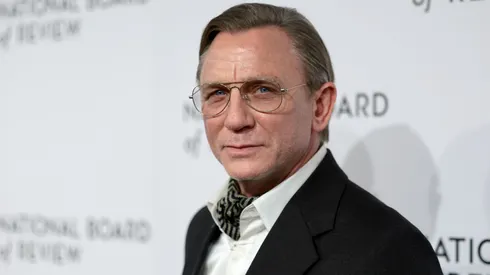
When Daniel Craig first stepped onto the screen as James Bond, few could have predicted how deeply his interpretation would redefine 007 for a new era. Gritty, introspective and physically commanding, his Bond became a benchmark for the franchise’s modern reinvention.
Beyond the tailored tuxedos and high-stakes set pieces, his career weaves through a surprising variety of genres, from psychological drama to taut crime thrillers. Each role has carried a thread of intensity that marks his evolving craft.
Now celebrating his 58th birthday, his body of work stands as a testament to versatility and quiet audacity — a career that has both challenged expectations and left an indelible imprint on contemporary cinema.
James Bond in Casino Royale (2006)

When Daniel Craig was announced as the sixth 007, the “Blonde Bond” backlash was relentless. However, he silenced critics within the first ten minutes of Casino Royale. Directed by Martin Campbell, the film stripped away the invisible cars and campy puns of the Pierce Brosnan era, delivering a brutal, fledgling agent who actually bled. Craig’s Bond wasn’t a polished superhero; he was a “blunt instrument” grappling with heartbreak and ego. This performance didn’t just save the franchise; it redefined the modern action hero as someone vulnerable and emotionally complex.
Detective Benoit Blanc in the Knives Out Series (2019–2022)
Just as the world wondered if he would be forever haunted by the ghost of 007, Craig teamed up with Rian Johnson to create a new icon. Benoit Blanc, the “Gentleman Sleuth” with a Foghorn Leghorn drawl, allowed Craig to showcase a theatricality and comedic timing that Bond had suppressed. Behind the scenes, Craig leaned into the absurdity, working closely with dialect coaches to perfect that distinct Southern lilt. The character became a streaming phenomenon, securing a massive multi-film deal with Netflix and proving Craig’s immense value outside of M16.
James Bond in Skyfall (2012)
If Casino Royale was the introduction, Skyfall was the masterpiece. Under the direction of Sam Mendes and the cinematography of Roger Deakins, Craig explored the obsolescence of the secret agent in a digital world. This film delved into Bond’s childhood trauma at the Skyfall estate, pitting him against Javier Bardem’s Silva. Craig’s performance was weary and weathered, capturing a man fighting against his own aging body and a changing world. It remains the highest-grossing film in the series, largely due to the gravitas Craig brought to the character’s internal struggle.
Joe Bang in Logan Lucky (2017)
In Steven Soderbergh’s “ocean’s 7-11,” Craig delivered what many consider his most transformative performance. Playing an incarcerated explosives expert with a penchant for hard-boiled eggs and chemistry, he was a comedic revelation. With bleached-blonde hair and a frantic energy, Craig shed every ounce of his leading-man vanity. It was a deliberate “palate cleanser” that signaled to the industry he was ready to play character roles rather than just the stoic protagonist.
Mikael Blomkvist in The Girl with the Dragon Tattoo (2011)
Working with David Fincher, Craig took a backseat to Rooney Mara’s Lisbeth Salander, a move few A-listers would make. As the disgraced journalist Mikael Blomkvist, Craig played a man who was frequently outmatched and physically overwhelmed. It’s a grounded, intellectual performance that required him to be the “straight man” in a cold, brutal thriller. Despite the film’s dark tone, Craig’s chemistry with Mara provided the necessary human spark that made the investigation compelling.
Connor Rooney in Road to Perdition (2002)
Long before the tuxedo, Craig proved he could be genuinely terrifying. In this Sam Mendes-directed mob drama, he played the jealous, unstable son of a crime boss (Paul Newman). It is a performance defined by insecurity and entitlement; Craig managed to make Connor Rooney both pathetic and dangerous. This role is often cited as the moment Hollywood casting directors realized he had the “steely gaze” necessary for high-stakes drama.
XXXX in Layer Cake (2004)
This stylish British crime thriller is essentially the “Bond Audition” tape. As a mid-level cocaine dealer trying to navigate a peaceful exit from the drug trade, Craig was cool, articulate, and immensely capable. Director Matthew Vaughn captured Craig’s ability to command a room without raising his voice. The film’s success proved that Craig could carry a movie on his back, blending the gritty reality of the London underworld with a polished, cinematic charisma.
William Lee in Queer (2024)
In his most recent collaboration with Luca Guadagnino, Craig took a massive artistic leap. Adapting William S. Burroughs’ semi-autobiographical novel, Craig plays an American expat in 1950s Mexico City who becomes obsessed with a younger man. The role is sexually frank and emotionally devastating, marking a total departure from his “tough guy” persona. Critics have hailed it as one of his most brave and “un-Hollywood” performances to date.
Steve in Munich (2005)
Under Steven Spielberg’s direction, Craig played a key member of a Mossad hit squad tasked with retaliating after the 1972 Olympics massacre. As Steve, the getaway driver with a short fuse, Craig represented the aggressive, uncompromising side of the mission. It’s a tense, nervous performance in a film that questions the morality of vengeance, showing Craig’s ability to thrive in a heavy, ensemble-driven historical narrative.
Tuvia Bielski in Defiance (2008)
Based on a true story, Craig portrays the leader of the Bielski partisans, who saved over 1,200 Jews during the Holocaust. Filmed in the freezing forests of Lithuania, the production was grueling. Craig’s performance is somber and authoritative, carrying the weight of a leader forced to make impossible ethical choices in a war zone. It showcased his ability to lead a traditional historical epic with grit and sincerity.