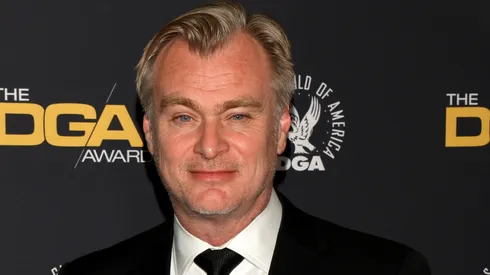
According to IMDb trivia, the Oscar-winning director has credited the films of Nicolas Roeg and, later, Terrence Malick, particularly “The Thin Red Line,” as major influences on the editing style that would come to define many of his own movies.
Nicolas Roeg and ‘The Thin Red Line’ Influenced Christopher Nolan
Before audiences associated Nolan with the fractured timelines of “Memento,” “Inception,” and “Tenet,” he was studying the work of filmmakers known for pushing the boundaries of cinematic storytelling. Among the earliest influences he has acknowledged is British director Nicolas Roeg, whose titles became known for their unconventional editing and fragmented narrative structures. Roeg’s style helped establish him as a lasting influence on generations of authors, including Nolan.
Nolan has also pointed to Terrence Malick’s work as an important creative reference, highlighting “The Thin Red Line” as a particularly significant inspiration. Released in 1998, the World War II epic stood out for its philosophical approach to war, lyrical visual style, and reflective editing, earning seven Academy Award nominations, including Best Picture and Best Director for Malick.

Rather than focusing solely on chronological storytelling, both Roeg and Malick became known for using editing to shape emotion, memory, and perspective. Those techniques can be seen throughout Nolan’s own filmography, where shifts in time and viewpoint became central to movies such as The Prestige, Dunkirk, and Oppenheimer.
Nolan’s fascination with cinematic form has continued into his most recent work. His latest feature, “The Odyssey,” adapts Homer’s epic poem with an ensemble cast led by Matt Damon and became the first feature film to be shot entirely on IMAX 70 mm cameras. The picture has earned critical acclaim since its release, adding another milestone to a career shaped in part by the filmmakers whose work first expanded his view of what editing could accomplish.