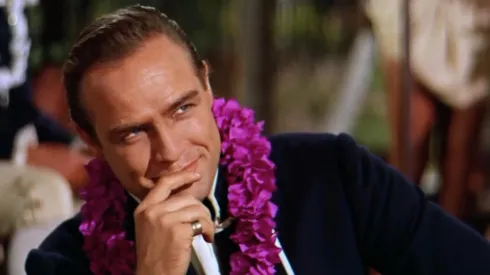
According to IMDb trivia and biographical accounts of the actor’s life, that search for privacy led him to purchase the Polynesian atoll of Tetiaroa, a place that remained deeply connected to him until his death in 2004. Twenty-two years after Brando’s passing, the island remains one of the most enduring symbols of the life he sought beyond the spotlight.
How Tetiaroa Became Marlon Brando’s Sanctuary
Brando’s connection to Tetiaroa began while filming “Mutiny on the Bounty” in the South Pacific. Captivated by Tahiti, its people, and its culture, he decided to buy the 12-island atoll in 1966 for about $270,000. Rather than seeing it as a lavish getaway, Brando envisioned the property as a place where nature, culture, and sustainable living could exist in harmony, far removed from the pressures of Hollywood.
His plans extended well beyond building a vacation home. Brando worked with architect Bernard Judge to develop modest structures that would blend into the landscape instead of overwhelming it. He also supported environmental initiatives on the atoll, including a research laboratory dedicated to protecting sea birds and marine turtles, while welcoming student groups interested in conservation. Although a hurricane destroyed many of the original buildings in the 1980s, Brando’s long-term vision centered on preserving the island’s natural and cultural heritage.
Life on Tetiaroa also reflected Brando’s desire for anonymity. He frequently communicated with passing boats and neighboring islands using amateur radio, introducing himself as “Mike” or “Martin Bumby” rather than using his famous name. He even encouraged fellow actor Johnny Depp to consider owning a private island of his own, having found in French Polynesia the sense of peace he rarely experienced elsewhere.
Despite his affection for the island, Brando still had to leave Tetiaroa periodically to fulfill acting commitments and attend to personal matters in the United States. Yet the atoll remained his true retreat, a place where he could step away from public attention and focus on interests that ranged from environmental protection to sustainable development.
After his death in 2004, his dream continued through the creation of The Brando, an eco-conscious luxury resort and research center developed on the island, while part of his ashes were scattered there, permanently linking him to the paradise he had chosen as his sanctuary.