Biopics promise insight into the lives of icons, rebels, visionaries, and villains, but dramatization often comes at a cost. In the pursuit of compelling storytelling, filmmakers sometimes bend timelines, invent confrontations, or exaggerate flaws, leaving the real people behind the legend frustrated or outright furious. These individuals publicly pushed back against the screen versions of their lives, arguing that what audiences saw was not accuracy but artistic license taken too far.
Michael Oher (The Blind Side)

The heartwarming tale of Oher’s journey to the NFL won Sandra Bullock an Oscar, but it left the athlete himself feeling like a caricature. Oher has long maintained that the film’s portrayal of him as intellectually simple or unaware of football’s basic strategy was insulting and damaging to his professional reputation. In 2023, the tension escalated into a legal battle when Oher alleged that the Tuohy family never actually adopted him, but instead placed him under a conservatorship for financial gain—a far darker reality than the movie suggested.
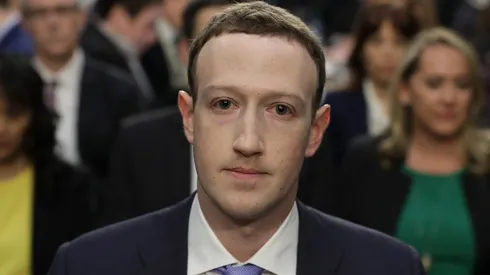
Mark Zuckerberg (The Social Network)
While the 2010 film was a critical darling, the Facebook co-founder was far from a fan of Aaron Sorkin’s sharp-tongued script. Zuckerberg took particular issue with the narrative’s central premise: that he created the social network to climb the social ladder or impress a girl who broke his heart. During a public Q&A years later, he expressed that the filmmakers simply couldn’t grasp the idea that someone might build something because they actually enjoyed building things, rather than for some melodramatic ulterior motive.
Patch Adams (Patch Adams)
The real Hunter “Patch” Adams is a dedicated social activist and doctor who spent decades revolutionizing healthcare, yet he felt the 1998 biopic reduced his life’s work to a series of cheap gags. Adams criticized the production for prioritizing Robin Williams’ comedic persona over the actual message of free, compassionate medical care. He famously remarked that the film made him look like a “funny doctor” while ignoring his political activism and the complexities of his mission to build a free hospital.
Ike Turner (What’s Love Got to Do with It)
Though the film was based on Tina Turner’s autobiography, Ike Turner spent the remainder of his life vehemently denying the level of brutality depicted on screen. He argued that while their relationship was undeniably volatile, the movie exaggerated his villainy for cinematic effect, specifically disputing several of the most violent scenes. Turner claimed the biopic permanently tarnished his musical legacy, leaving him to be remembered more as a cinematic monster than as a pioneer of rock and roll.
David Letterman (The Late Shift)
When HBO dramatized the late-night wars of the early ’90s, David Letterman didn’t hold back his vitriol for the way he was portrayed. He famously ridiculed John Michael Higgins’ performance on his own show, comparing the actor’s interpretation of him to a “circus chimp” and a “budding psychopath.” Letterman found the picture’s focus on his neuroses and temper to be a “waste of film,” opting to mock the production’s inaccuracies for years following its 1996 release.
Olivia de Havilland (Feud: Bette and Joan)
The legendary Gone with the Wind star was so incensed by her portrayal in the 2017 FX miniseries that she filed a landmark lawsuit against the network at the age of 101. De Havilland took particular issue with a scene where her character, played by Catherine Zeta-Jones, refers to her sister Joan Fontaine as a “b**ch,” a term the actress claimed she never used in her life. She argued that the show’s depiction of her as a vulgar gossipmonger was a false light character assassination that traded her hard-earned reputation for integrity for the sake of cheap, modern sensationalism.
Julian Assange (The Fifth Estate)
The WikiLeaks founder was so opposed to this 2013 biopic that he actually wrote a personal letter to lead actor Benedict Cumberbatch before filming began. Assange described the script as a “massive propaganda attack” and urged the actor to walk away from the project to avoid being used as a “hired gun” for a distorted narrative. He remained a vocal critic of the film, claiming it was designed to delegitimize his organization and assassinate his character through a falsified history.
Patrizia Reggiani (House of Gucci)
The “Black Widow” of the Gucci dynasty was notably offended when Lady Gaga took on her role without ever reaching out for a consultation. Reggiani, who served 18 years for orchestrating the murder of her ex-husband, told Italian media that it was a matter of “good sense and respect” for an actress to meet the person they are portraying. She felt the production ignored her perspective entirely, opting instead for a Hollywood-ized version of the family’s tragic downfall.
Lil’ Kim (Notorious)
The Queen Bee did not hold back her fury regarding the 2009 Biggie Smalls biopic, directed by George Tillman Jr. Lil’ Kim slammed the film for its portrayal of her relationship with the late rapper, claiming the actress cast to play her looked nothing like her and that the script diminished her actual contributions to the music industry. She felt the production focused far too much on a jealous mistress trope, effectively stripping away her agency and the power she held as a hip-hop pioneer in her own right.
Jada Pinkett Smith (All Eyez on Me)
When the Tupac Shakur biopic hit theaters in 2017, Jada Pinkett Smith took to social media to express her profound disappointment, describing the reimagining of her relationship with the late rapper as “deeply hurtful.” The actress specifically debunked several key scenes designed for emotional weight, stating that these moments never actually occurred. Pinkett Smith clarified that her friendship with Shakur was too precious to allow the film’s manufactured drama to stand as truth, though she was careful to praise the actors involved for doing the best they could with an inaccurate script.