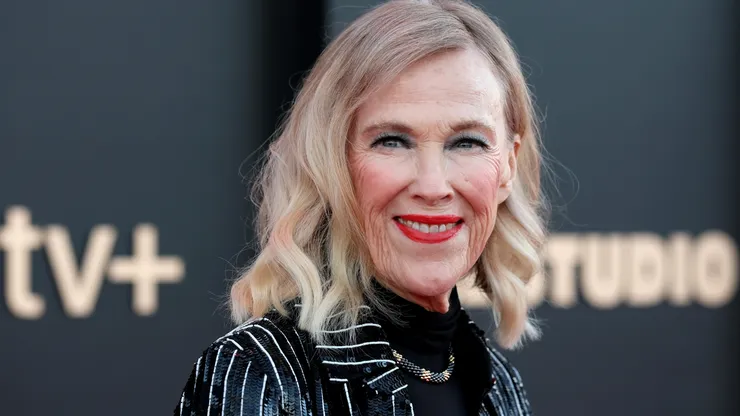
Today, March 4, 2026, marks the first birthday of the incomparable Catherine O’Hara since her passing earlier this year. To say the entertainment industry is still reeling would be an understatement; just last week, at the 2026 Actor Awards, a tearful Seth Rogen accepted a posthumous trophy on her behalf, leading the room in a three-minute standing ovation. O’Hara was a rare breed of talent: a “comedian’s comedian” who eventually became a global fashion icon and a symbol of resilient maternal warmth. Whether she was screaming for Kevin or introducing us to the “bebé,” her career was a masterclass in commitment.
The Posthumous Win for ‘The Studio’ (2026)
The industry’s final gift to O’Hara came just days ago at the 32nd Annual Actor Awards, where she was honored for her role in The Studio. Playing a razor-sharp Hollywood executive, she demonstrated that her wit was as biting and precise as ever. The win served as a poignant final curtain call, cementing her status as the only actor to sweep the awards circuit posthumously for a performance that remained “vibrant and devastatingly funny” until the very end.
Kate McCallister: The Icon of Parental Panic
IMDb
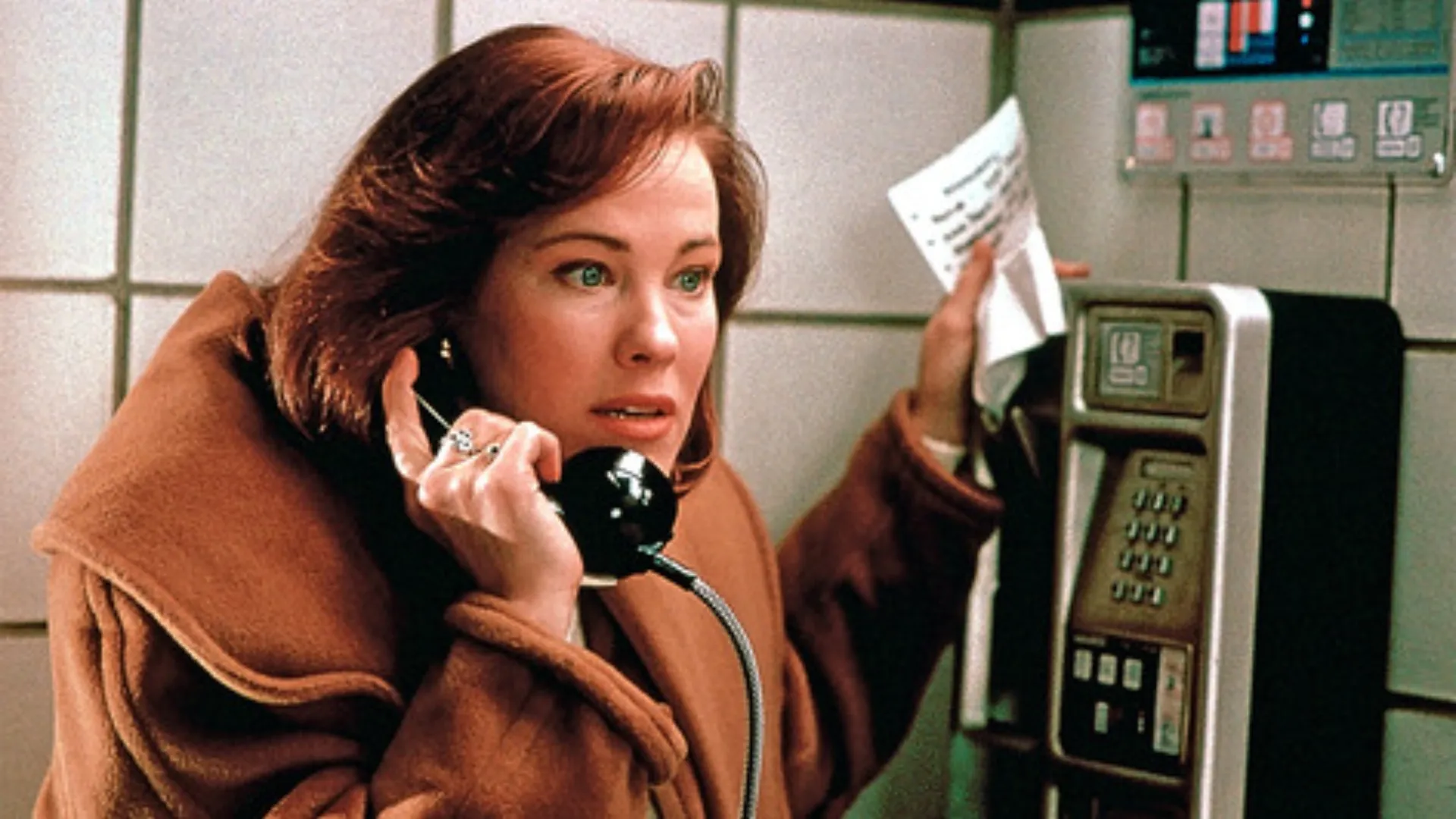
In 1990, O’Hara delivered the most famous yell in cinematic history, a two-syllable explosion of realization that still haunts airports every December. As the mother in Home Alone, she provided the emotional stakes that balanced the slapstick violence of the film. Her portrayal of Kate McCallister remains the gold standard for “holiday movie” performances, capturing the raw, frantic desperation of a parent who will stop at nothing to get home.
The “Day-O” Possession in ‘Beetlejuice’
IMDb
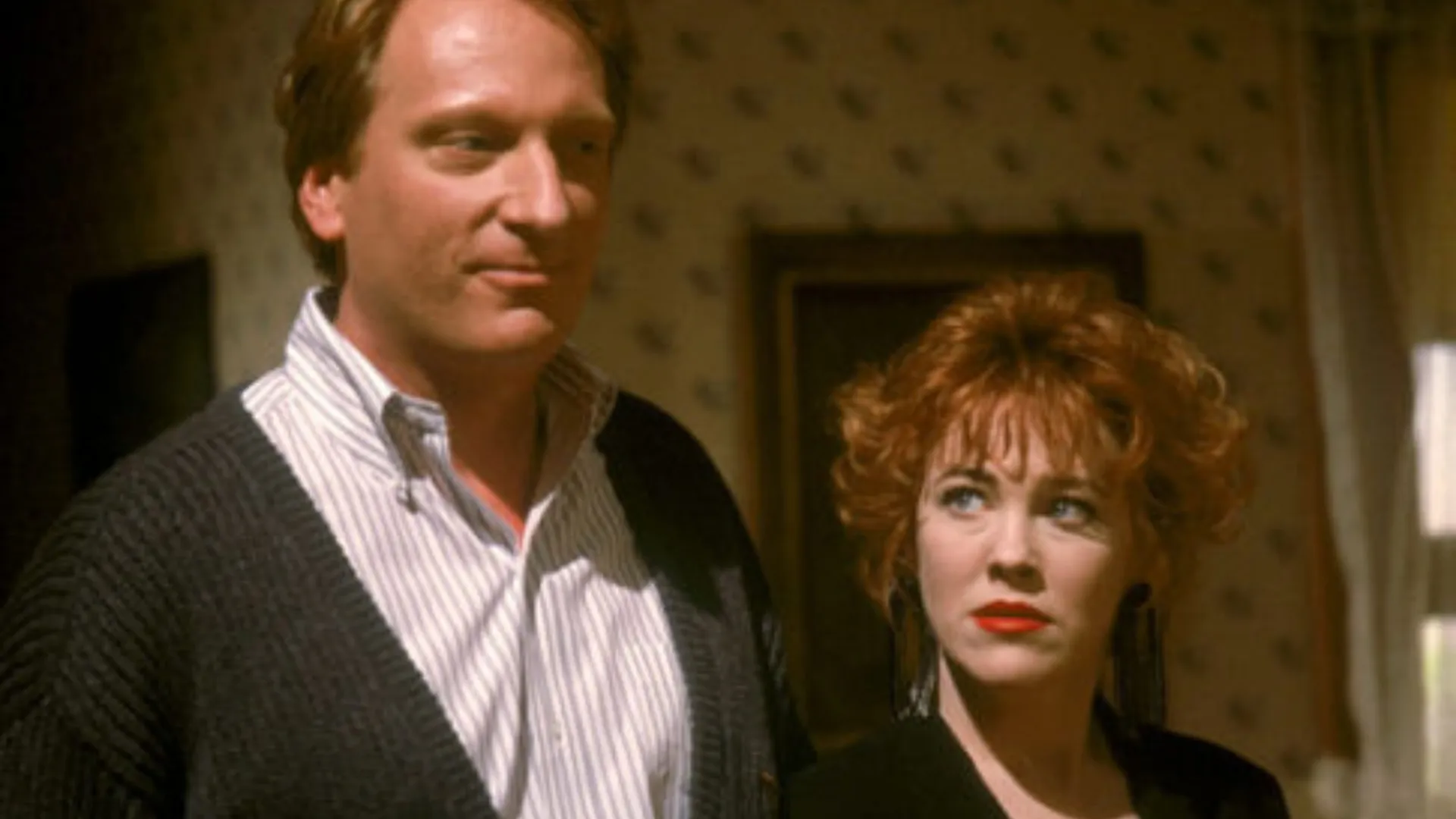
As the pretentious artist Delia Deetz, O’Hara participated in the most iconic musical possession in film history. Her involuntary dance to Harry Belafonte’s “Banana Boat Song” showcased her incredible physical comedy and her willingness to look utterly ridiculous. It established her as a Tim Burton favorite and a queen of the “quirky-chic” aesthetic that would define the rest of her 80s and 90s filmography.
Moira Rose in Schitt’s Creek
IMDb
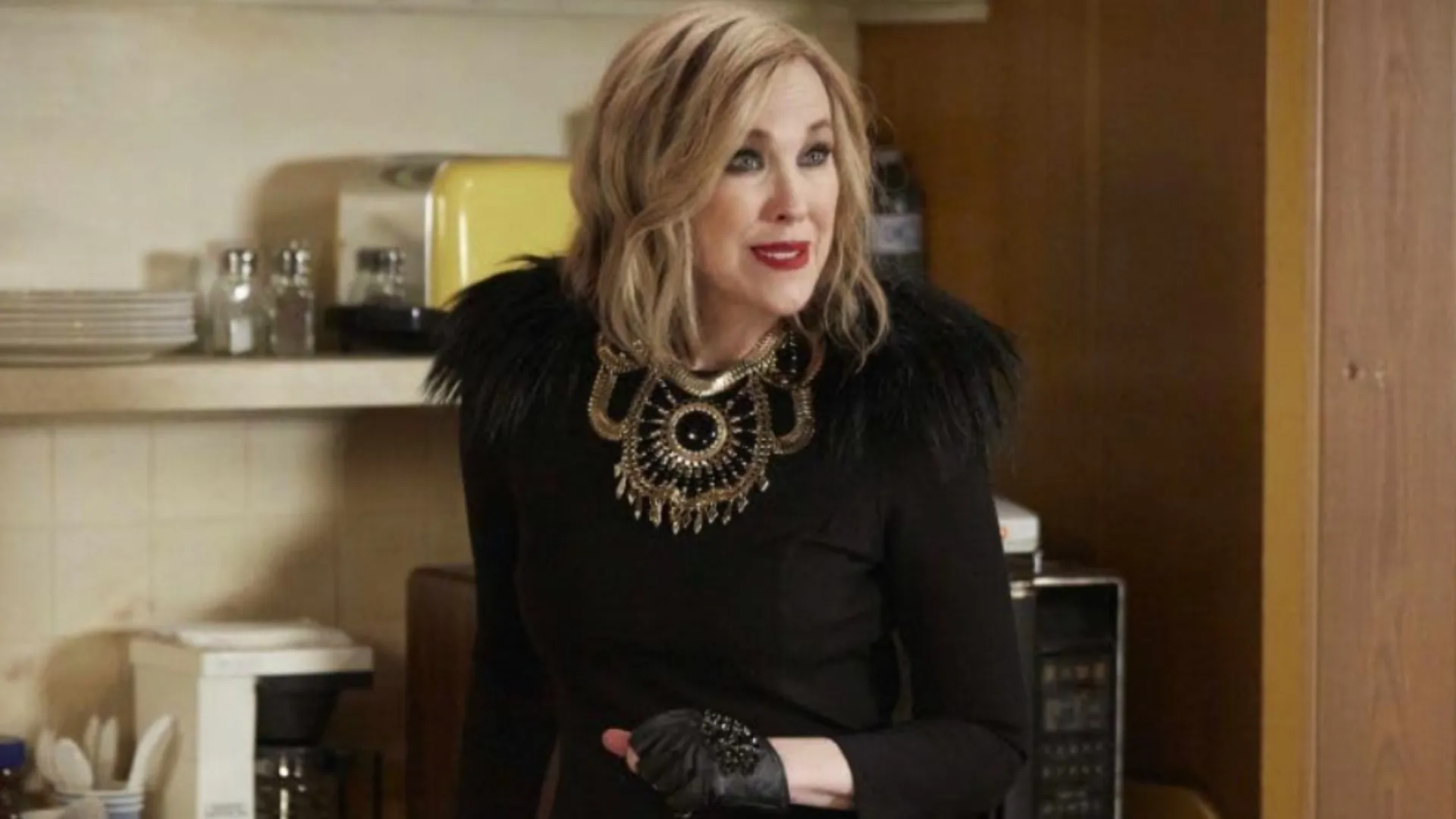
The role that defined the late 2010s and earned O’Hara a historic Emmy sweep was the inimitable Moira Rose. With a vocabulary that required a dictionary and an accent that came from nowhere and everywhere, Moira became a symbol of resilience and eccentric vanity. O’Hara’s choice to give the character a “wall of wigs” and a dramatic, “bebe-infused” cadence turned a fallen socialite into a global icon of self-love and family loyalty.
One of Catherine’s most famous creative contributions to this role was the idea that Moira Rose should own a vast collection of “girls”—her wigs. Each wig represented a different mood, a shield against their sudden poverty, or a way to reinvent herself for a new audience. The “Wall of Wigs” became a character in its own right, symbolizing the colorful, protective layers we all wear to survive life’s most difficult plot twists.
On this day we don’t just mourn the loss of Catherine O’Hara; we celebrate the fact that we got to live in her era. She taught us that it’s okay to be “too much,” that family is the most important “ensemble” we’ll ever belong to, and that a well-placed wig can fix almost anything.