
Each awards season, dozens of films compete for the attention of the Academy of Motion Picture Arts and Sciences, but only a handful manage to dominate the ballot. Across nearly a century of the Academy Awards, certain productions have stood above the rest, collecting an extraordinary number of nominations and turning their release year into a showcase of cinematic ambition.
The titles that accumulate the most nominations rarely succeed by accident. They often arrive as cultural events. Whether set in distant historical eras or rooted in intimate human drama, these films share a common trait: they managed to impress nearly every branch of the Academy at once, securing their place among the most recognized achievements in Oscar history.
The Grand Budapest Hotel (2014) — 9 nominations, 4 wins

(Source: IMDb)
Few films have ever looked quite like The Grand Budapest Hotel. Directed by Wes Anderson, the film blends whimsical storytelling with meticulous visual design, creating a fictional Central European world that feels both nostalgic and surreal. At the center is Ralph Fiennes as Gustave H., a legendary concierge whose devotion to elegance and etiquette turns him into an unlikely hero.
When the film arrived at the Academy Awards, it quickly became one of the most celebrated productions of the year. Its nine nominations reflected the Academy’s admiration for the film’s technical artistry, particularly in costume design, production design, and makeup. Ultimately, it won four Oscars, proving that Anderson’s idiosyncratic style could resonate with the industry’s highest honors.
Birdman (2014) — 9 nominations, 4 wins

(Source: IMDb)
Cinema occasionally reinvents its own language, and Birdman felt like one of those moments. Directed by Alejandro González Iñárritu, the film follows a fading Hollywood star—played by Michael Keaton—attempting to reclaim artistic legitimacy through a Broadway play.
What made Birdman extraordinary was its illusion of being filmed in a single continuous take, a daring stylistic choice that turned the entire movie into a kind of cinematic high-wire act.
The Academy rewarded that ambition with four Oscars, including Best Picture, Best Director, Best Original Screenplay, and Best Cinematography. Its nine nominations highlighted how bold filmmaking can captivate both critics and voters.
Avatar (2009) — 9 nominations, 3 wins

(Source: IMDb)
When Avatar premiered, it didn’t just dominate the box office—it transformed the conversation around visual effects. Directed by James Cameron, the film transported audiences to the alien moon of Pandora, where the conflict between human expansion and indigenous life unfolds in spectacular fashion.
At the Academy Awards, Avatar received nine nominations and won three Oscars, primarily for its groundbreaking technical achievements. The film’s use of motion capture, 3D technology, and digital world-building set a new standard for blockbuster filmmaking and helped usher in a new era of large-scale visual storytelling.
Mad Max: Fury Road (2015) — 10 nominations, 6 wins

(Source: IMDb)
For decades, action movies rarely dominated the Oscars. Then came Mad Max: Fury Road. Directed by George Miller, the film reinvented the post-apocalyptic franchise with relentless energy, turning nearly every minute of its runtime into a kinetic spectacle.
The Academy responded with ten nominations and six wins, most of them in technical categories like editing, sound, and production design. The film’s practical stunts and immersive world-building earned widespread acclaim, proving that blockbuster action cinema could also be considered high artistic achievement.
The Lord of the Rings: The Return of the King (2003) — 11 nominations, 11 wins

(Source: IMDb)
Few Oscar stories are as triumphant as the one behind The Lord of the Rings: The Return of the King. Directed by Peter Jackson, the final installment of the fantasy trilogy concluded one of cinema’s most ambitious adaptations.
At the Academy Awards, the film achieved a perfect record: 11 nominations and 11 wins, including Best Picture and Best Director. The sweep reflected not only the film itself but the monumental effort behind the entire trilogy, which transformed The Lord of the Rings into a landmark cinematic saga.
Life of Pi (2012) — 11 nominations, 4 wins

(Source: IMDb)
Adapted from the novel by Yann Martel, Life of Pi was widely considered an impossible book to bring to the screen. Director Ang Lee proved otherwise. The film tells the surreal survival story of a boy stranded in the Pacific Ocean with a Bengal tiger.
Its striking visual effects and philosophical themes earned 11 Oscar nominations and four wins, including Best Director for Lee. The movie became a testament to how visual storytelling can turn an intimate fable into a grand cinematic experience.
Joker (2019) — 11 nominations, 2 wins

(Source: IMDb)
Comic book films rarely dominate the Oscars, but Joker changed that narrative. Directed by Todd Phillips, the film offers a dark character study of Gotham’s most infamous villain.
With 11 nominations, the film became one of the most recognized comic book adaptations in Oscar history. Joaquin Phoenix won Best Actor for his unsettling portrayal of Arthur Fleck, turning the film into a cultural phenomenon that blurred the lines between blockbuster entertainment and psychological drama.
The Revenant (2015) — 12 nominations, 3 wins

(Source: IMDb)
Survival cinema rarely looks as visceral as it does in The Revenant. Directed by Alejandro González Iñárritu, the film follows frontiersman Hugh Glass as he fights to survive in the unforgiving American wilderness.
The production became famous for its demanding filming conditions and its use of natural light. With 12 nominations, the film dominated the awards conversation, ultimately earning three Oscars—including Best Actor for Leonardo DiCaprio after years of nominations.
One Battle After Another (2025) — 13 nominations

(Source: IMDb)
One Battle After Another, directed by Paul Thomas Anderson, quickly emerged as one of the most talked-about releases of its awards season. Known for his meticulous storytelling, Anderson delivered a film that blends political intrigue, character drama, and sweeping narrative scope.
With 13 nominations at the Academy Awards, the film joined a rare group of productions that managed to capture the attention of nearly every branch of the Academy. Its nominations reflected the industry’s admiration for Anderson’s distinctive style and ambitious storytelling.
Oppenheimer (2023) — 13 nominations, 7 wins

(Source: IMDb)
In Oppenheimer, director Christopher Nolan turned the story of physicist J. Robert Oppenheimer into a sweeping historical epic about science, power, and moral responsibility.
The film’s 13 nominations reflected widespread acclaim for its performances, editing, and storytelling. It ultimately won seven Oscars, including Best Picture and Best Director, cementing Nolan’s reputation as one of modern cinema’s most influential filmmakers.
Titanic (1997) — 14 nominations, 11 wins
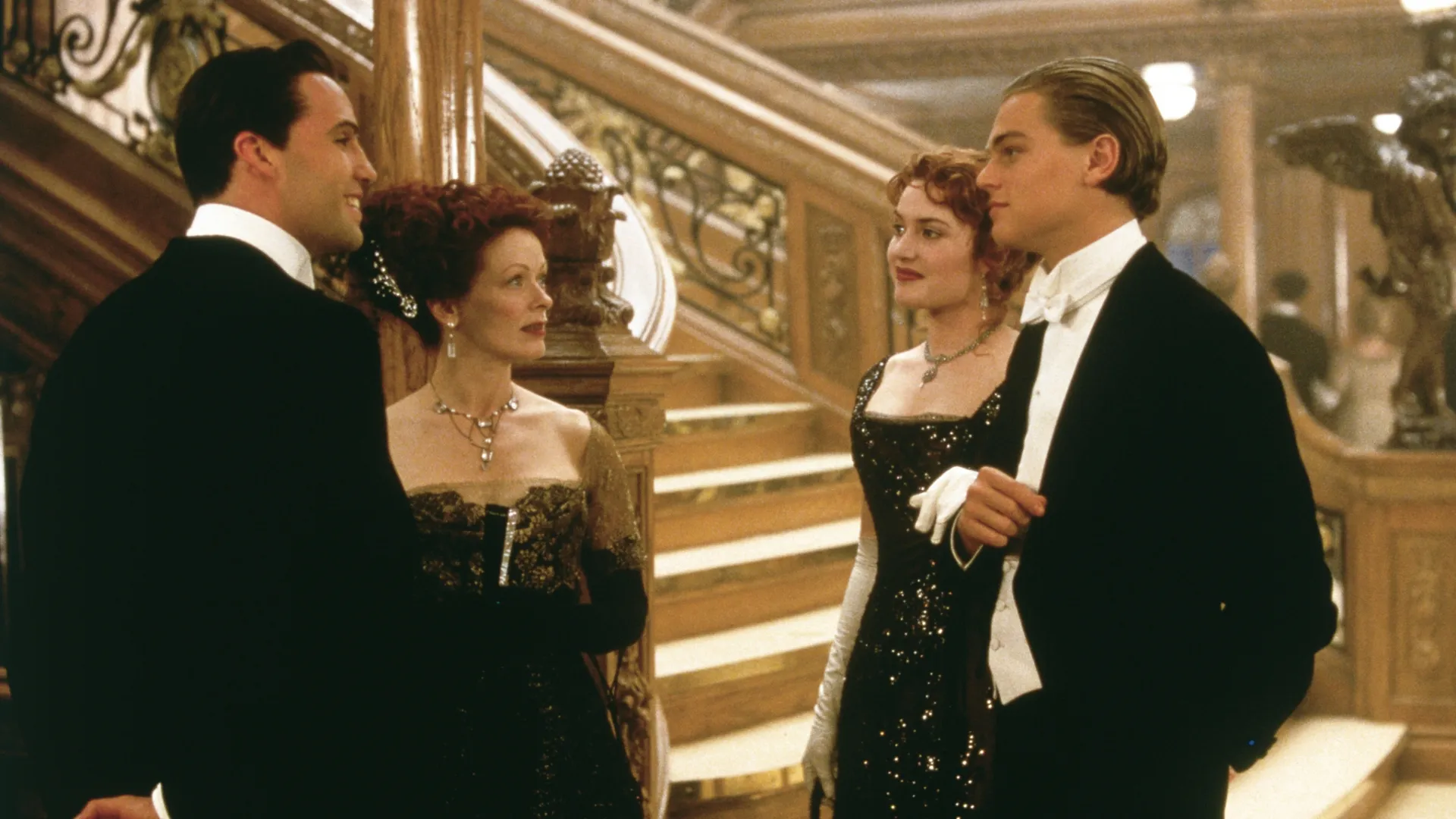
(Source: IMDb)
Epic romance, disaster spectacle, and groundbreaking visual effects all converged in Titanic. Directed by James Cameron, the film dramatized the tragic sinking of the RMS Titanic through the fictional love story of Jack and Rose.
The Academy rewarded the film with 14 nominations and 11 wins, tying the record for most Oscars won by a single movie. Its cultural impact extended far beyond awards season, turning it into one of the most iconic films in cinematic history.
Sinners (2025) — 16 nominations

(Source: IMDb)
Among the most remarkable awards-season stories in recent memory is Sinners, which set a new benchmark with 16 Academy Award nominations. The film’s sweeping recognition across acting, directing, and technical categories placed it in rare territory within Oscar history.
Such a nomination haul signals more than popularity—it suggests a production that resonated across the Academy’s many branches. From performances to cinematography and design, the film’s recognition reflects the kind of broad industry admiration that only a handful of movies have ever achieved.