
From stories where class barriers collapse into violence to grotesque explorations of indulgence and moral decay, filmmakers have mined the rich for fear, satire and societal critique. Some movies unmask the decay beneath luxury, turning polished surfaces into arenas of envy and desperation.
Other works go beyond social satire into biting psychological territory, questioning not just what the elite have, but what they become when unchecked power meets human flaw. Whether through surreal traps of entitlement, roaring excess or economic corruption, these titles reveal worlds where privilege is both shield and weapon.
The Neon Demon

Elle Fanning in The Neon Demon (Source: IMDb)
Nicolas Winding Refn pushes the glamour of Los Angeles to the edge of surrealism in The Neon Demon (2016), where beauty is not merely a form of currency but a kind of violence.
The film follows a young model whose youth and perfection ignite a spiral of obsession, envy, and near-religious devotion to aesthetics within the fashion industry—a world that devours what it promises to elevate.
Refn’s camera transforms runways and hotels into chambers of worship and sacrifice, suggesting how the cult of appearance can distort the psyche as profoundly as the elites who sustain it.
Under the Silver Lake

Andrew Garfield in Under the Silver Lake (Source: IMDb)
In the unsettling neo-noir Under the Silver Lake (2018), Los Angeles becomes a tapestry of conspiracies and secrets visible only to the obsessive. The protagonist, played by Andrew Garfield, wanders through a metropolis where hidden codes, celebrity symbols, and clandestine narratives seem designed to protect an elite living behind dazzling facades.
The film’s commentary on conspiracy culture and collective perceptions of fame portrays Hollywood as a coded network that privileges surface over truth, suggesting that those who look too closely may become trapped in power games they cannot fully understand.
Eyes Wide Shut

Tom Cruise in Eyes Wide Shut (Source: IMDb)
Stanley Kubrick’s final film immerses itself in the secret intimacy of the powerful. Following Dr. Bill Harford through the closed halls of an elitist sexual ritual, Eyes Wide Shut (1999) uses visual language and psychological tension to expose how high-society circles protect hidden pacts behind masks and codes. More than an erotic thriller, it becomes a fable about unequal access: doors closed to some, private ceremonies reserved for others.
Martyrs

Mylène Jampanoï in Martyrs (Source: IMDb)
Although not a film about traditional elites, Martyrs (2008) explores another form of structural darkness: a secret society convinced it can transcend human experience through systematic torture.
What begins as a revenge story becomes a brutal excavation of pain, vulnerability, and cruelty organized in the name of “truth.” The narrative—divisive among critics and audiences for its raw violence and obsessive themes—raises unsettling questions about who claims the right to inflict suffering and why, reflecting the worst justifications power structures give themselves.
Society
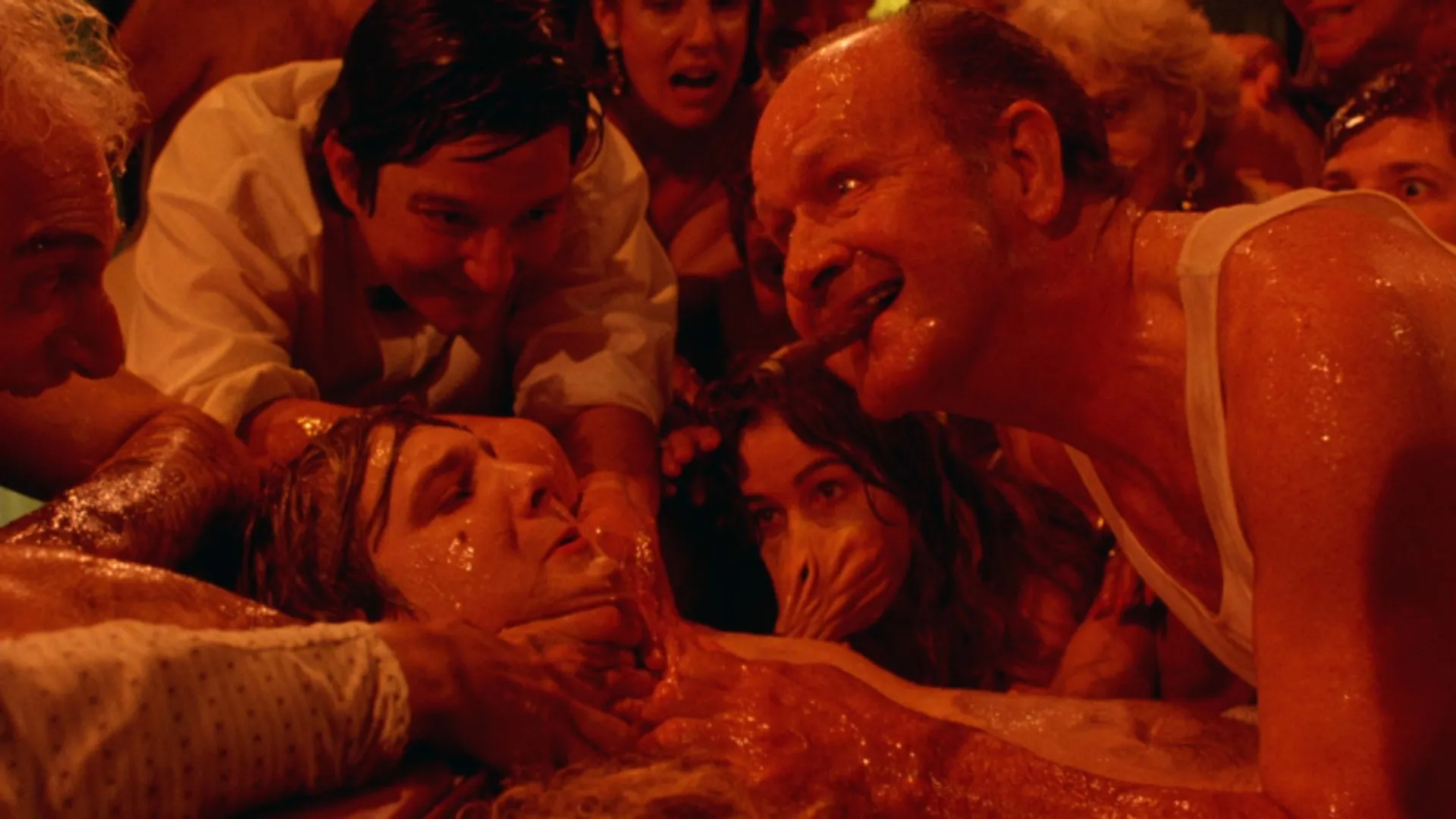
Tim Bartell and David Wiley in Society (Source: IMDb)
This grotesque 1980s cult film is far more than an odd horror title; it is a savage satire of the upper class. Beneath its bizarre surface lies a society literally and figuratively different from everyone else, where the wealthy transform and mutate into impossible bodies during rituals that evoke disconnection and metaphorical cannibalism.
Using extreme practical effects, the film suggests that at the highest economic levels, moral rules are another illusion—and the true nature of power is oppressive, distorted, and monstrous.
Dark City

Kiefer Sutherland in Dark City (Source: IMDb)
Blending science fiction and noir, Dark City presents a shadowy, inexplicable metropolis controlled by an elite that manipulates human memories and destinies. The story depicts a minority capable of reshaping reality itself, rewriting lives as if they were toys.
While not directly about traditional socioeconomic elites, the film employs a cosmic metaphor to explore how invisible, immutable powers can dictate human perception and experience without ever being held accountable.
Salò, or the 120 Days of Sodom
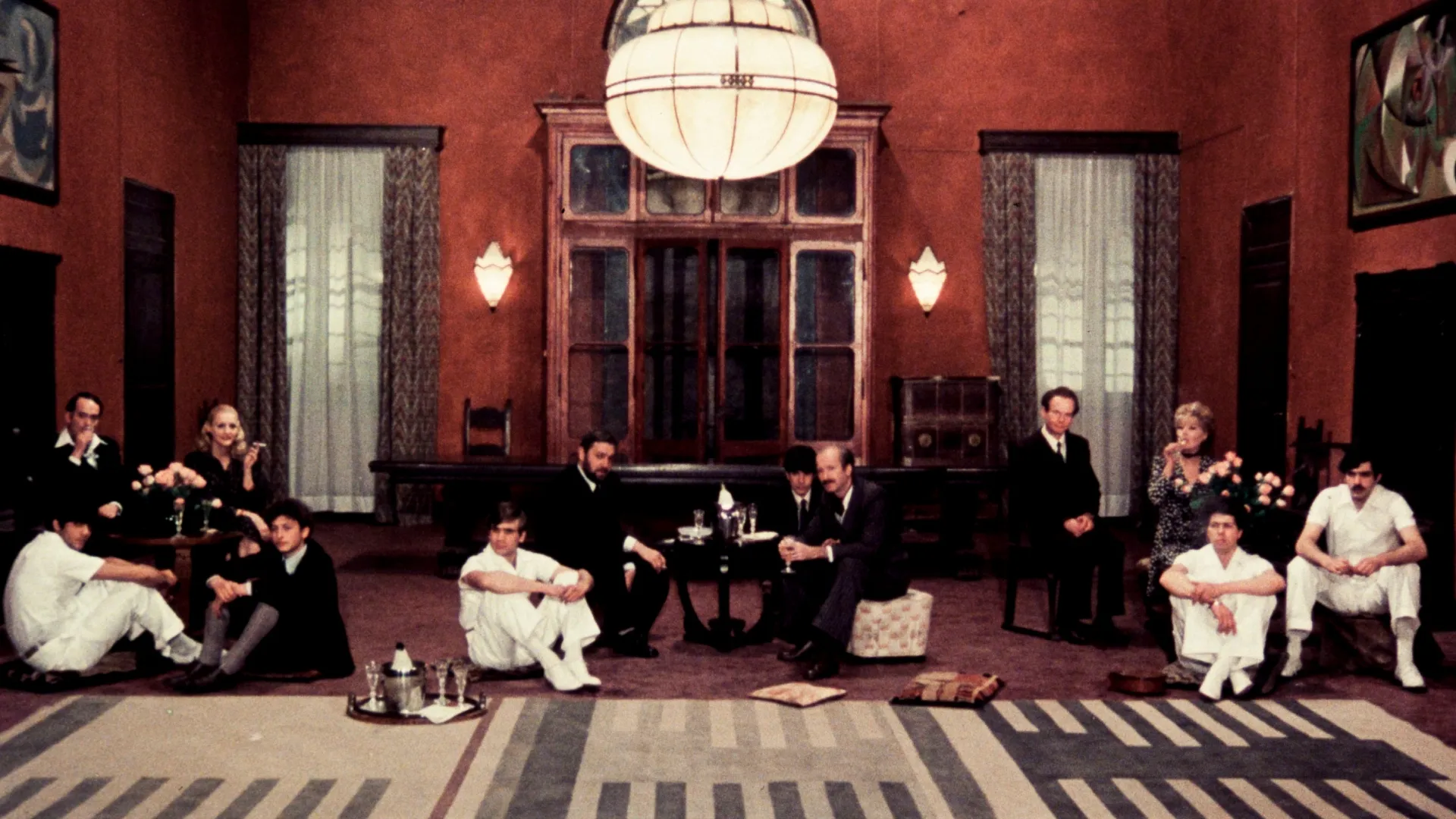
Salò, or the 120 Days of Sodom (Source: IMDb)
One of the most provocative works of art cinema, Salò, or the 120 Days of Sodom transforms the Marquis de Sade’s brutal novel into an allegory of how absolute power can devolve into total domination over bodies and dignity.
Set in the Republic of Salò during World War II, Pasolini deploys violence, sadism, and humiliation as instruments of totalitarian control and a critique of abuse of power—a radical vision of how the most protected circles can annihilate humanity itself.
The Conformist
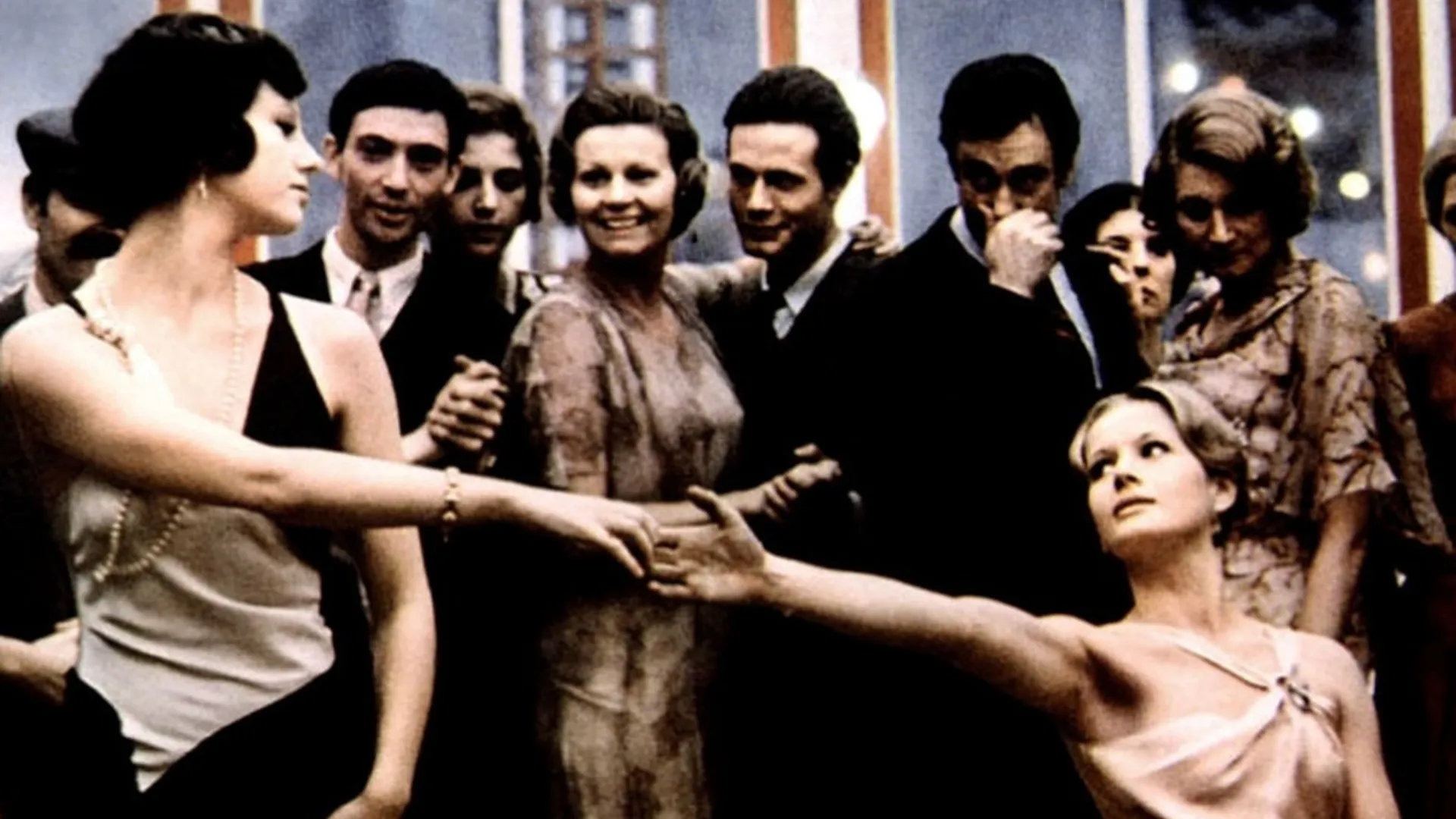
Dominique Sanda and Stefania Sandrelli in The Conformist (Source: IMDb)
This landmark of Italian cinema examines how social pressure and the desire to fit into “normality” can lead a man to embrace authoritarian structures he believes will validate his identity.
More subtle than others on this list, The Conformist dissects the psychology of power and obedience, revealing how political and social elites are built and sustained through cultural submission, fear, and the uncritical acceptance of authority.
Infinity Pool

Alexander Skarsgard and Mia Goth in The Menu (Source: IMDb)
This contemporary film plays with identity and consequence within privileged circles. Infinity Pool explores what happens when characters with money and power believe themselves beyond social or legal repercussions—an illusion of impunity at the heart of a paradise resort—until violence and decay begin to erode their certainty. The film merges social reflection with psychological disturbance to portray an elite that forgets every action ultimately carries a cost.
The Hunt

Hilary Swank, Vince Pisani, Teri Wyble and Hannah Alline in The Hunt (Source: IMDb)
What begins as political satire quickly reveals itself as something more primal: humans turned into sport for the amusement of the powerful. The film stages its violence with deliberate provocation, framing ideological division as spectacle while exposing the deeper impulse beneath it—the belief that status grants the right to decide who matters and who does not.
Beneath the bloodshed lies a sharper critique of polarization and privilege. Power here is not elegant or hidden; it is casual, recreational, and disturbingly justified by those who wield it.
American Psycho

Christian Bale in American Psycho (Source: IMDb)
Set amid the polished excess of late-1980s Manhattan, this adaptation of Bret Easton Ellis’s novel dissects capitalism’s most narcissistic fantasy. Patrick Bateman moves through elite circles where appearances eclipse morality, and identity is measured in business cards, designer labels, and vacant perfection.
The horror emerges not only from violence, but from indifference. In a world obsessed with status, even brutality becomes invisible—absorbed into the same glossy surface that protects wealth from consequence.
Parasite

Song Kang-ho and Cho Yeo-jeong in Parasite (Source: IMDb)
Bong Joon-ho’s Oscar-winning thriller reframes class conflict as intimate architecture: two families bound together by inequality, separated by elevation, secrecy, and illusion. The wealthy household appears serene, yet its stability depends on unseen labor and carefully ignored truths.
What makes the film devastating is its precision. Rather than caricature the elite, it reveals a system where comfort itself becomes complicity—and where the distance between privilege and despair is measured in a single staircase.
The Menu

Ralph Fiennes and Anya Taylor-Joy in The Menu (Source: IMDb)
Fine dining becomes ritualistic theater in this dark satire of exclusivity and taste. Guests arrive expecting luxury and leave confronting something closer to judgment, as the chef transforms cuisine into commentary on wealth, consumption, and artistic control.
Elegance slowly curdles into menace. The experience suggests that elite culture, when pushed to its extreme, stops nourishing and begins devouring—turning refinement into one final performance of power.