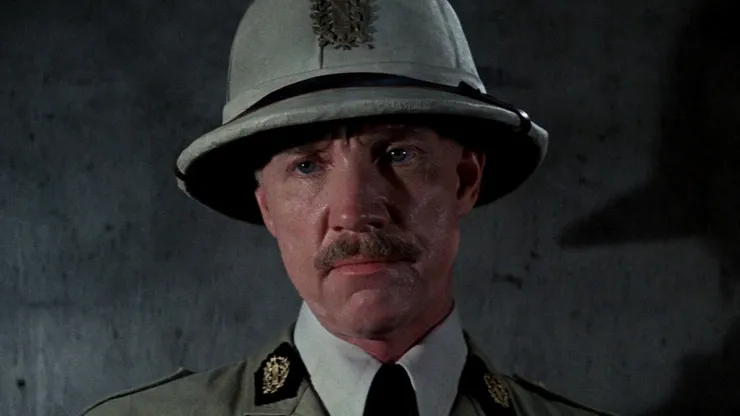
According to the Santa Barbara Independent, Smithers died on May 26 in Santa Barbara, California, leaving behind a body of work that spanned hundreds of screen credits and earned him recognition from both theater audiences and television viewers.
A Career That Bridged Broadway and Television
Born in Richmond, Virginia, on July 10, 1927, Smithers developed an interest in performance at an early age. Before establishing himself as an actor, he served in the U.S. Navy near the end of World War II. By his early twenties, he was already taking on prominent theatrical roles, including portraying Thomas Jefferson in the inaugural production of Paul Green’s historical drama “The Common Glory.”
His professional breakthrough came in the theater world. Smithers made his Broadway debut in a production of “Romeo and Juliet” opposite Olivia de Havilland, earning a Theater World Award. He later became a lifetime member of The Actors Studio and collected further acclaim for his stage work, including an Obie Award for his performance in “The Seagull.” Over the following years, he appeared in a variety of Broadway and Off-Broadway productions that helped establish him as a respected presence in American theater.
Television ultimately brought Smithers to a wider audience. After relocating to Los Angeles in the 1960s, he appeared in series such as “Peyton Place,” “Guiding Light” and “Executive Suite.” Across a career that included nearly 400 television productions, he accumulated credits on numerous popular programs, including “Star Trek,” “Mission: Impossible,” “Hawaii Five O,” “The Invaders” and “Barnaby Jones,” while also appearing in films such as “Papillon” and “Scorpio.”
Many viewers, however, remember Smithers best as Jeremy Wendell, the powerful oil executive who became a recurring adversary on “Dallas.” His appearances throughout the 1980s helped make the character a familiar figure during the height of the hit primetime soap’s popularity.
Beyond acting, Smithers also became known for a legal battle with MGM over contractual billing rights, a case that ultimately reached the California Supreme Court and later became a subject of study in entertainment law.
In his later years, Smithers remained active in the arts community in Santa Barbara. Alongside his wife, acting teacher and author S. Loraine Hull Smithers, he worked on theater, television and educational projects while supporting local cultural initiatives.
He also served on community arts boards and authored a book about former California Governor Jerry Brown. His career reflected a rare longevity, extending from postwar theater to modern television and civic arts advocacy.