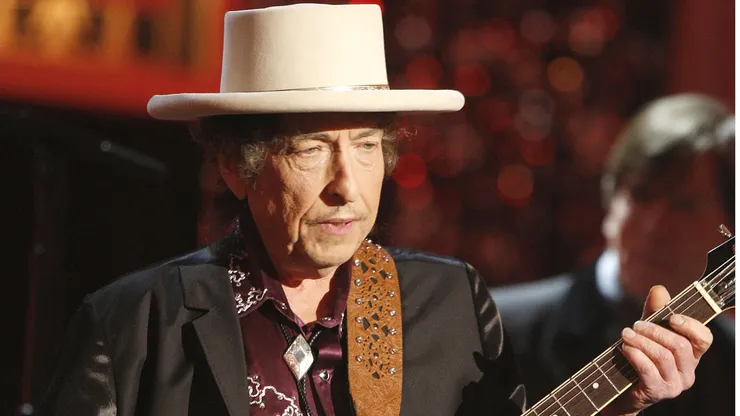
Born Robert Allen Zimmerman, this poetic genius didn’t just participate in the cultural revolutions of the twentieth century; he frequently provided their most vital, enduring soundtracks. As the first and only songwriter to ever be awarded the Nobel Prize in Literature, his astonishingly vast catalog has influenced virtually every major artist who followed in his footsteps.
To properly honor this incredible milestone, we are counting down the ten absolute best songs that permanently cemented his legacy as a generational voice.
1. “Like a Rolling Stone” (1965)
Clocking in at over six minutes, this revolutionary electric anthem completely shattered the restrictive boundaries of mainstream pop radio formats. Dylan seamlessly combined a sneering, cynical vocal delivery with soaring organ riffs to create an unprecedented expression of youthful disillusionment. It essentially severed his exclusive ties to the traditional folk community, successfully launching him into the stratospheric realm of global rock stardom. Decades after its initial release, the blistering track remains a defining masterpiece of twentieth-century musical rebellion.
2. “Tangled Up in Blue” (1975)
Serving as the magnificent opening track to his deeply personal album Blood on the Tracks, this song is an absolute masterclass in non-linear storytelling. He brilliantly shifts perspectives and timelines to paint a devastatingly vivid portrait of a fractured relationship enduring through changing American landscapes. The acoustic, driving rhythm perfectly complements the complex lyrical structure, demonstrating his unmatched ability to weave cinematic narratives into a standard musical format. It stands as one of his most celebrated and intensely emotional compositions.
3. “Blowin’ in the Wind” (1963)
This poignant, seemingly simple acoustic track rapidly transformed into the ultimate, defining anthem for the American civil rights movement. By posing a series of devastating rhetorical questions about peace, war, and human freedom, the young songwriter captured the cultural anxieties of an entire generation. Its universal message and easily adaptable melody allowed countless other artists to cover it, propelling his profound poetry onto the international stage. The track remains an incredibly powerful plea for justice that continues to resonate heavily today.
4. “The Times They Are a-Changin'” (1964)
Delivered with the absolute certainty of an Old Testament prophet, this bold declaration served as a stern warning to the aging political establishment. Dylan crafted a fierce, uncompromising battle cry that expertly articulated the massive generational divide completely fracturing American society during the 1960s. The stark acoustic arrangement forces the listener to focus entirely on his commanding, socially conscious lyrics without any unnecessary studio distractions. It permanently solidified his reluctant, yet undeniable status as the official voice of a radical youth movement.
5. “Mr. Tambourine Man” (1965)
Showcasing a massive leap in his surrealist poetic capabilities, this enchanting track invites listeners on a mesmerizing, drug-fueled nocturnal journey. The brilliantly abstract imagery abandons strict political commentary in favor of beautiful, flowing dreamscapes and deeply introspective emotional exploration. While The Byrds famously turned it into a massive electric hit, Dylan’s stripped-down original version holds a magical, hypnotic power that is entirely unique. The brilliant composition heavily influenced the burgeoning psychedelic rock scene that would soon dominate the decade.
6. “All Along the Watchtower” (1967)
Originally recorded as a quiet, haunting acoustic ballad for the John Wesley Harding album, this track is heavily steeped in ominous, apocalyptic dread. The incredibly dense, biblical imagery creates a deeply unsettling atmosphere, depicting two outcasts observing a collapsing society from a distance. While Jimi Hendrix famously transformed the composition into an explosive, guitar-shredding rock masterpiece, the core brilliance of the original songwriting remains completely undeniable. The creator himself eventually adopted Hendrix’s heavy arrangement during his own live performances, recognizing the song’s massive sonic potential.
7. “A Hard Rain’s a-Gonna Fall” (1963)
Written during the terrifying height of the Cold War, this sprawling, hallucinatory epic beautifully captures the overwhelming existential dread of the nuclear age. Utilizing an incredibly complex, surrealist lyrical structure, he unleashes a relentless barrage of terrifying visions and apocalyptic prophecies. The sheer ambition required to fit such staggering, nightmarish poetry into a traditional folk melody completely redefined what a singer-songwriter could achieve. It is a stunning, deeply haunting masterpiece that perfectly reflects the darkest anxieties of the era.
8. “Don’t Think Twice, It’s All Right” (1963)
Balancing profound heartbreak with a remarkably casual, biting indifference, this classic track completely revolutionized the traditional breakup song. Rather than wallowing in overwhelming sadness, the narrator delivers a series of incredibly sharp, witty dismissals to a former lover who failed to understand him. The intricate, rapidly finger-picked acoustic guitar perfectly mirrors the restless, moving-on energy of a man literally walking out the door. It effortlessly captures the complex, conflicting emotions of leaving a deeply flawed relationship behind.
9. “Visions of Johanna” (1966)
Widely considered by literary critics to be his absolute finest poetic achievement, this mesmerizing track perfectly captures the hollow emptiness of an urban night. The incredibly vivid, nocturnal imagery details a restless narrator trapped in a New York loft, tormented by the idealized memory of an absent woman. The beautiful, sprawling verses blur the lines between reality and hallucination, supported by a remarkably loose, atmospheric studio backing band. It is a staggering achievement in modern songwriting that demands endless analysis and careful listening.
10. “Knockin’ on Heaven’s Door” (1973)
Originally composed for the soundtrack of Sam Peckinpah’s Western film Pat Garrett and Billy the Kid, this incredibly simple track carries monumental emotional weight. The mournful, deeply cinematic ballad brilliantly captures the exhausting final moments of a dying lawman who can no longer carry his badge. With just a few sparse chords and profoundly repetitive lyrics, the songwriter manages to evoke an overwhelming sense of mortality and spiritual surrender. Its raw emotional power has made it one of the most widely covered tracks in recorded music history.