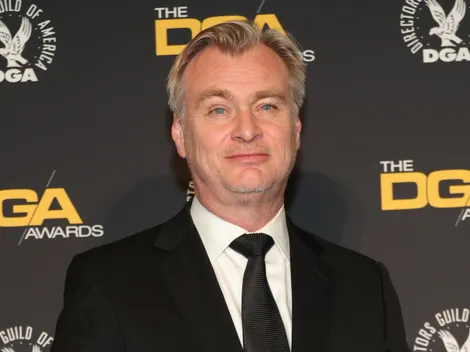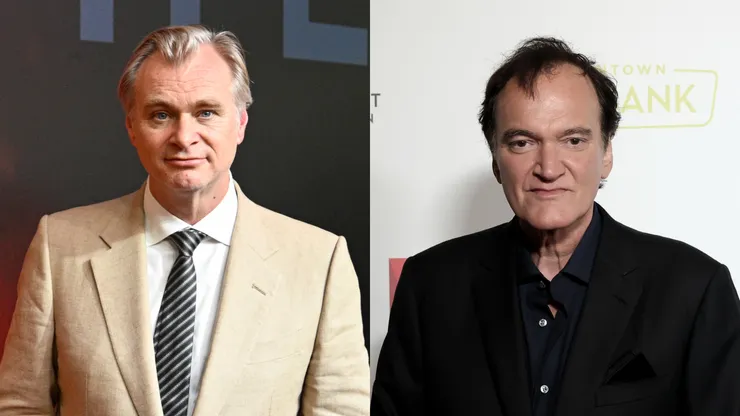
Speaking with The Telegraph, the Oppenheimer auteur explained why he views Quentin Tarantino’s self-imposed 10-film limit as “dangerous”—and why he treats every single project as if his career ends tomorrow.
Among today’s filmmakers, few possess the uncompromising creative control and industry influence enjoyed by Christopher Nolan and Quentin Tarantino. They are the twin gatekeepers of original, large-scale, celluloid-shot theatrical events. Yet, despite their shared obsession with the classic moviegoing experience, the two masters could not be more polarized when it comes to the life cycle of a director.
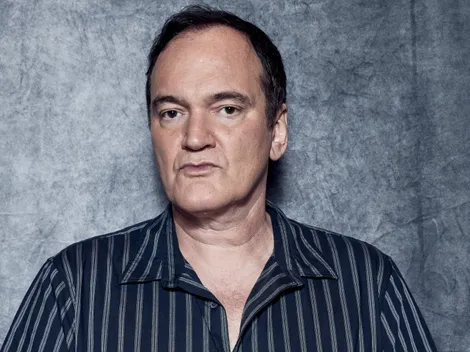
For over a decade, Tarantino has insisted on a strict, self-imposed countdown: ten films and then he retires. Now, with his tenth and final project looming on the horizon, Christopher Nolan is publicly urging his peer to rip up the rulebook.
Nolan’s “Every Movie is My Last” Philosophy
While speaking to The Telegraph about the monumental, six-country physical shoot required to bring The Odyssey to the big screen, Nolan was asked directly about Tarantino’s retirement policy.
Nolan didn’t mince words, calling the mathematical restriction a highly precarious mental trap:
“I think it’s dangerous to look at it that specifically. I mean, Quentin has his reasons, and I respect those enormously. But I’m hoping that he won’t stay true to them.”
For Nolan, the key to sustaining a peerless creative drive isn’t counting down to an arbitrary finish line. Instead, it’s a mindset of absolute, existential finality every time he steps onto a set:
“Every film that I do is the last I’ll ever make… and one day I will be right. So every time I want to put everything into the project at hand. I’m never thinking, ‘Well, I’ll save this for the next one.’ I don’t ever want to think like that. I want each movie to be everything.”
Why Nolan’s Mindset Has Redefined Modern Cinema
Nolan’s refusal to hold anything back is glaringly obvious when looking at his filmography. He famously utilized his Dark Knight capital to gamble on mind-bending original concepts like Inception and Interstellar, rather than saving those high-concept ideas for a rainy day.
When he approached Oppenheimer, he didn’t construct a standard, comfortable historical biopic; he treated it like a relentless, three-hour psychological thriller that pushed IMAX technology to its physical limits. Now, with The Odyssey, he is dragging audiences into the literal deep ocean with real, hand-crafted ships. By treating every movie as his final curtain call, Nolan ensures that his audiences are never served a “transitional” or safe movie.
The Search for Tarantino’s Final Act
Tarantino’s self-imposed rule has indeed created a massive pressure cooker. The anxiety of landing a flawless final punch is reportedly what led him to completely scrap his planned tenth film, The Movie Critic, in late-stage pre-production.
As the cinema world eagerly waits to see what Tarantino settles on for his actual swan song, Nolan’s perspective offers a refreshing reminder of why we love movies in the first place. Cinema isn’t a tidy, mathematical spreadsheet to be curated and locked in a vault—it is a live, unpredictable, and endless journey. Let’s hope Quentin takes Christopher’s advice and leaves the exit door unlocked.
Christopher Nolan’s ‘The Odyssey’ opens in theaters and IMAX on Friday, July 17, 2026.