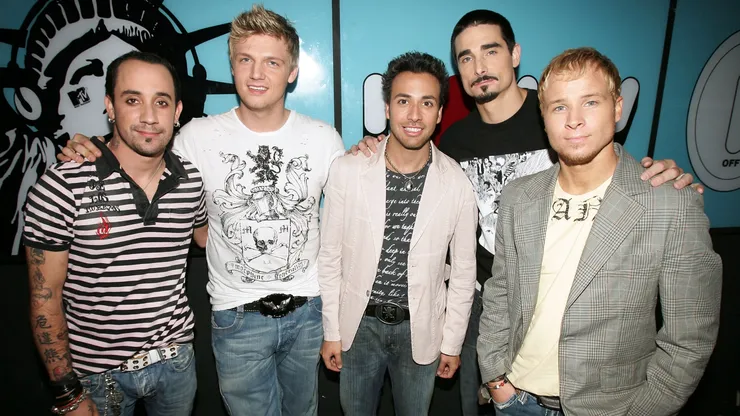
If you grew up in the late ’90s or early 2000s, you probably remember exactly where you were when you first heard the opening acoustic guitar riff of “I Want It That Way.” But before the sold-out stadium tours, the diamond-certified albums, and the absolute peak of TRL hysteria, the biggest boy band in history was just five guys harmonizing in an Orlando blimp hangar.
The origin story is the stuff of pop music legend. Local Orlando singers AJ McLean, Howie Dorough, and a 13-year-old Nick Carter had already been selected by entrepreneur Lou Pearlman to form a new vocal harmony group. They soon added Kevin Richardson, a Kentucky native who was working as an Aladdin face character at Walt Disney World. However, they were still missing a crucial fifth member. On April 19, 1993, Kevin called his cousin, Brian Littrell, pulling him straight out of his high school American History class to ask if he wanted to fly to Florida and audition. The next day, April 20, 1993, Brian officially joined the group, and the Backstreet Boys were born.
Over three decades and more than 130 million records sold later, they remain the undisputed kings of the boy band era. To celebrate their 33rd anniversary today, we are taking a heavily nostalgic trip down memory lane to rank the five absolute best hits of their legendary career.
1. “I Want It That Way” (1999)
There is simply no debate: this is the quintessential pop song of the late 1990s. The lead single from their blockbuster album Millennium is a melodic masterpiece orchestrated by Swedish pop genius Max Martin. Despite the fact that the lyrics famously make absolutely no logical sense—something the band themselves have openly admitted—the sweeping chorus, the iconic white outfits at the airport terminal, and that legendary key change created a permanent pop-culture touchstone. It is the ultimate karaoke anthem and the definitive Backstreet Boys track.
2. “Everybody (Backstreet’s Back)” (1997)
If “I Want It That Way” is their most beautiful pop ballad, “Everybody” is their undisputed stadium-shaking banger. Released right as they were cementing their global superstardom, the heavily synthesized dance track featured an infectious, booming bassline that demanded you get up and dance. Paired with its iconic, Thriller-inspired haunted house music video—complete with the boys dressed as classic movie monsters performing flawless group choreography—the song remains an absolute staple at every party and throwback club night around the world.
3. “As Long As You Love Me” (1997)
Showcasing the group’s immaculate vocal blending and smooth R&B influences, this track perfectly encapsulates their transition from upbeat teen idols to serious vocal harmony kings. The acoustic-driven mid-tempo ballad allowed each member to shine, heavily featuring Brian and Nick’s soaring lead vocals. It also gave the world one of the most recognizable chair-dance routines in music video history. Sweet, incredibly catchy, and flawlessly produced, it remains one of the most enduring love songs of the entire decade.
4. “Quit Playing Games (With My Heart)” (1996)
This was the song that finally broke the Backstreet Boys in the United States. While they were already massive superstars across Europe, it wasn’t until this smooth, mid-tempo track dropped that their home country finally paid attention. Peaking at number two on the Billboard Hot 100, the song’s incredibly infectious chorus and the now-infamous music video—featuring the boys singing passionately in the rain with unbuttoned shirts—officially ignited the American boy band explosion of the late ’90s.
5. “Show Me the Meaning of Being Lonely” (1999)
Proving that they were fully capable of tackling mature, genuinely heartbreaking material, this standout track from Millennium is arguably their vocal masterpiece. Written during a time when the band members were dealing with real-life losses—including the death of Max Martin’s mentor, Denniz Pop—the song trades sugary pop hooks for sweeping orchestral strings and deeply melancholic vocals. The beautifully directed music video, which subtly referenced their individual personal struggles, proved that BSB had far more emotional depth than their critics ever gave them credit for.