TIME’s newly released roundup of the 10 best movie performances of 2025 arrives at a moment when the industry is still recalibrating from years of disruption and reinvention. The past year delivered a wave of roles shaped by artistic risk, unexpected casting swings, and filmmakers willing to stretch familiar genres in new directions.
What stands out in the selection is the sense of range: collaborations born on independent sets running alongside major-studio turns that broke through the noise, and veteran actors sharing space with names still carving out their artistic identities.
Kirsten Dunst, Roofman

Kirsten Dunst’s work in Roofman marks one of the most quietly revelatory turns of 2025. Under Derek Cianfrance’s sensitive direction, she embodies Leigh, a woman drawn into the orbit of a charming con man played by Channing Tatum.
Dunst’s performance is remarkable not for grand gestures but for its emotional precision: every glance and withheld smile conveys the vulnerability of someone who has learned to trust against better judgment. In a film that balances humor with a melancholic undercurrent, her portrayal becomes the emotional bedrock, evoking the tension between longing and self-preservation.
Delroy Lindo, Sinners
Delroy Lindo’s performance in Sinners is a study in quiet authority. As Delta Slim, a seasoned musician whose blues roots run as deep as the Mississippi soil, Lindo carries the weight of history and memory in every breath. The film’s blend of gothic horror and cultural introspection gives him room to anchor scenes that could otherwise teeter on the fantastical.
What makes his work stand out this year is the way he embodies resilience without spectacle: the character’s wisdom, weariness, and unspoken grief become the pulse of a narrative that is as much about heritage as it is about haunting.
Jennifer Lawrence, Die My Love
In one of the most unsettling portrayals of the year, Jennifer Lawrence taps into a visceral emotional landscape in Die My Love. Playing Grace, a new mother plunged into postpartum turmoil, Lawrence does not merely perform distress—she excavates it.
The performance teeters between tenderness and fragmentation, inviting a kind of empathetic immersion that few actors achieve. What’s especially striking is her ability to evoke humor amid chaos, making Grace’s psychological odyssey both poignant and disturbingly intimate.
Joel Edgerton, Train Dreams
Joel Edgerton delivers a performance of quiet, haunting beauty in Train Dreams, Clint Bentley’s adaptation of Denis Johnson’s novella. As Robert Grainier, a hardworking logger whose life unravels after personal tragedy, Edgerton brings an elemental stillness to sorrow that could easily be misread as restraint.
Yet beneath that composure lies a reservoir of patience and reflective pain, capturing the ache of a man adrift in a changing world. His portrayal anchors the film’s meditative rhythm, making Grainier’s solitude feel both universal and deeply specific.
Zoey Deutch, Nouvelle Vague
Zoey Deutch’s turn in Nouvelle Vague is both a celebration of and a tribute to the French New Wave spirit. In Richard Linklater’s affectionate recreation of the making of Breathless, Deutch channels Jean Seberg with a combination of intellectual poise and playful spontaneity.
Her performance is lively without being lightweight, capturing Seberg’s paradoxical blend of thoughtful retreat and bold improvisation. In a film steeped in cinema history, it is Deutch’s buoyant yet thoughtful presence that allows the past to feel immediate and alive.
Paul Mescal, Hamnet
In Hamnet, Paul Mescal embodies one of Shakespeare’s most elusive emotional states: the silent grief of a father. Unlike performances driven by outward expression, Mescal’s is a study in internal conflict—his face a landscape of suppressed longing and stoic tenderness.
Chloe Zhao’s adaptation of Maggie O’Farrell’s novel places him at the emotional heart of a family grappling with loss, and by channeling subtle, almost imperceptible shifts in mood, Mescal turns Hamlet’s quieter echoes into something heartbreakingly tangible.
Rebecca Hall, Peter Hujar’s Day
In Peter Hujar’s Day, Rebecca Hall transforms the role of Linda Rosenkrantz into something quietly profound. The film’s premise—an intimate interview over the course of a single day—requires Hall to be both a listener and a presence that shapes the narrative without commandeering it.
Her performance is a masterclass in conversational nuance: she never dominates the dialogue, but with each measured hesitation and soft challenge, she reveals layers of curiosity, respect, and introspection. In this way, Hall turns the act of listening into a dramatic force.
Channing Tatum, Roofman
Channing Tatum’s performance in Roofman resists easy categorization. Known for his charismatic screen presence, here he deepens his craft to reveal the complex interiority of Jeffrey, a thief with a penchant for reinvention.
Balancing the film’s comedic edges with moments of poignant vulnerability, Tatum explores the contradictions of a man seeking redemption while haunted by past failures. The result is an emotionally rich portrayal that rescues Jeffrey from cliché, making his earnest yearning feel like the quiet engine driving the film’s richer themes of identity and belonging.
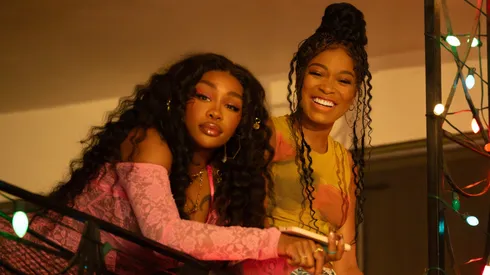
Keke Palmer and SZA, One of Them Days
Keke Palmer and SZA share a rare screen chemistry in One of Them Days that elevates what could have been a standard buddy comedy into a kinetic duet of raw humor and emotional resonance.
Their portrayal of two best friends scrambling to pay rent becomes a kind of rhythmic back-and-forth, full of impulsive laughter and unexpected vulnerability. Together, they transform each bicker and harmony into a reflection of shared survival, making their performance feel as spontaneous and alive as the city streets their characters traverse.
Ethan Hawke, Blue Moon
Ethan Hawke’s work in Blue Moon brings to life the melancholic genius of lyricist Lorenz Hart, a figure struggling with both brilliance and desolation. Hawke captures the razor’s edge between jubilant charm and emotional unraveling, revealing how Hart’s creative fire is inseparable from his self-destructive impulses. In scenes that oscillate between witty banter and aching solitude, Hawke taps into an emotional truth that resonates far beyond the period setting: that genius often flourishes in the shadow of personal turmoil.