
When Kristin Davis first appeared as Charlotte York on Sex and the City in 1998, she embodied Park Avenue optimism with a porcelain smile and an unshakable belief in fairy-tale endings. Across six seasons on HBO, she evolved from the gallery-managing romantic chasing perfection to one of the show’s most emotionally layered figures.
Now, as Davis turns 61, Charlotte’s most unforgettable episodes feel less like relics of late-’90s television and more like cultural touchstones. Whether sparring with Samantha over sensual politics or redefining family on her own terms, her storylines captured a quieter revolution inside the series.
“Great Sexpectations” (Season 6, Episode 2)
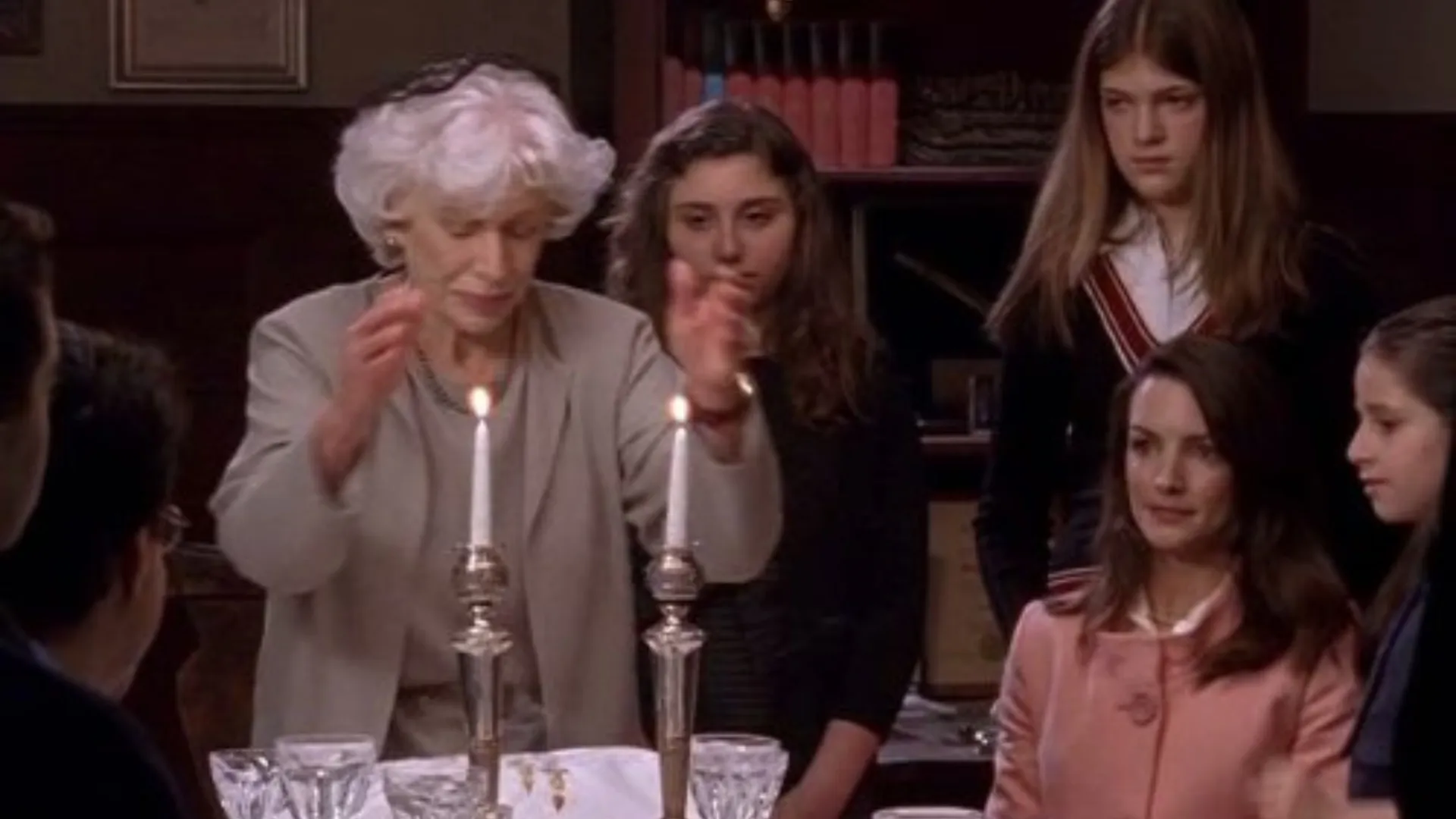
By Season 6, Charlotte’s romantic narrative has shifted from Trey’s controlled elegance to Harry Goldenblatt’s unfiltered warmth. In “Great Sexpectations,” she makes the profound decision to convert to Judaism in order to build a life with him. What could have been portrayed as a simple romantic compromise is instead framed as a sincere spiritual and personal commitment.
The episode captures Charlotte at her most determined. She approaches conversion not as a gesture of desperation, but as an act of belief — in love, in partnership, and in the possibility of reinvention. Yet when Harry briefly rejects her after the conversion process, the emotional blow lands hard.
For perhaps the first time, Charlotte’s devotion is met with unexpected rejection. The vulnerability she shows in those scenes strips away the last remnants of naïveté. This is no longer the woman chasing a fairy tale; this is someone choosing love with open eyes.
“One” (Season 6, Episode 12)
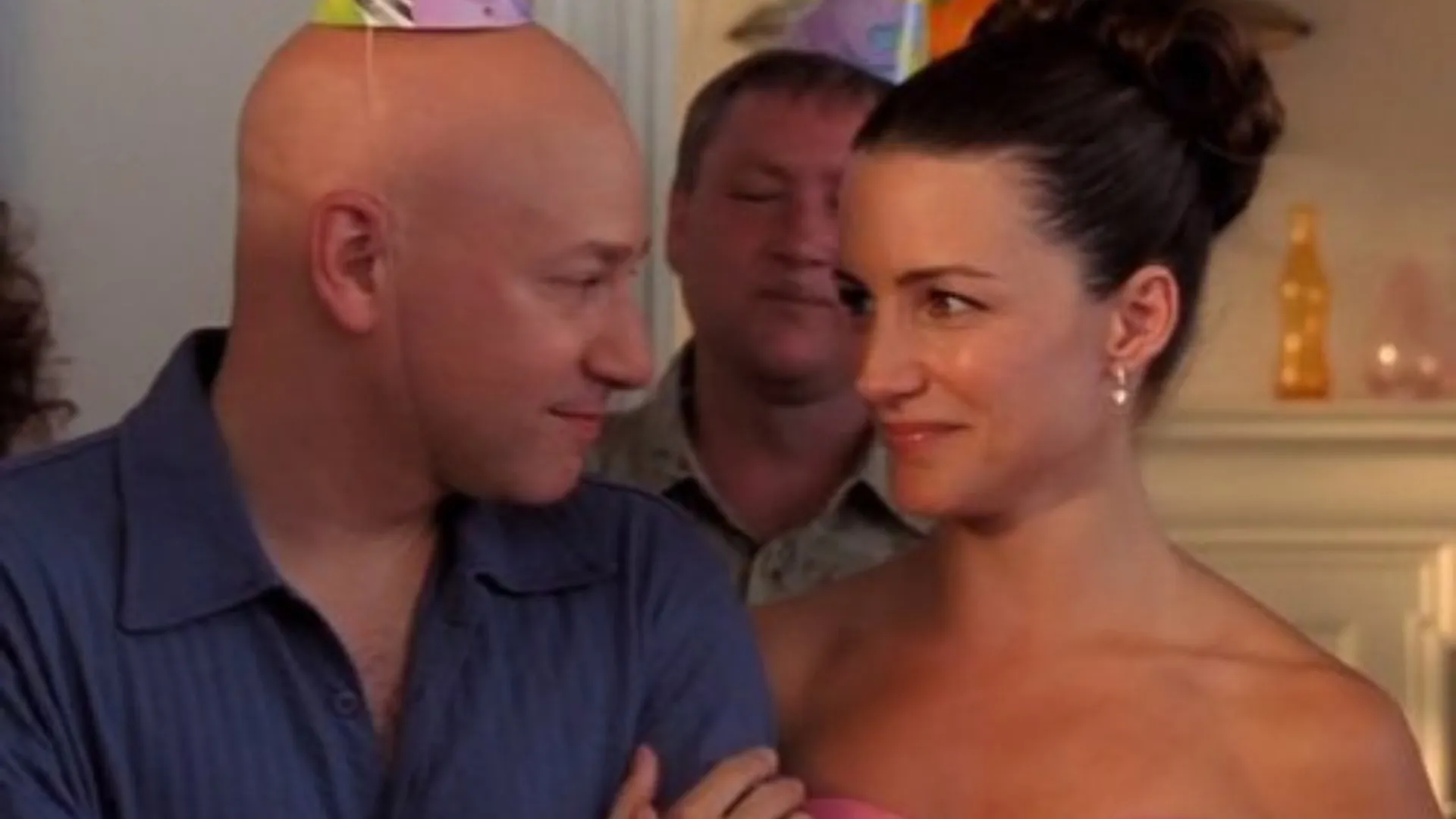
Few episodes in the series carry the emotional weight of “One.” After years of longing for motherhood, Charlotte experiences the joy of discovering she is pregnant — only to suffer a miscarriage shortly after. The storyline is handled with unusual tenderness for the show, allowing grief to sit quietly without comic relief.
Kristin Davis delivers one of her most powerful performances here. The devastation is internal, controlled, dignified — a sharp contrast to the bright optimism that once defined the character. Charlotte’s journey toward motherhood had already been marked by fertility struggles and disappointment; this loss deepens her resilience while underscoring her humanity.
Yet even in heartbreak, “One” subtly points forward. The episode becomes a bridge toward the adoption storyline that will ultimately redefine Charlotte’s understanding of family. It is a turning point not because it fulfills her dream, but because it reshapes it.
“Three’s a Crowd” (Season 3, Episode 5)

By the time this episode unfolds, Charlotte York is newly married to Trey MacDougal, fully immersed in the Upper East Side fantasy she once dreamed of. But the reality of marriage proves far more complicated. Trey’s struggles with intimacy continue to strain the relationship, and more significantly, his mother Bunny becomes an ever-present force in their lives.
What begins as mild discomfort escalates into emotional suffocation, as Charlotte realizes she hasn’t just married a man — she’s married into a rigid, controlling family structure. The episode exposes Charlotte’s internal conflict: her desire to preserve appearances versus her growing awareness that something is fundamentally broken.
Kristin Davis plays these scenes with restrained frustration, capturing a woman trying to keep her fairy tale intact while quietly unraveling. “Three’s a Crowd” marks the moment Charlotte begins to question whether perfection was ever real to begin with.
“The Cheating Curve” (Season 3, Episode 11)

In “The Cheating Curve,” Charlotte confronts the emotional fallout of her collapsing marriage. While the episode’s broader theme examines infidelity and blurred boundaries in relationships, Charlotte’s storyline carries a sharper edge. Her trust in Trey — already fragile — is tested further as unresolved resentment and disappointment surface. The polished Park Avenue veneer begins to crack.
This episode is pivotal because it strips Charlotte of her last illusions about the marriage. The woman who once believed that love, etiquette and persistence could solve anything is forced to confront betrayal and emotional abandonment.
It’s not just about whether someone cheats; it’s about the realization that devotion alone cannot sustain a relationship. The seeds of her eventual divorce are firmly planted here, making “The Cheating Curve” one of the most consequential chapters in her evolution.
“Cover Girl” (Season 5, Episode 8)
On the surface, “Cover Girl” revolves around a glamorous photoshoot. Charlotte is asked to model for a magazine feature celebrating “real women,” a moment that should affirm her confidence. Instead, it quietly exposes the insecurity beneath her polished exterior. Standing under bright lights, styled and photographed, she confronts something she rarely admits aloud: the fear of fading relevance.
Charlotte has long defined herself through ideals — beauty, marriage, status, presentation. But in this episode, the mirror feels less forgiving. The storyline taps into a deeper anxiety about aging and worth, especially in a city that prizes youth and visibility.
Kristin Davis plays the role with delicate restraint; a flicker of doubt crosses her face more powerfully than any dramatic monologue could. “Cover Girl” reminds viewers that Charlotte’s perfectionism isn’t just about romance — it extends to how she sees herself in the world.
“The Man, the Myth, the Viagra” (Season 2, Episode 8)
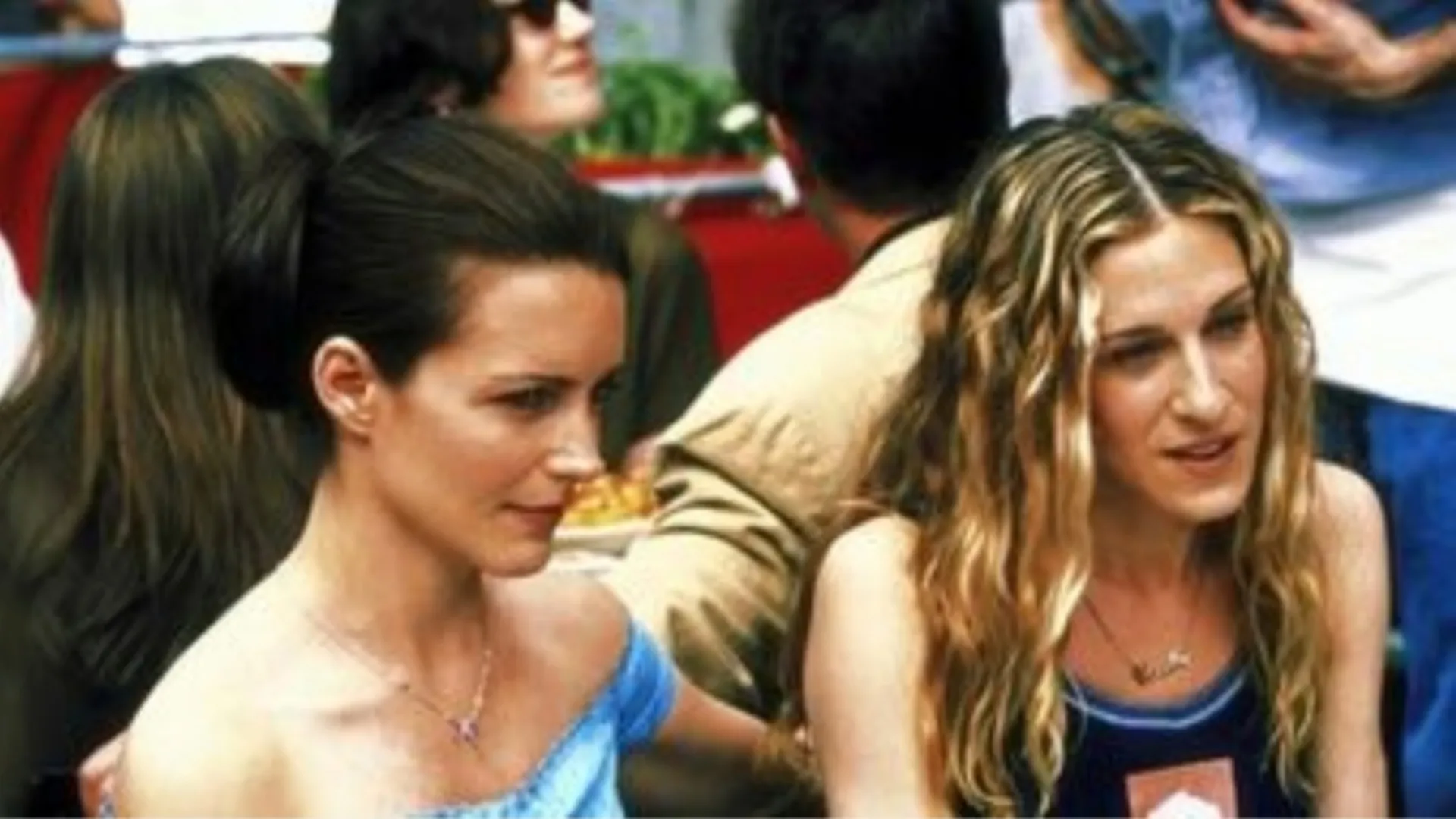
This is the episode where Charlotte’s fantasy meets its first real fracture. Trey MacDougal appears to be everything she has ever wanted — handsome, well-bred, financially secure, the embodiment of Upper East Side perfection.
But when intimacy issues surface, the illusion wavers. Rather than walk away, Charlotte doubles down on optimism, convinced that patience and devotion can solve anything.
The episode reveals her deep commitment to the idea of marriage as an institution — something worth protecting even before it fully exists. It’s an early glimpse into both her greatest strength and her most limiting flaw: the belief that love, if properly managed, can be perfected.
In hindsight, “The Man, the Myth, the Viagra” plants the first seeds of the emotional reckoning that will unfold in Season 3. The fairy tale hasn’t collapsed yet — but the cracks are visible.
“Twenty-Something Girls vs. Thirty-Something Women” (Season 2, Episode 17)

Set in the Hamptons, this episode cleverly uses generational contrast to explore insecurity. Charlotte finds herself dating a younger man, briefly entertaining the idea that desirability can be measured by youth alone. But beneath the comedic surface lies something sharper: a quiet panic about time passing and milestones unmet.
Charlotte has always operated on a timeline — marriage by a certain age, children soon after, a life carefully curated. Watching younger women command attention unsettles her not because of vanity, but because it threatens her internal schedule.
Kristin Davis plays these scenes with a mix of poise and subtle vulnerability, capturing a woman who is polished on the outside but quietly questioning her trajectory. The episode becomes less about age and more about the pressure to “arrive” at happiness before it feels too late.
“La Douleur Exquise!” (Season 2, Episode 12)

While the episode is largely remembered for Carrie’s emotional spiral in Paris, it quietly reinforces Charlotte’s unwavering faith in traditional romance. At this stage in the series, Charlotte still believes in the architecture of fairy tales — courtship, engagement, marriage, permanence. Surrounded by the chaos of her friends’ love lives, she clings to structure and ritual as stabilizing forces.
What makes this episode meaningful for her arc is contrast. Charlotte stands as the hopeful counterpoint to heartbreak, embodying the idea that love should be pursued with intention and decorum. Yet in retrospect, her certainty feels almost fragile — a reminder that her romantic worldview has yet to be tested by the realities that await her in later seasons.
“Plus One Is the Loneliest Number” (Season 5, Episode 5)

By Season 5, Charlotte is officially divorced and navigating a version of New York she never planned for — one without a husband. “Plus One Is the Loneliest Number” places her in the uncomfortable spotlight of solo attendance, surrounded by couples and social rituals designed for twos.
Weddings, gallery events, formal dinners — each invitation becomes a reminder of the life she once believed was guaranteed. What makes this episode particularly resonant is how quietly it dismantles Charlotte’s old blueprint for happiness.
There is no dramatic confrontation, no explosive argument — just the slow burn of social comparison and private doubt. Kristin Davis captures the subtle humiliation and resilience of standing alone in rooms where she once imagined herself accompanied.
Yet beneath the loneliness, something shifts. Charlotte begins to understand that partnership cannot be pursued as a status symbol; it must be rooted in authenticity. The episode becomes less about isolation and more about recalibration — a necessary pause before her eventual love story with Harry unfolds.
“Frenemies” (Season 3, Episode 16)
Set against the emotional aftershocks of her separation from Trey, “Frenemies” finds Charlotte in a quieter but revealing stage of transition. No longer clinging to the illusion of her perfect marriage, she begins confronting what that chapter cost her — socially, emotionally and personally.
The episode explores rivalry and resentment within friendships, but for Charlotte, it subtly underscores something deeper: the fear of being left behind. As tensions rise among the women, Charlotte’s vulnerability surfaces in unexpected ways.
Her identity has long been intertwined with status, romance and belonging, and now she is forced to recalibrate without the safety net of marriage. Kristin Davis plays the role with delicate restraint, allowing small gestures and glances to convey the insecurity beneath Charlotte’s polished exterior.
“Luck Be an Old Lady” (Season 5, Episode 3)

Fresh off her divorce from Trey, Charlotte is in emotional free fall — though she would never quite describe it that way. In “Luck Be an Old Lady,” the women travel to Atlantic City, a setting that mirrors Charlotte’s inner state: glittering on the surface, quietly uncertain underneath.
Newly single and suddenly untethered from the identity she worked so hard to secure, she finds herself disoriented in a world that feels louder and less structured than the one she imagined for herself.
What makes this episode pivotal is not a grand romantic revelation, but a shift in perspective. Charlotte begins to confront the uncomfortable reality that luck — not just planning — plays a role in love. Her life has been built on careful choices and social formulas, yet here she is, starting over.
The Atlantic City backdrop becomes symbolic: risk, chance, reinvention. Kristin Davis subtly conveys the fragility beneath Charlotte’s composure, showing a woman learning that control is an illusion — and that sometimes, rebuilding requires embracing uncertainty rather than resisting it.