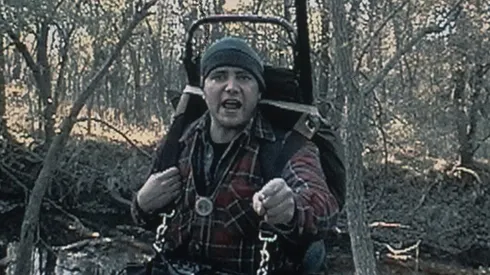
According to IMDb trivia, much of that authenticity came from the directors’ unconventional production methods, which deliberately placed the actors in uncomfortable situations to blur the line between performance and genuine fear.
The Directors Used Unusual Methods to Keep the Cast on Edge
Rather than following a conventional script, directors Daniel Myrick and Eduardo Sánchez gave Heather Donahue, Joshua Leonard, and Michael C. Williams only general instructions for each day’s filming. The actors navigated the Maryland woods using GPS coordinates and discovered hidden film canisters containing notes that guided the next stage of the story, leaving much of their dialogue and reactions to improvisation.

To intensify the experience, the filmmakers gradually reduced the cast’s food supply while forcing them to hike long distances through the forest. During the night, members of the crew secretly disturbed the campsite by snapping branches, shaking tents, and creating unexplained noises. The goal was to wear down the actors physically and emotionally so their exhaustion and anxiety would naturally appear on camera.
The production also encouraged uncertainty by keeping key story developments hidden from the performers. They did not always know what would happen next or what surprises awaited them at each location. Even the now iconic final image of Mike standing silently in the corner was conceived only days before it was filmed, preserving the sense of unpredictability throughout the shoot.
Those techniques helped create one of horror’s most convincing performances. Produced on a modest budget, “The Blair Witch Project” became a worldwide phenomenon, earning nearly $250 million at the global box office and inspiring a new wave of found footage films, including “Paranormal Activity,” “REC,” and “Cloverfield.” More than two decades later, its innovative production methods remain as famous as the movie itself.