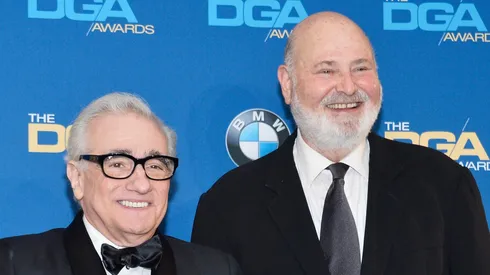
The global film community fell into a state of profound shock on December 14, following the news that legendary director Rob Reiner and his wife, Michele, had been found dead in their Brentwood home.
The tragic discovery occurred after the couple’s daughter, Romy, was notified that they had missed a routine appointment, leading to a welfare check that quickly uncovered a devastating scene. Authorities later confirmed that the couple had died from sharp force injuries, and in a further blow to the family’s legacy, their son, Nick, was arrested and charged in connection with the murders just days later.
As the industry struggled to reconcile the violent nature of their passing with the immense joy the Reiners brought to the world, longtime friend Martin Scorsese sought to reclaim the narrative of Rob’s life through a lens of love and cinematic history.
A Legacy of Laughter and Humanity: Scorsese’s Final Farewell
In a deeply personal essay published in The New York Times, Scorsese moved past the horrific nature of the headlines to honor the man he knew behind the camera. He began his tribute with the heavy admission that “Rob Reiner was my friend, and so was Michele. From now on, I’ll have to use the past tense, and that fills me with such profound sadness. But there’s no other choice.”

Scorsese recalled their shared roots as “Eastern transplants” and explained that Reiner’s specific brand of New York humor “was the very air I breathed.” He described a man who possessed a “beautiful sense of uninhibited freedom, fully enjoying the life of the moment,” and a “great barreling laugh” that was so loud that during a tribute at Lincoln Center “you could hear it throughout the auditorium.”
Scorsese’s tribute delved into the specific brilliance of Reiner’s filmography, elevating This Is Spinal Tap as “in a class of its own … an immaculate creation.” However, the most poignant reflections came from their collaboration on the 2013 film The Wolf of Wall Street. Scorsese recalled casting Reiner because “he could improvise with the best, he was a master at comedy, he worked beautifully with Leo and the rest of the guys, and he understood the human predicament of his character: The man loved his son, he was happy with his success, but he knew that he was destined for a fall.”
He noted that Reiner’s portrayal of a “loving father, mystified by his son” was defined by a look on his face that was “so eloquent,” a detail that has become hauntingly resonant in the wake of the family’s real-life tragedy.
The filmmaker admitted that what happened to the couple “is an obscenity, an abyss in lived reality,” and noted that he was “moved by the delicacy and openness of his performance” during the editing of their film. By focusing on the spirit of the man rather than the tragedy of his end, Scorsese invites the reader to remember a friend who lived with “tenderness” and joy.
He concluded the piece by stating that he must be allowed to “imagine them alive and well … and that one day, I’ll be at a dinner or a party and find myself seated next to Rob, and I’ll hear his laugh and see his beatific face and laugh at his stories and relish his natural comic timing, and feel lucky all over again to have him as a friend.”