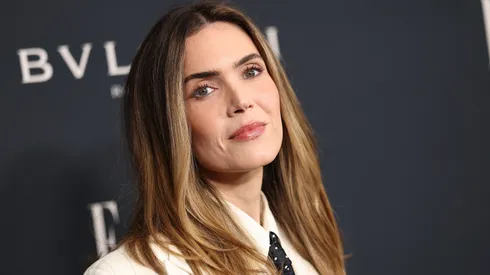
Mandy Moore reaches 42 with a career that has quietly shifted from pop stardom to steady dramatic presence in film and television. First introduced to audiences in the late 1990s as a teen pop sensation, she soon began reshaping her public image through acting roles that leaned into vulnerability, romance and emotional conflict.
Over time, that transition would define her as a performer more associated with layered characters than chart-topping singles. From early breakout appearances in teen-era films to her later work in prestige television, including This Is Us, her career reflects a consistent thread: characters navigating emotional crossroads.
Rebecca Pearson – This Is Us (2016–2022)
Mandy Moore’s most defining role came with Rebecca Pearson in NBC’s This Is Us, a performance that reintroduced her as a dramatic force in television. The character spans multiple decades, requiring Moore to portray Rebecca from young adulthood into old age, a rare acting challenge that demanded subtle physical and emotional transformation across seasons.
The role became the emotional backbone of the series, with Rebecca’s story deeply tied to family loss, memory, and generational identity. Moore’s performance earned widespread critical praise and award recognition, solidifying her transition from romantic lead roles into prestige television drama.
Jamie Sullivan – A Walk to Remember (2002)
Jamie Sullivan marked Mandy Moore’s breakthrough into serious acting, moving her away from her early pop-star image. As the quiet, faith-driven daughter of a small-town minister, Moore delivered a restrained performance that contrasted sharply with the teen rom-com style dominant at the time.
The film became a cultural touchstone in early 2000s romance cinema, largely due to the emotional contrast between her character and Shane West’s rebellious lead. Over time, Jamie Sullivan has remained one of Moore’s most iconic roles, often cited as the turning point in her acting career.
Rapunzel – Tangled (2010)
In Tangled, Moore transitioned into animation, voicing Disney’s modern Rapunzel in one of the studio’s most successful animated films of the decade. Her vocal performance brought warmth and curiosity to the character, balancing innocence with emotional growth.
The film’s success helped reintroduce Disney princess storytelling for a new generation, with Moore also contributing to the soundtrack. Songs like “I See the Light” showcased her musical background, bridging her early music career with voice acting.
Hilary Faye – Saved! (2004)
Hilary Faye allowed Moore to step into satire, portraying a deeply religious high school student in the dark comedy Saved! The role flipped expectations, presenting a character who blends devotion with hypocrisy in a sharply written teen environment.
The film later gained cult status for its bold critique of religious and social pressure in adolescence. Moore’s performance stood out for its commitment to a role that required both comedic timing and emotional exaggeration without losing credibility.
Lana Thomas – The Princess Diaries (2001)
One of Moore’s earliest film appearances came as Lana Thomas, the stereotypical high school antagonist in Disney’s The Princess Diaries. Though a supporting role, it positioned her within a major studio production alongside Anne Hathaway’s breakout performance.
Lana’s character embodied early-2000s teen film archetypes, but Moore’s portrayal helped establish her screen presence at a time when she was still primarily known for music. It became a foundational step in her transition into acting.
Anna Foster – Chasing Liberty (2004)
In Chasing Liberty, Moore took on a leading romantic comedy role as Anna Foster, the daughter of the U.S. President seeking freedom from constant security. The film leaned heavily into European escapism, blending political context with light romance.
While not a critical hit, the role reinforced Moore’s early 2000s identity as a rom-com lead. It also showcased her ability to carry a film centered on youthful independence and self-discovery.
Milly Wilder – License to Wed (2007)
Moore starred opposite Robin Williams and John Krasinski in License to Wed, playing Milly Wilder in a story about pre-marital counseling gone wrong. The role placed her within a comedic trio dynamic rather than a traditional romantic lead.
The film explored relationship pressure and compatibility through exaggerated comedic situations. Although reviews were mixed, Moore’s performance contributed to her continued presence in mainstream romantic comedies during that period.
Sally Kendoo – American Dreamz (2006)
In American Dreamz, Moore appeared as Sally Kendoo, a contestant in a satirical take on reality TV culture and political spectacle. The film mixed entertainment industry parody with political commentary, placing her character in the center of televised ambition.
The role allowed Moore to explore satire again, but in a more ensemble-driven context. While the film itself had a polarizing reception, it reflected the mid-2000s fascination with media-driven fame.
Becky – Because I Said So (2007)
Moore played Becky in Because I Said So, a romantic comedy centered on a controlling mother attempting to manage her daughter’s love life. The film focused on family dynamics and generational differences in relationships.
Her character represented the younger sibling archetype within the family structure, balancing romantic subplot elements with comedic timing. The film reinforced Moore’s continued presence in studio rom-coms during the late 2000s.
Mary Portman – Grey’s Anatomy (2007–2010)
Mandy Moore’s role in Grey’s Anatomy came to life through Mary Portman, a patient introduced during the explosive Season 6 hospital shooting storyline. Her first appearance occurs in the two-part arc “Sanctuary” and “Death and All His Friends,” where she arrives at Seattle Grace Hospital for a scheduled procedure but becomes trapped during an active shooter situation.
The character is placed under the care of Dr. Miranda Bailey, and her survival of the crisis becomes one of the emotional anchors of the episode. What initially begins as a routine surgical case evolves into a long-form arc that stretches into Season 7.
Mary later returns to the hospital for a colostomy reversal procedure, which is considered low-risk, but complications arise when she fails to wake up from anesthesia. Despite medical intervention and investigation, no clear cause is found, and the storyline ends with her death—an outcome that contrasts sharply with her earlier survival of the shooting.