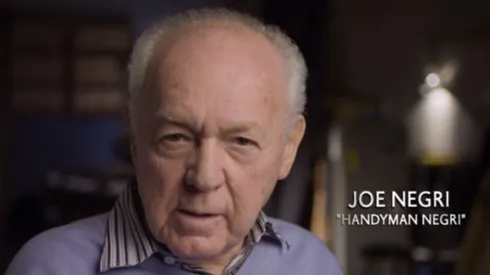
His family announced that he died on May 30 at a senior living facility near Pittsburgh, just days before what would have been his 100th birthday.
Negri spent nearly a century performing, teaching, and championing music, building a legacy that extended from television screens to concert stages and university classrooms. While many viewers recognized him from his appearances alongside Fred Rogers, he was also widely respected within the jazz world as a performer, mentor, and advocate for music education.
A Life Dedicated to Music On and Off Screen
Born in Pittsburgh on June 10, 1926, Negri showed an early aptitude for performance, appearing on radio as a child and beginning his professional career while still young. By the 1940s, he was touring nationally with big bands before interrupting his musical pursuits to serve in the U.S. Army during World War II. After returning home, he immersed himself in Pittsburgh’s thriving music scene and studied composition at what is now Carnegie Mellon University.
His television career developed alongside his work as a musician. During the 1950s and 1960s, Negri became a familiar figure on local Pittsburgh broadcasts, eventually serving as music director for WTAE. It was through that work that he crossed paths with Fred Rogers, a connection that would lead to one of the most recognizable roles of his career.
Beginning in 1968, Negri appeared on “Mister Rogers’ Neighborhood” as both Handyman Negri and the owner of Negri’s Music Shop. His calm demeanor and love of music made him a natural fit for the program, where he introduced young viewers to instruments, creativity, and the joy of making music. He remained associated with the series until production of new episodes ended in 2000.
Away from television, Negri spent decades shaping future generations of musicians. He taught jazz guitar for nearly half a century at the University of Pittsburgh and also held long teaching tenures at Duquesne University and Carnegie Mellon University. His work helped establish jazz guitar as a serious academic discipline, and many former students credited him not only for his technical instruction but also for his generosity and encouragement.
Negri’s career included collaborations with a wide range of artists, including Tony Bennett, Johnny Mathis, Andy Williams, Yo-Yo Ma, Michael Feinstein, and Wynton and Ellis Marsalis. Whether performing in intimate jazz settings, appearing with the Pittsburgh Symphony Orchestra, or teaching aspiring musicians, he remained a constant presence in Pittsburgh’s cultural life.
He is survived by his wife of 72 years, Joan Negri, their three daughters, and three granddaughters.