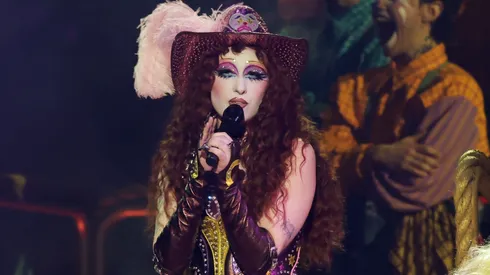
As Chappell Roan blows out the candles today, the music industry is forced to reckon with the fact that we haven’t seen this level of world-building since the peak of the Born This Way era. Much like Madonna and Lady Gaga before her, Roan hasn’t just released an album; she has established a cultural ecosystem where camp, drag, and vulnerability coexist in a glittering explosion of synth-pop. She possesses that rare, once-in-a-generation ability to turn a concert into a cathedral of self-expression, proving that she isn’t just following the blueprint—she’s renovating the entire estate.
1. Transforming Pop Concerts into Participatory Shows

By setting dress themes for her audience, she has mirrored Gaga’s “Little Monster” community-building on an interactive level. This isn’t just about watching a star; it is about the fans becoming part of the art through glitter, wigs, and “Hot to Go” choreography. Madonna famously brought the underground ballroom scene to the mainstream with “Vogue,” and Chappell is doing the same for modern drag culture. Every tour stop becomes a sanctuary where the line between performer and public disappears entirely.
2. The Literal Reinvention of the Wedding Dress
Roan famously paid homage to the “Like a Virgin” era by donning a vintage-inspired bridal gown for her MTV Push performance, effectively reclaiming the garment for a new generation of queer storytelling. While Madonna used the lace and tulle to subvert traditional purity, Chappell utilizes the aesthetic to celebrate the “Midwest Princess” who finally found her throne. It was a visual passing of the torch that signaled she understands the power of a wardrobe as a political statement.
3. The Bold Fearlessness of the “Super Graphic Ultra Modern Girl”
Gaga gave us the paparazzi-ready avant-garde, and Chappell has evolved that DNA into a surrealist, camp-heavy persona that feels both alien and deeply human. Her lyrics in tracks like “Super Graphic Ultra Modern Girl” echo the synth-heavy confidence of The Fame, asserting a new standard for what a pop star should look like. She refuses to play it safe with her visuals, often opting for face paint and prosthetic-heavy looks that challenge conventional beauty standards. This commitment to the weird is exactly what the industry has been craving since the late 2000s.
4. The Architecture of the “Era” as a Total Aesthetic
Just as Gaga’s Artpop and Madonna’s Ray of Light defined entire years of fashion, Chappell has constructed a visual language so specific that a single shade of green or a certain ruffle immediately evokes her brand. She doesn’t just release singles; she drops entire mood boards that dictate how her fans dress, act, and decorate their lives. This commitment to a cohesive, immersive world ensures that her music is experienced with all five senses simultaneously. By treating her career as a series of distinct, curated chapters, she has mastered the longevity trick of her predecessors.
5. The Mastery of the High-Concept Music Video
From the cinematic camp of “Casual” to the rhinestone-cowboy fever dream of “Pink Pony Club,” her videography recalls the era when music videos were essential cultural events. Much like Gaga’s “Bad Romance” or Madonna’s “Express Yourself,” Roan’s visuals are dense with symbolism and high-fashion references. She understands that the eyes need to be as fed as the ears for a pop era to truly stick.
6. The Mid-Performance Vocal Versatility
Critics often compare her operatic flips and gritty belting to the vocal athleticism that Gaga brought to the jazz and pop worlds. She can transition from a delicate, Gwen Stefani-esque yodel to a powerhouse belt that out-sings her own backing tracks, proving she has the technical chops to back up the costumes. Madonna was often underestimated as a vocalist, but her ability to adapt her voice to the genre at hand is a skill Chappell has mastered early.
7. Navigating the Cult of Personality with Wit
Roan’s “it feels like I was right all along” quip to Jimmy Fallon showcased a dry, self-assured wit that is reminiscent of Madonna’s legendary interviews. She handles the sudden, meteoric rise to fame with a mixture of gratitude and a told-you-so attitude that keeps her grounded. This refusal to play the humbled, lucky girl trope is a refreshing callback to the era of the untouchable, confident Pop Diva.
8. Creating a New Religious Experience Through Camp
The way fans treat “Pink Pony Club” as a secular hymn mirrors the religious fervor found at Gaga’s Monster Ball or Madonna’s Confessions Tour. She has tapped into the human need for ritual, turning the simple act of a pop chorus into a spiritual release for her “Midwest Princesses.” By blending the sacred (personal identity) with the profane (raunchy, danceable beats), she has created a new liturgy for the 2020s. Her audience doesn’t just listen; they testify.
9. Staying True to Her Small Town Origins While Conquering the World
Despite her global reach, Kayleigh Rose Amstutz never lets the world forget the Willard, Missouri girl who had to sneak out to find herself. This “hometown girl turned global icon” narrative was the foundation of Madonna’s Michigan-to-NYC story and Gaga’s Upper West Side grit. By maintaining that tether to her past, she makes the impossible dream feel attainable to every kid in a small town. She has become the ultimate proof that you can take the girl out of the Midwest, but you can’t take the Midwest out of the Pop Queen.
10. The Sonic Fusion of Nostalgia and the Future
Her production often blends the 80s synth-heavy heartbeat of True Blue with the glitchy, hyper-pop sensibilities of the 2020s, creating a sound that feels both timeless and cutting-edge. She honors the foundations of dance-pop while injecting it with a raw, live band energy that feels modern and urgent. This ability to synthesize the best parts of music history into a “new” sound is what kept Madonna relevant for four decades and Gaga at the top of the charts. Chappell isn’t just a “retro” act; she is a futuristic interpreter of the pop canon.