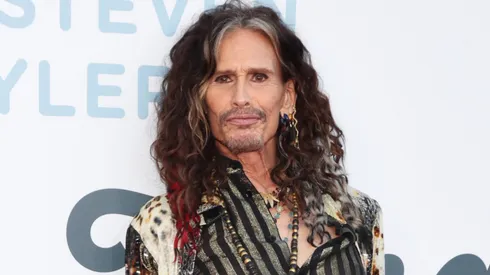
78 arrives with the same restless spark that has defined Steven Tyler for more than five decades, a voice that once cut through arenas like a live wire and never fully learned how to fade. From the chaos of early Boston clubs to global stadium dominance, his trajectory with Aerosmith turned swagger into a sonic identity.
Across shifting eras of rock history, the band’s catalog preserved a rare kind of permanence—songs built on riffs that still feel urgent and choruses that refuse to age quietly. As he reaches another milestone year, the focus inevitably returns to the recordings that outlived trends, the tracks where grit, melody and theatrical instinct fused into something larger than their time.
Dream On
“Dream On” stands as one of the earliest defining statements of Aerosmith, originally featured on their 1973 debut album. Written by Steven Tyler during his teenage years, the track captures the tension between ambition and fragility, gradually building from a restrained piano-driven opening into one of rock’s most explosive vocal climaxes.
Over time, the song became a cornerstone of the band’s identity and a permanent fixture in their live performances. Its emotional arc and vocal intensity helped establish Tyler as one of rock’s most distinctive frontmen, with a performance style that blurred the line between vulnerability and theatrical power.
Walk This Way
Released in 1975 on Toys in the Attic, “Walk This Way” emerged from a simple guitar riff by Joe Perry and quickly evolved into one of Aerosmith’s most recognizable tracks. The song’s rhythm and lyrical delivery created a conversational, almost percussive vocal style from Tyler that stood out in the hard rock landscape of the time.
Its cultural footprint expanded dramatically in 1986 when Run-D.M.C. reimagined the track, merging rock and hip-hop in a way that reshaped mainstream music. That collaboration reintroduced Aerosmith to a new generation and cemented the song’s legacy beyond its original era.
Sweet Emotion
“Sweet Emotion,” also from Toys in the Attic, showcased a more atmospheric and groove-oriented side of Aerosmith. Built around a slow-burning bassline and distinctive talk box effects, the track leaned into tension rather than speed, giving it a hypnotic quality that contrasted with their more explosive songs.
The lyrics, often interpreted as reflective of internal band dynamics and frustration, added a layer of realism to its laid-back exterior. Over decades, it has remained one of the band’s most enduring tracks, frequently used in films, commercials, and sporting events.
Crazy
Released in 1993 as part of the Get a Grip era, “Crazy” marked a major comeback moment for Aerosmith in the MTV generation. The track blends polished production with emotional delivery, anchored by Steven Tyler’s expressive vocal performance.
The accompanying music video, starring Alicia Silverstone and Liv Tyler, became a defining visual of 1990s pop culture. Its heavy rotation on MTV helped the band re-establish itself as a dominant force in mainstream rock.
I Don’t Want to Miss a Thing
Written by Diane Warren and released in 1998 for the film Armageddon, this ballad became Aerosmith’s first number-one hit on the Billboard Hot 100. Although stylistically different from their earlier hard rock work, it showcased the band’s adaptability and emotional range.
The song’s cinematic scale and orchestral production made it a global phenomenon. Despite initial skepticism from some rock purists, it ultimately became one of the most commercially successful tracks associated with the band.

Janie’s Got a Gun
Appearing on the 1989 album Pump, “Janie’s Got a Gun” tackled dark and unconventional subject matter for a mainstream rock single. Written by Steven Tyler and Tom Hamilton, the song stands out for its narrative structure and restrained, suspense-driven arrangement.
It earned critical recognition, including a Grammy Award, and demonstrated Aerosmith’s willingness to engage with heavier thematic material. The track’s storytelling approach distinguished it from their more traditional rock anthems.
Love in an Elevator
“Love in an Elevator” marked the lead single from Pump and captured Aerosmith’s return to a more raw, energetic sound in the late 1980s. Driven by Joe Perry’s guitar work and Tyler’s charismatic vocal delivery, the song quickly became a live staple.
According to band interviews, the lyrics were inspired by a real-life encounter experienced by Tyler, adding a sense of playful realism. Its blend of humor and hard rock attitude helped define the era of their commercial resurgence.
Dude (Looks Like a Lady)
Released in 1987 on Permanent Vacation, this track played a key role in Aerosmith’s late-career revival. The song combined glam rock influences with a polished production style that aligned with MTV-era aesthetics.
Its success helped reintroduce the band to a younger audience and marked a turning point in their commercial trajectory. The track remains one of their most instantly recognizable singles from the 1980s.
Cryin’
Part of the Get a Grip album cycle, “Cryin’” became one of Aerosmith’s most successful singles of the 1990s. The song balances melodic structure with emotional intensity, driven by Steven Tyler’s vocal range and expressive phrasing.
Its music video, heavily rotated on MTV, played a major role in its popularity and helped define the visual language of the era. The track solidified Aerosmith’s relevance in the evolving rock-pop crossover landscape.
Back in the Saddle
Originally released in 1976 on Rocks, “Back in the Saddle” represents one of Aerosmith’s heaviest early recordings. Built around a powerful, driving guitar riff and distorted vocal effects, it reflects the band’s rawest hard rock identity.
The song became a live favorite due to its intensity and energy, often used to open or elevate setlists. It remains a key example of the band’s early sonic edge during their rise in the 1970s.