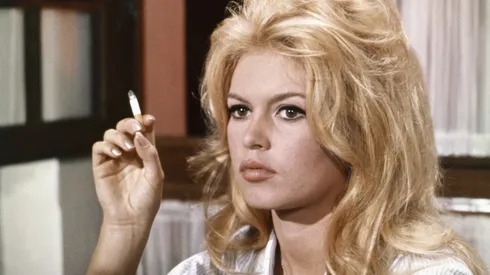
Brigitte Bardot’s name was once whispered in cinema houses and shouted in seaside cafés from Paris to Saint-Tropez, a symbol as provocative as the French New Wave that surged around her.
Her ascent to superstardom was swift and seismic: in 1956, she embodied a new kind of onscreen femininity in And God Created Woman, a role that defied the staid moral codes of postwar cinema and catapulted her into international fame.
Over the next two decades, her presence anchored a remarkable range of films that challenged conventions of desire, freedom and female autonomy on screen. Yet she was more than a luminous face framed by tousled blonde locks and widescreen glamour.
And God Created Woman (1956)

With this film, Roger Vadim did more than launch Brigitte Bardot’s career—he reshaped how female desire could be portrayed in modern cinema. Bardot plays Juliette, a young woman whose emotional and sexual freedom proved as magnetic as it was scandalous at the time.
The film sparked immediate controversy, but it also marked a cultural rupture. Bardot did not perform sensuality; she embodied it with a natural ease that unsettled both critics and censors. This was the role that turned her into an international star—and a symbol of a new era.
A Very Private Affair (Vie Privée, 1962)

Few films capture Bardot’s complicated relationship with fame as clearly as this one. Playing an actress consumed by celebrity culture, Bardot appears to be in constant dialogue with her own public life. The film examines media exploitation, the loss of privacy and the emotional toll of stardom.
Her performance is introspective and nearly confessional, turning A Very Private Affair into a key work for understanding not only her career, but the psychological cost of becoming a cultural icon.
The Night Heaven Fell (1958)
Set in an Italian landscape steeped in moral tension and repressed desire, this film helped cement Bardot’s image as both sensual and tragic. Her character navigates the conflict between religious guilt and irresistible attraction in a story where atmosphere weighs as heavily as action. Bardot brings vulnerability to the role, balancing eroticism with emotional fragility and delivering one of her most haunting performances.
Love Is My Profession (1958)
In this dark melodrama, Bardot confronts a narrative shaped by obsession and emotional imbalance. Starring opposite Jean Gabin, she plays a seductive yet dangerous figure, aware of the power she wields but ultimately trapped by it. The film rejects romantic idealism, offering a raw portrait of destructive relationships. Bardot sustains the somber tone with a performance that moves between fragility and manipulation.
Shalako (1968)
This international western reflects the global scale of Bardot’s fame by the late 1960s. Appearing alongside Sean Connery, she enters a genre traditionally dominated by men, bringing a magnetic presence that disrupts its conventions. While the film received mixed critical responses, its significance lies in showcasing Bardot as a star capable of crossing cultural and cinematic borders, reinforcing her international stature.
Dear Brigitte (1965)
A rarity within her filmography, this Hollywood comedy openly plays with the Bardot myth. Appearing as a heightened version of herself, she displays awareness of her public image and uses it with irony and charm. Dear Brigitte is light, self-referential and deliberately playful, offering a more accessible and relaxed portrait of the French star without diminishing her allure.
Don Juan, or If Don Juan Were a Woman (1973)
Bardot’s final film functions as both farewell and statement. Reimagining the Don Juan myth through a female lens, the film challenges conventions of gender and morality. Provocative and divisive, it reflects Bardot’s determination to leave cinema on her own terms. It may not be her most celebrated work, but it is one of her most symbolic—closing a career that consistently refused to conform to expectation.